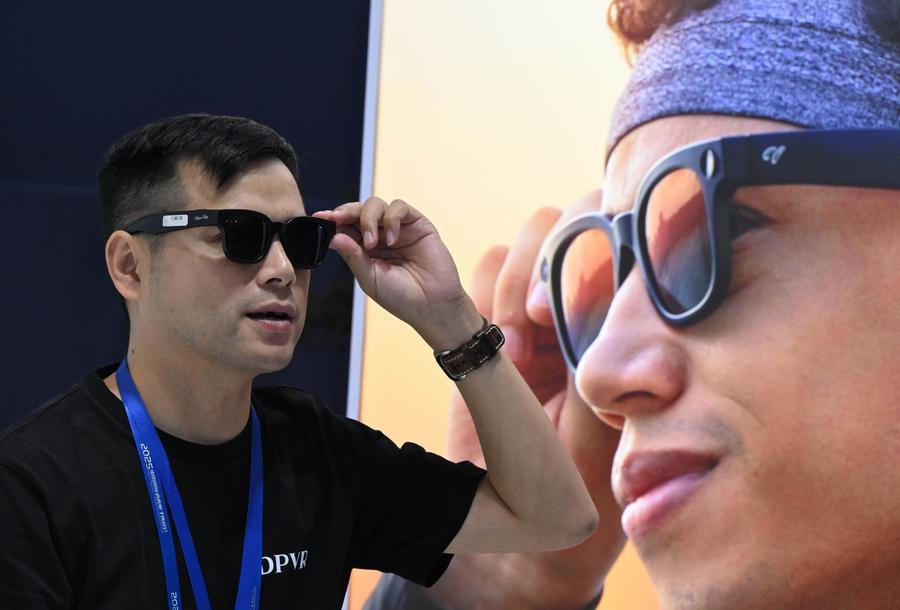
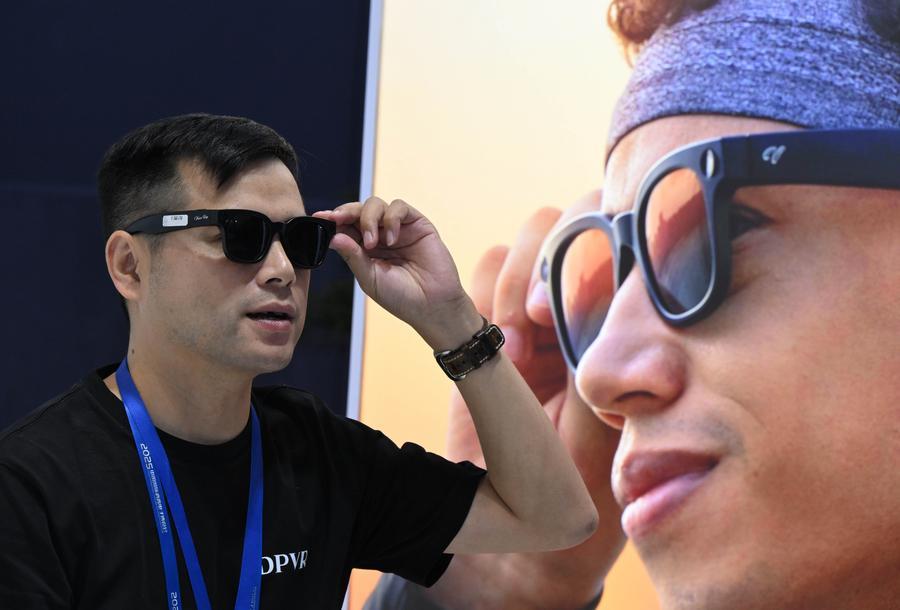
BEIJING, March 22 (Xinhua) — Freestyle skiing Olympic champion Xu Mengtao wore AI glasses to record his gym training ahead of the Milan Winter Olympics, and maintenance staff in eastern China’s Hangzhou city used the hands-free gadgets to inspect EV charging stations. Additionally, the Australian vlogger gave a glimpse of his AI glasses in a recent video, saying that they have proven to be China’s most reliable travel companion.
Once reserved for enthusiasts, AI glasses have now become a popular product, attracting capital investment and fierce competition among Chinese tech companies. Industry observers believe this wearable AI hardware is moving from a niche market to consumer adoption in China.
As a smart wearable device integrated with artificial intelligence, AI glasses are attracting attention from many people as a next-generation personal computing platform following smartphones and smart watches.
Earlier this month, Alibaba unveiled its first AI glasses powered by the Qwen large language model, and state-owned carrier China Unicom unveiled new AI glasses. Social media is also filled with photos of consumers flocking to Huawei and Xiaomi stores to try out the latest AI glasses.
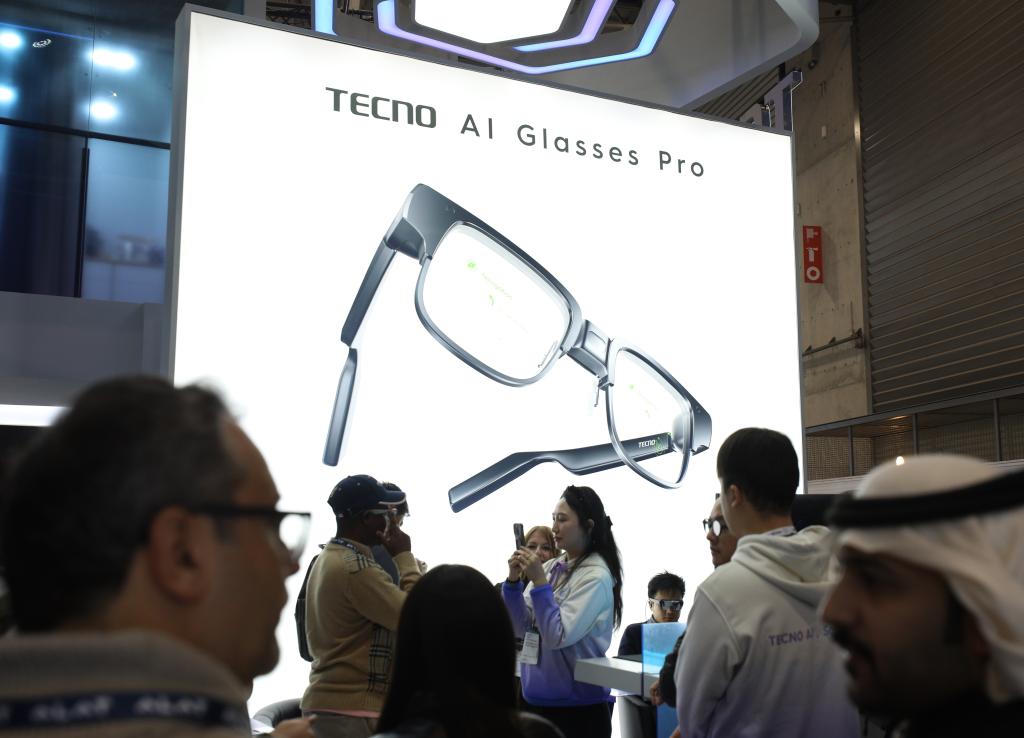
Besides tech giants and smart glasses specialists, other major players in China include consumer electronics brands and display panel manufacturers.
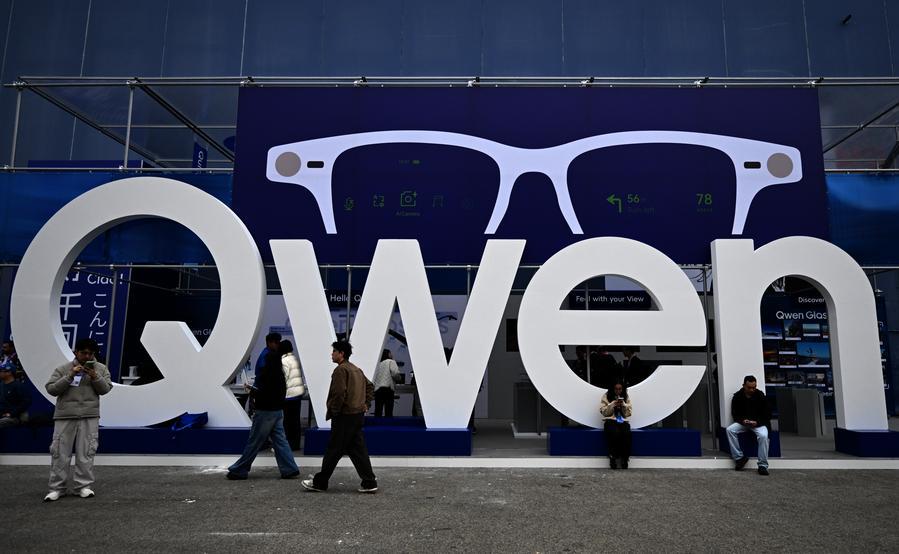
The entry of leading Chinese companies into the AI eyewear market is not just a matter of riding on a trend, but also a competition to secure a share of next-generation mobile devices.
Wang Junjie, vice president of smart glasses maker Hangzhou Lingpan Technology, said smartphones have already reached their physical limits in terms of screen size and operation methods, leaving little room for further innovation. In contrast, smart glasses, which are similar to the human brain and can capture a wide variety of information, serve as a bridge between the physical and digital worlds.
Meanwhile, as competition among AI models intensifies, the focus shifts to real-world applications. Shi Weixin, an associate professor at Shenzhen University of Advanced Technology in southern China, said many companies entering the game are “aiming to secure a voice in the next AI-driven computing era.”
Market research firm International Data Corporation (IDC) predicts that Chinese manufacturers will account for 45% of the global AI glasses market in 2026, with shipments of Chinese brands reaching 22.67 million units worldwide, an increase of 56.3% from the previous year.
The main driver for this mass adoption is government support. In January, AI glasses were included in China’s state subsidy program for the first time, giving buyers a 15% discount on purchases up to 500 yuan (US$72.6).
E-commerce platform JD. com points out that the AI eyewear market has maintained double-digit growth since 2025, with month-on-month increases since subsidies were added earlier this year.
Beyond policy, China’s competitiveness lies in its manufacturing strength. For example, in the economic powerhouse Guangdong province in southern China, popular AI glasses, AI toys, and intelligent robots can have quick production cycles: designed in the morning, sampled in the afternoon, mass-produced the next day, and exported within a week.
Sales of AI glasses at Shenzhen’s Huaqiangbei Electronics Market, known as “China’s Hardware Silicon Valley,” have surged 80% in the past two months, with the number of foreign buyers doubling during this period, said Zeng Jinze, a senior official with Guangdong’s industry and information technology department.
Despite this rapid growth, challenges remain. IDC China analyst Ye Qingqing pointed out that the central bottleneck in the mass adoption process lies in the supply chain, especially in ramping up production capacity for key components such as more advanced chips, display screens and batteries.
He added that the current features offered by AI glasses, such as photography, translation, and navigation, can be easily replicated on smartphones, so users have little incentive to use these glasses long-term beyond curiosity. Further efforts should be focused on exploiting the unique features of such glasses, such as first-person interaction, real-time sensing, and proactive services, and exploring scenarios to integrate them into daily life.
As the capabilities of AI glasses increase, so do legal and privacy concerns.
Peng Jing, a lawyer in the southwest Chinese city of Chongqing, warned that the ability of AI glasses to record video and audio in public places calls into question the existing consent framework under China’s privacy law.
Peng said, “If AI glasses lose the final line of privacy protection, the faster they become popular, the greater the social risks will be.” He called for future judicial practices and interpretations to clarify usage rules and to set clear “red lines that must not be crossed” for the healthy development of the industry.
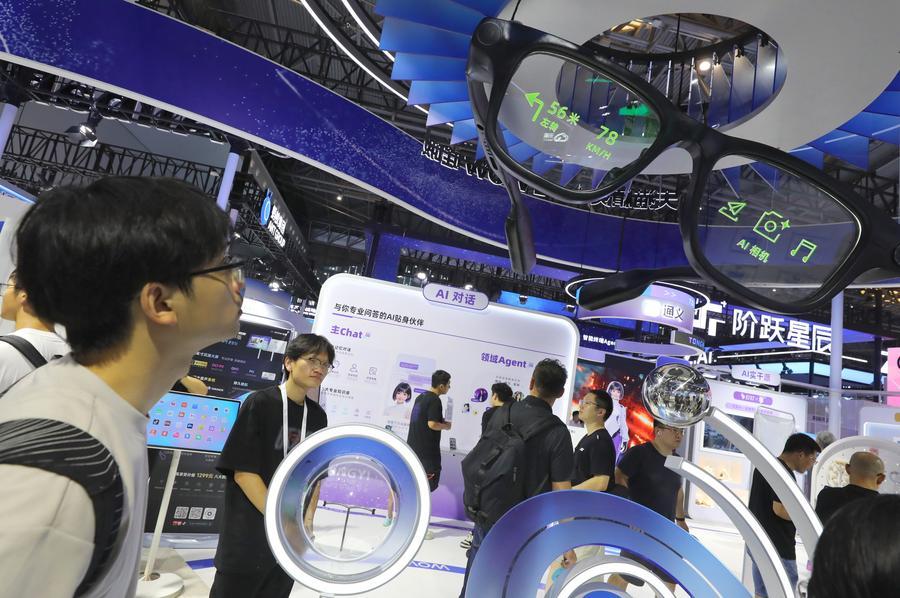
Some industry leaders remain cautious about how quickly AI glasses will become household products. Xu Chi, founder and CEO of domestic smart glasses maker XREAL, compared the current state of the industry to the smartphone market in 2005 and 2006, before the release of the iPhone. “The ecosystem is very fragmented,” he said at a recent technology fair in Shanghai, eastern China.
“The AI glasses industry’s ‘iPhone moment’ has not yet arrived and will require further technological advancements and innovations,” he said.
Li Hongwei, founder and CEO of RayNeo, an AI glasses company in Shenzhen, offered a more concrete schedule. “I don’t think 2025 was the breakthrough year. Maybe 2026 is the start, and 2027 and 2028 will be the ‘iPhone moment,'” Lee said, suggesting it may take a little longer to achieve mass adoption.
According to official data, in 2025, the size of China’s core AI industry will exceed 1.2 trillion yuan, with more than 6,200 participating companies. In particular, AI glasses have emerged as one of the trendiest products in this fast-growing field.
Earlier this month, China’s Industry and Information Technology Minister Li Lecheng said that AI is a “strong progressive driving force” for the country’s economic development, adding that China will promote “AI + manufacturing” and cultivate a distinctive AI agent in 2026.
The AI glasses could be a clear demonstration of how AI will evolve in the market and reshape China’s economy. ■