Tinder, the app that revolutionized the online dating market, is adding a series of new features aimed at appealing to younger users in hopes of increasing engagement and building trust in the dating app.
The West Hollywood, Calif.-based company unveiled its vision for the future Thursday, outlining how it wants to be seen among young adults and millennials with a series of updates aimed at making the popular dating app a top choice in the dating scene.
“Over the past year, dating apps have been dominated by headlines about fatigue and Gen Z opting out, but let’s be clear: The need for human connection is greater than ever,” CEO Spencer Rascoff said during the event, discussing how dating apps sometimes come with pressure and certain expectations, and how he wants to change that to transform Tinder into the modern dating app.
 The West Hollywood, Calif.-based company unveiled its vision for the future Thursday, outlining how it wants to be seen among young adults and millennials with a series of updates aimed at making the popular dating app a top choice in the dating scene.
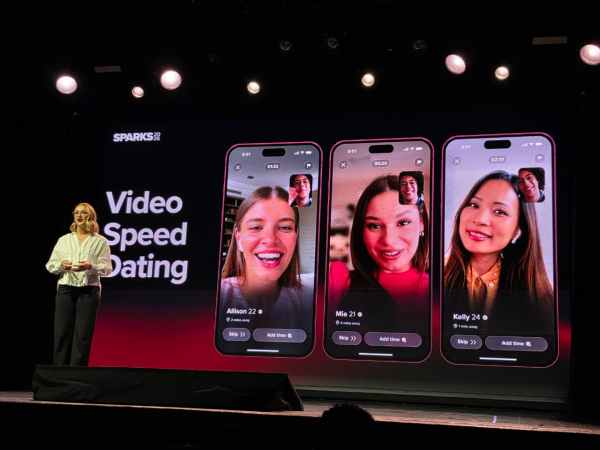
Gen Z and Millennials are increasingly finding new ways to make real-world connections beyond traditional dating apps, and Tinder is building new features to take cues from that. These include a new events tab being tested this month in Los Angeles that connects users to in-person dating events, such as pottery classes, trivia nights, and pickleball sessions. A new video speed dating feature is also being tested for photo-verified users, allowing them to attend scheduled virtual events and have a quick three-minute video chat.
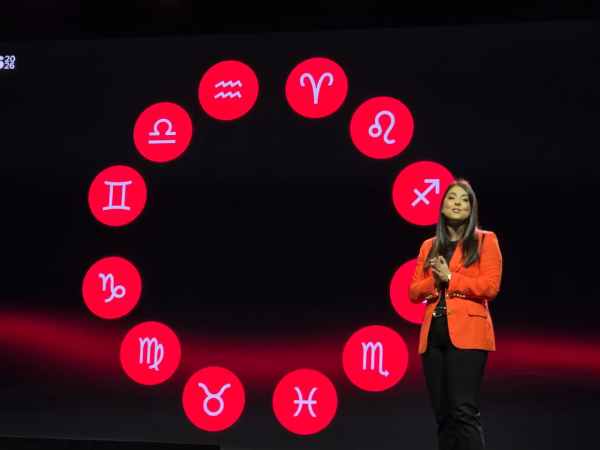
Other features include music and astrology-specific swipe modes, the latter based on the growing interest in astrology among younger users. Early testing shows these modes increase engagement. 1 in 10 users under 22 have adopted music mode, and the number of likes sent by women on astrology profiles has increased by 20%.
 Tinder is also extending its reliability and safety improvements with updates to features such as “Are You Sure?” and “Does this bother you?” The latter has been enhanced to detect more harmful messages, along with a new auto-blur feature that hides disrespectful content.
Tinder is also extending its reliability and safety improvements with updates to features such as “Are You Sure?” and “Does this bother you?” The latter has been enhanced to detect more harmful messages, along with a new auto-blur feature that hides disrespectful content.
Match Group’s Tinder is also turning to artificial intelligence with a new feature called Chemistry to help alleviate the growing trend of “swipe fatigue,” a growing problem among online daters who feel burnt out and want better results. Introduced last quarter, Chemistry uses AI to get to know you through questions and, with your permission, can access your phone’s camera roll to learn more about your interests and personality. At the time, the chemistry was being tested in Australia and New Zealand, but testing has now expanded to the United States and Canada.
Story continues below this ad
Tinder also introduced “Learn Mode,” a new feature that quickly analyzes users’ preferences to surface more relevant matches earlier. This reduces the need for multiple swipe sessions to understand what a user is looking for and improves matching recommendations more quickly.
The app also has modern improvements with an Apple-like liquid glass design and full-screen photos and content.
The announcement, made during Tinder’s first Sparks event at the El Rey Theater in Los Angeles, highlights how tough competition the market-leading dating app faces — not just from rivals, but also from changing habits among young daters who are looking for more authentic connections beyond swipes.
More than a decade ago, Tinder became the most popular dating app, changing the way single daters connected online: swiping through profiles, matching, and meeting. Tinder now faces the challenge of meeting user expectations and reviving the appeal of online dating. The app has focused on retaining younger and female users over the past year, improving the app ecosystem and rolling out safety features like ID verification in many markets.
Story continues below this ad
Perhaps the biggest challenge for Tinder, which has 50 million monthly active users, is how to attract Gen Z users and keep young online daters on the platform who have grown tired of swiping. Dating apps are turning to AI and additional features to keep users engaged on their platforms, and are finding new ways to engage users in in-person events.
Tinder remains the most popular dating app, but it has recently lost users in some markets. At the same time, dating apps like Bumble, Grindr, Hinge, and OkCupid have exploded and are rapidly gaining popularity in the online dating scene. Although the overall popularity of dating apps has remained stable, the number of downloads has declined slightly in recent years.
Tinder is the largest app from Match Group, which includes Match, OkCupid, Hinge, Plenty of Fish, and 36 other dating app brands targeting a diverse audience. Match Group is a dominant force in the dating industry, with a market value of $7.2 billion.
The company has a new leadership team, including new CEO Spencer Rascoff, who started in 2025, and is tasked with making the world’s largest dating app more topical and meaningful as user behavior changes. Rascoff is also the CEO of Match Group, Tinder’s parent company.