
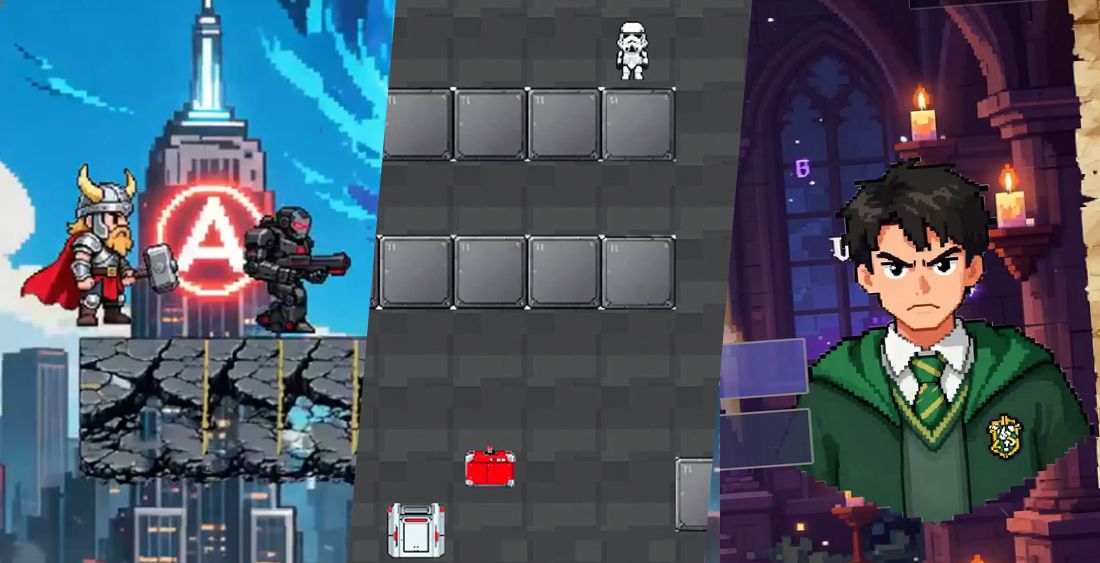
AI researchers believe they are close to being able to create video games from text prompts. A team at the Chinese University of Hong Kong’s MMLab has released an open-source model that it claims is the first AI capable of building fully playable games from scratch (though you may need your best laptop for game development).
According to the researchers’ paper, developers can write their games using natural language, and OpenGame will build the project, write the code, debug any errors, and generate the final browser-based game. The researchers built a demo of a survival game inspired by an Avengers-style platformer, a Harry Potter card battle game, a KOF-style Quiz Fighter, and Netflix’s Squid Game.
2. Hajimi Defense: Tuna Crisis Prompt: “Create a hilarious tower defense game called ‘Hajimi Defense’ where cute cats protect a ‘golden tuna can’ from invading household pests (cucumbers, vacuum cleaners). The tower should be a funny cat meme: spitting tabby, sniper… pic.twitter.com/YBY15GjW3TApril 21, 2026
OpenGame takes a different approach than many other AI game development models. It’s an autonomous framework that can complete the entire process of generating the game itself, rather than generating individual code snippets or assets that go into an existing pipeline.
Article continues below
It uses a specialized model called GameCoder-27B, which is trained in a game development workflow using reinforcement learning on real code execution. Researchers say they can already generate more than 150 different game types.
4. Star Wars: The Mandalorian Protocol Prompt: “Create a high-intensity top-down action RPG shooter set in the Star Wars universe. Play as a Mandalorian fighting his way through an Imperial base to rescue Grogu. Gameplay should be a twin-stick shooter style with the ability to use a blaster… pic.twitter.com/GultqZ8r88April 21, 2026
6. Marvel Avengers: Infinity Strike Prompt: “Build an epic side-scrolling action platformer starring the Avengers. Choose between Iron Man (lasers and flight), Thor (hammer melee and lightning strikes), or Hulk (smash attacks) to fight across three different levels: Ruined City, Ruins… pic.twitter.com/rugPr2brbzApril 21, 2026
The OpenGame process consists of several coordinated stages. We start by identifying the type of game requested, establishing the project’s framework and technical design, then generating the necessary assets and automatically implementing the code and tests.
A rating system called OpenGame-Bench runs the generated games and judges them based on their sanity, ease of use, and whether they match the original prompts. The errors will then be fixed until the framework determines the game is playable.
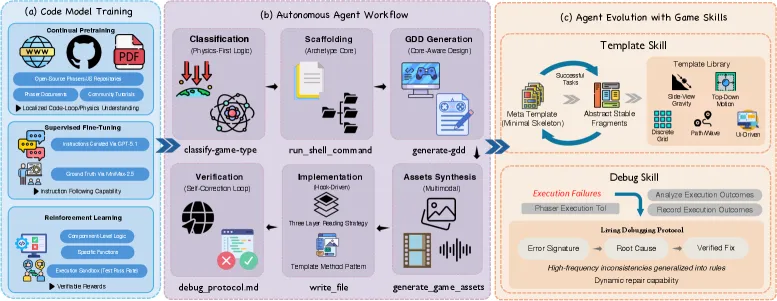
This framework has an evolving set of abilities called gaming skills. Template Skills builds a library of five templates from previous game generation experience. On the other hand, debugging skills maintain the protocol of error signatures and fixes that are verified. This model tells a history of patterns, designs, and modifications across projects, allowing OpenGame to iterate, recycle solutions, and improve reliability over time.
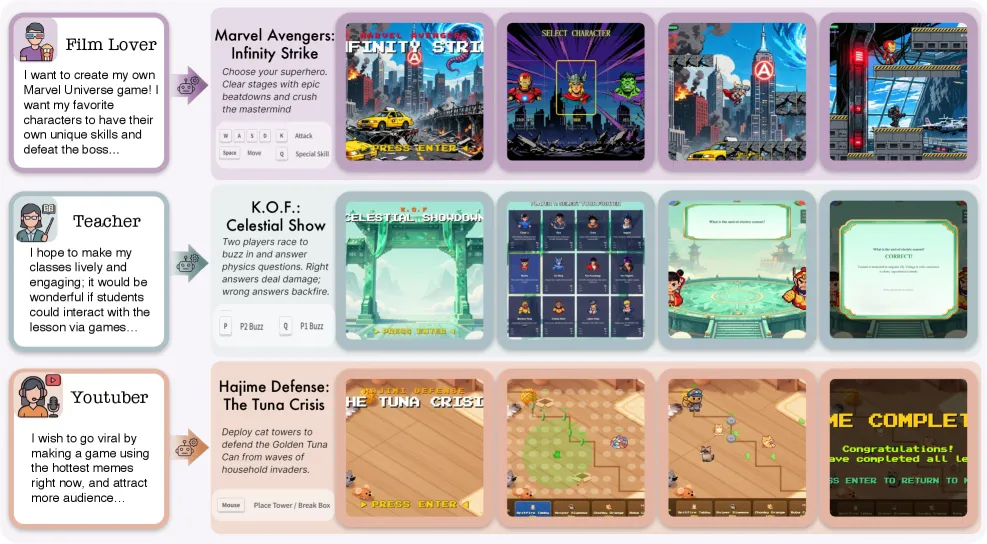
Although the process and output seem to represent a leap forward from previous models, many developers have questions about how innovative OpenGame really is. One-shot games shared online may look good, but there’s no persistent state or multiplayer synchronization, and games of any size can be expensive to produce.
“The demo is impressive, but I’d like to see repeated playtest feedback instead of one-shot generation. I’d be interested to see what breaks first in a slightly longer game loop,” one person wrote on X.
“The demo game is easy. Add 20 lines of JS to the canvas and you’ll see red lights, green lights in the afternoon,” another points out. “Real Rift synchronizes state when two players join. Every agent coding project I’ve ever seen hits that wall around the third day.”
OpenGame can be found at github


