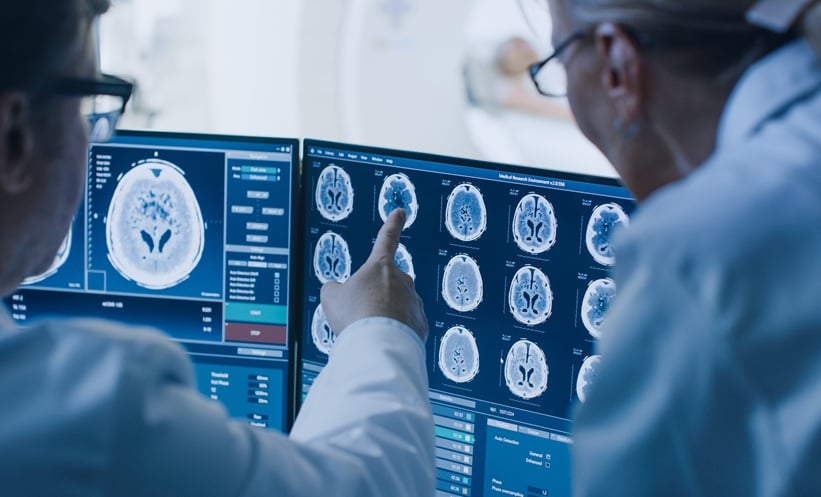
A new study shows that combining neuroimaging and artificial intelligence (AI) can significantly enhance brain tumor diagnosis and achieve near-perfect accuracy in classifying tumor types.
Brain tumors remain one of the most complex neurological conditions to diagnose, often requiring multiple imaging techniques and expert interpretation. Although magnetic resonance imaging (MRI) is widely used, it can still be difficult to distinguish between tumor types such as gliomas, meningiomas, and pituitary tumors.
As a result, there is growing interest in using machine learning to support clinical decision-making and improve diagnostic accuracy.
Brain tumor diagnosis powered by AI
The researchers developed a fusion approach that integrates MRI data with three machine learning models: convolutional neural networks (CNN), random forests (RF), and support vector machines (SVM). This system aims to improve the accuracy of brain tumor diagnosis and classification by combining structural imaging with advanced computational analysis.
The study analyzed 7,023 MRI images across four categories: glioma, meningioma, pituitary tumor, and no tumor. Using standard train and test splits, all three models demonstrated very high performance. The CNN model achieved the highest accuracy of 99.29%, followed closely by RF at 99.06% and SVM at 98.36%.
These findings suggest that integrating multiple analytical approaches can enhance brain tumor diagnosis in complex cases by capturing subtle image features that may be missed by traditional evaluation alone.
Why this is important for clinical practice
Accurate classification is important in the diagnosis of brain tumors, as treatment strategies and prognosis vary widely depending on the tumor type. Even small diagnostic errors can lead to inappropriate treatment or delayed intervention.
AI-driven tools could help radiologists and neurologists make faster and more reliable decisions by improving classification accuracy. This is especially true in high-pressure clinical environments where rapid diagnosis is essential.
Limitations highlight the need for extensive validation
Despite the promising results, the authors highlighted important limitations.
This model was trained and tested on a single publicly available dataset and therefore may not reflect the diversity of real-world clinical populations.
Additionally, no external validation was performed, raising questions about generalizability.
Future direction of brain tumor diagnosis
The researchers suggested that future research should focus on multicenter datasets, real-world clinical integration, and federated learning frameworks to increase robustness.
Scaling these models across facilities has the potential to ensure consistent performance across diverse clinical settings.
If this fusion approach is validated in clinical practice, it could represent an important step forward in brain tumor diagnosis and become a powerful tool to support precision medicine in neurology.
reference
Khan UA et al. Combining neuroimaging and machine learning to improve brain tumor diagnosis and prognosis. Sci Rep. 2026;DOI:10.1038/s41598-026-50213-x.
Featured image: Gorodenkoff from Adobe Stock