In today’s digital environment, still images no longer capture the attention they once did. Having used AI content tools extensively, I have seen firsthand how they work. From photo to video Technology is changing the landscape for small businesses. This isn’t just a technology trend, it’s a practical solution with real results.
What exactly is Image to Video AI?
Image to Video AI uses artificial intelligence to transform still photos into engaging video content. Unlike traditional video production, it doesn’t require technical expertise or expensive equipment. Just upload an image, give it some basic instructions, and the AI will do the rest.
I remember testing the first Image to Video AI tool last year. A task that would have taken hours with traditional editing software was completed in about three minutes. I was also surprised by the quality. Smooth animations, professional transitions, and all without any video editing skills.
Why this is important for small businesses
Accumulating cost reductions
Traditional video production isn’t cheap. Hiring a videographer, editor, and purchasing equipment can easily run you thousands of dollars each month. Image to Video AI significantly reduces these costs. One of my clients used these tools to reduce their content creation budget from $3,000 to less than $300 per month.
Speed to market
When trends emerge, you need to act quickly. I used Image to Video AI to create and publish responsive content within hours of breaking news. This kind of agility is valuable in today’s rapidly changing digital environment.
consistent quality
Human creators have days off. AI isn’t like that. The Image to Video AI tools I use regularly maintain consistent quality across all outputs, which is critical to brand integrity.
How to get started: A practical guide
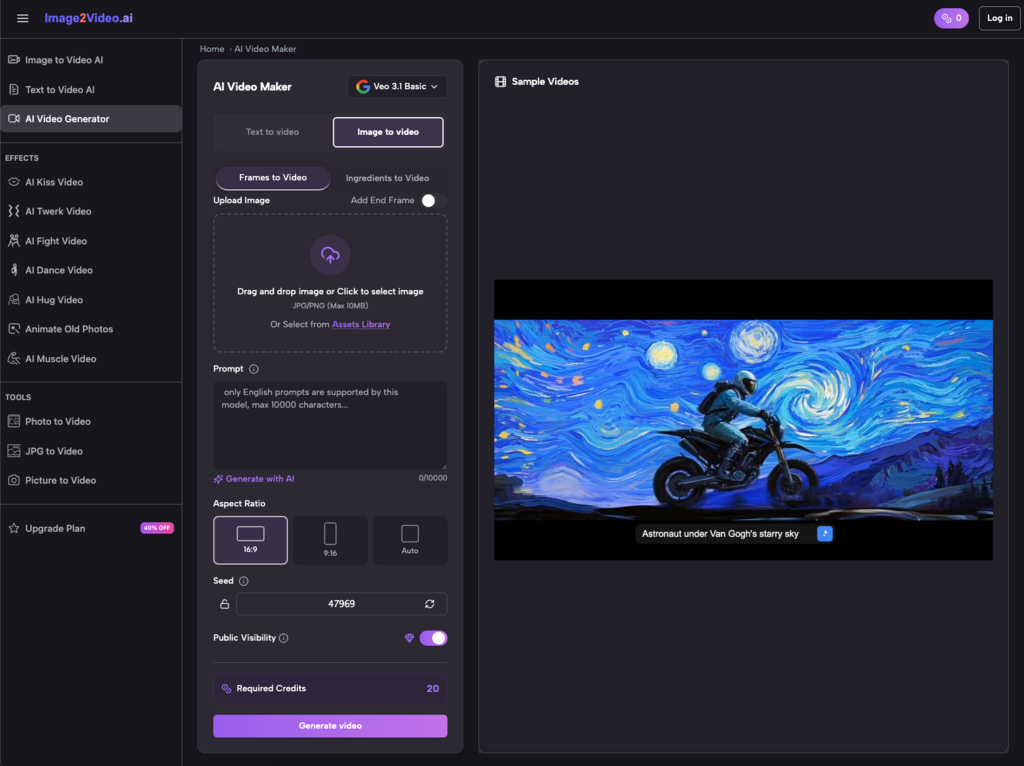
Step 1: Select an image
Choose high-quality, bright images. The better the source material, the better the final video will look. Most image conversion platforms handle JPEG and PNG files easily.
Step 2: Explain your vision
Please use plain English to explain what you need. Instead of jargon, try something like, “Slowly rotate the product while the background changes from blue to white.” Image to Video AI understands natural language very well.
Step 3: Let the AI work its magic
Processing typically takes 2 to 5 minutes. I typically use this time to prepare social media captions and review other content.
Step 4: Review and implementation
Preview your video, make any necessary adjustments, and you’re ready to publish. When I completed this process for the first time, I was really impressed with how seamless it was.
Real-world applications that deliver results
E-commerce transformation
Product photos become a dynamic showcase. One furniture client saw a 40% increase in engagement after switching to AI content from images to videos.
social media content
Platforms like Instagram and TikTok thrive on motion. Static posts will be lost. The video will be shared. We consistently see that AI-generated videos have 2-3x higher engagement rates compared to still images.
marketing campaign
Seasonal promotions, holiday sales, limited-time sales, and more all benefit from fast, professional video content. Image to Video The speed of AI means you can create timely content that actually matches the urgency of your offer.
educational content
Turn diagrams and charts into engaging instructional videos. One training company I worked with reduced content creation time by 70% while increasing learner engagement.
Answer frequently asked questions
How difficult is it to learn?
Most people get the hang of it after the first session. The interface is designed to be simple. I’ve trained dozens of small business owners, and nearly all of them have created content they can use within 15 minutes.
Are there any length restrictions?
Most Image to Video AI tools create videos between 5 and 15 seconds. This is actually perfect for social media platforms where attention spans are short.
Do I need to download software?
No, modern solutions are cloud-based. I access it through a web browser. That means you can work from anywhere, on any device.
Success story: Transforming a local bakery
Our small bakery client was struggling with their social media presence. Their beautiful pastries were buried in the crowded feeding area. After implementing Image to Video AI:
- 45% increase in Instagram engagement
- 30% increase in online orders
- Reduce content creation time by 85%
- Save $2,500 per month on video production costs
The owner says, “This technology has leveled the playing field. We can now create content that can compete with the big bakeries without a big budget.”
Pro tips from experience
- Start with the best images – high quality, low quality
- Be specific in your instructions – detailed instructions will give you better results
- Experiment with styles – test different animation approaches
- Maintain brand consistency – develop a recognizable style
- Create content regularly – consistency trumps occasional perfection
The road ahead
Image to Video AI technology continues to evolve rapidly. You’ll see improved customization, smoother animations, and even AI-generated narration. Early adopters now have a significant competitive advantage.
conclusion
Image to Video AI isn’t just about creating videos, it’s also about creating opportunities. This removes the barriers that previously prevented small businesses from competing in the visual content space.
Having implemented these solutions across multiple industries, I can confidently say: Image-to-video AI This is one of the most practical and cost-effective advances in content technology I’ve ever seen. Barriers to entry are low, learning curves are minimal, and profit potential is large.
The question is not whether you can afford to use Image to Video AI technology, but whether you can afford not to use it.