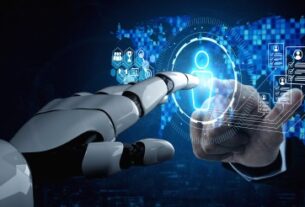
ML applications in the healthcare industry are rapidly advancing and revolutionizing
ML applications in the healthcare industry are evolving rapidly, changing the way doctors identify, treat, and prevent disease. The potential applications of machine learning in the healthcare industry are many and varied, from predicting disease outbreaks to discovering complex medical patterns to assisting researchers in developing targeted medicines.
ML algorithms have the potential to provide medical professionals with unprecedented insight into patient health by analyzing massive data sets and seeing patterns that are not apparent to the human eye. . Machine learning has the potential to revolutionize healthcare, benefiting patient outcomes and the overall healthcare experience in this rapidly evolving industry. Let’s take a look at some applications of machine learning in medicine.
Creation and production of medicines
Clinical applications of machine learning have great potential, especially in the early stages of the drug discovery process. It covers the development of alternative therapeutic strategies for complex diseases using next-generation sequencing and precision medicine. Unsupervised learning techniques are currently used to find patterns in data without making predictions.
Manage health records
Maintaining accurate and up-to-date health data in a healthcare business can be time consuming and labor intensive. Although technology has simplified the data entry process, many tasks are still time consuming and labor intensive. A promising way to optimize medical procedures and save time and money is machine learning.
disease recognition
Machine learning is increasingly being used in medicine to identify and diagnose hard-to-detect diseases and conditions, such as cancer and genetic disorders. The ability to combine cognitive computing with genome-based tumor sequencing will enable IBM Watson Genomics to best demonstrate rapid and accurate diagnosis.
Clinical trial optimization
Machine learning can greatly improve the effectiveness and efficiency of clinical trials and research. Applying ML-based predictive analytics to find trial participants helps researchers access a wide range of data sources, such as past doctor visits, social media activity, and more. Clinical trials are notoriously time-consuming and expensive. In addition, machine learning has the potential to select the optimal sample size for testing, reduce errors in databases using electronic medical records, and enable real-time monitoring and data access for trial participants. These cutting-edge machine learning algorithms can accelerate drug discovery and improve patient outcomes.
personalized medicine
Predictive analytics is used in personalized medicine, a promising medical practice, to match patient health data with customized alternative treatments. Using machine learning, personalized medicine can improve disease assessment and increase treatment effectiveness. A doctor can only choose a diagnosis based on a history of symptoms and genetic data.
Predictive modeling of disease epidemics
Global infectious disease monitoring and forecasting is increasingly relying on machine learning and AI-based technologies. With so much data available from satellites, social media and websites, scientists can use artificial neural networks to gather information and predict epidemics of everything from malaria to severe chronic infections. increase.
collection of data techniques
Crowdsourcing, which gives researchers and medical professionals access to large amounts of health data voluntarily uploaded by individuals, is rapidly gaining popularity in the healthcare industry. This live health data will have a major impact on the future of medicine. For example, Apple’s ResearchKit uses machine learning-powered conversational apps and facial recognition to treat Asperger’s and Parkinson’s.
Looking to the future of healthcare, machine learning will play an increasingly important role in disease detection and treatment, improving patient outcomes, and enhancing the overall healthcare experience. Scenarios where wearable technology and biosensors can track your every step and easily integrate your health information into highly developed machine learning algorithms to predict health concerns and suggest personalized treatments. Think about it. Imagine a scenario where healthcare professionals have access to cutting-edge AI-powered diagnostic technology that can identify diseases with unmatched speed and accuracy.