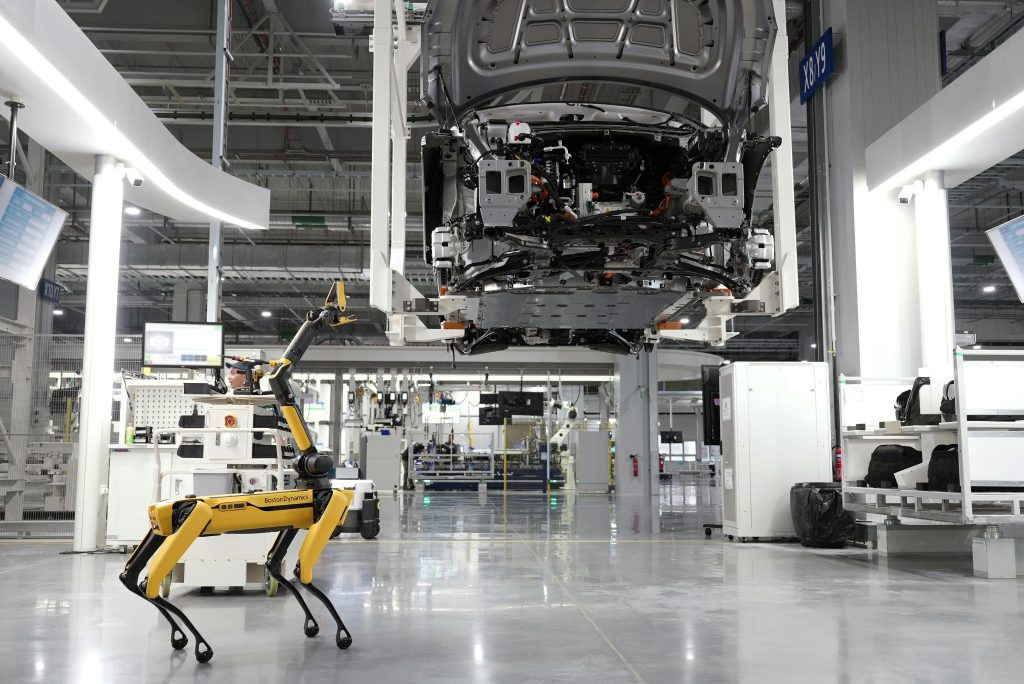
The global manufacturing industry is undergoing major changes due to the rapid evolution of artificial intelligence. Industrial facilities have long relied on connected sensors and data dashboards to monitor operations and provide human operators with the insights they need to make informed decisions. But the paradigm is changing. the next wave is Manufacturing AI solution goes beyond mere observation and predictive analysis to usher in an era of autonomous factories, where intelligent systems operate, adapt, and optimize in real time.
This shift from passive surveillance to active agentic decision-making represents a fundamental change in the way goods are produced. According to IoT Analytics, the global industrial AI market is expected to grow from $43.6 billion in 2024 to $153.9 billion by 2030, making the integration of advanced machine learning, computer vision, and autonomous agents no longer a futuristic concept but an operational imperative today.
The evolution of industrial intelligence
The journey toward an autonomous factory progressed through three distinct stages: connectivity, predictive analytics, and agent operations. Understanding this advancement is essential for manufacturers looking to remain competitive in an increasingly automated landscape.
- Phase 1: Connectivity and Dashboards (Industry 4.0) Factories equipped with Industrial Internet of Things (IIoT) sensors and Supervisory Control and Data Acquisition (SCADA) systems have created a wealth of operational data. This data was visualized in complex dashboards, providing unprecedented visibility into the manufacturing process, but the burden of interpretation and action remained on human operators.
- Phase 2: Predictive analytics Systems that apply machine learning algorithms to historical and real-time data predict equipment failures before they occur. According to McKinsey benchmarks, predictive maintenance is the cornerstone of smart manufacturing, reducing documented maintenance costs by 18-25% and unplanned downtime by 30-50%. For example, car manufacturer Renault reported saving €270 million in energy and maintenance costs in one year by implementing predictive maintenance AI tools.
- Phase 3: Agent-based AI and autonomous operations Agenttic AI systems execute entire workflows by continuously monitoring production parameters, identifying inefficiencies, and fine-tuning operations without human intervention. It does more than just alert you to potential problems. They learn from it and take corrective action on their own initiative.
Core technology supporting autonomous factories
Enabling autonomous factories relies on the integration of digital twins, advanced computer vision, and edge AI. Each technology plays a key role in enabling self-optimized operations.
Digital twin and real-time simulation
Digital twins serve as a fundamental testing ground for AI agents, allowing manufacturers to simulate production workflows in a 3D virtual world before physical implementation. A digital twin is a virtual, real-time replica of a physical asset, process, or entire operational environment. By integrating building, equipment, logistics, and vehicle data, manufacturers create highly accurate models of their operations.
When combined with agent AI, digital twins become dynamic ecosystems. The AI agent feeds real-time data to the twin, which validates the AI’s proposed strategies to ensure only the most effective and safe optimizations are deployed on the physical factory floor. This symbiotic relationship accelerates the optimization process and significantly reduces the risks associated with operational changes. SoftServe research shows that simulation and digital twins can reduce commissioning time by 30-50% and accelerate decision-making in modern manufacturing.
Advanced computer vision and automated inspection
Automated optical inspection, powered by advanced computer vision, detects tiny defects in real time with incredible accuracy and is a key use case for industrial AI, which currently accounts for approximately 11% of the market. Quality control has historically been a labor-intensive process prone to human error. These systems utilize high-resolution video feeds and deep learning algorithms to eliminate their vulnerabilities.
Modern AI-enabled defect detection systems routinely achieve greater than 95% accuracy. For example, electronics manufacturer Pegatron used NVIDIA technology to build an automated optical inspection tool that increased defect detection accuracy to 99.8% and increased throughput by 4x. These systems not only identify defects, but also autonomously adjust upstream production parameters to prevent defects from recurring, thereby closing the quality control loop without human input.
Edge AI and localized processing
Edge AI solves the challenges of latency, bandwidth costs, and data security by processing data locally, directly on the machine or production line where it is generated. As factories generate increasingly large amounts of data, relying solely on cloud computing creates significant bottlenecks.
The maturation of purpose-built edge computing hardware makes it possible to run complex AI workloads such as real-time video analytics and sensor fusion directly on the device. This localized processing allows autonomous systems to respond to environmental changes and equipment anomalies in milliseconds. This is a key requirement to maintain safety and efficiency in high-speed manufacturing environments. Edge AI deployments deliver 15-45 ms response times and eliminate 100-200 ms round-trip delays to the cloud.
Addressing Frequently Asked Questions: Frequently Asked Questions (PAA)
As the industry moves to these advanced systems, several common questions arise regarding the nature and impact of autonomous factories.
- What is an autonomous factory? Autonomous factories are advanced manufacturing facilities designed to operate with minimal human intervention. It relies on a network of intelligent systems, including agent AI, robotics, and edge computing, to autonomously plan, execute, and optimize production processes in real-time.
- What is the difference between a smart factory and an autonomous factory? Smart factories use connected sensors and AI to collect data and provide predictive insights to human operators, who then make the final decisions. Autonomous factories take this a step further by allowing AI agents to make and execute decisions independently, closing the loop from insight to action.
- How will AI improve manufacturing? AI improves manufacturing by increasing operational efficiency, reducing unplanned downtime with predictive maintenance, improving product quality with automated inspection, and enabling dynamic supply chain adjustments. Transform reactive processes into proactive, self-optimizing systems.
The strategic imperative of agenttic AI
Agentic AI enables dynamic, data-driven decision-making by replacing static rules with autonomous agents that adapt to disruption on the fly. The transition to autonomous factories is more than just a technology upgrade. It is strategically necessary to remain competitive in a volatile global market.
For example, in supply chain and logistics management, AI agents act as a network of intelligent collaborators. Rather than relying on scheduled replenishment, these agents autonomously reroute shipments, rebalance inventory across regions, and negotiate supplier terms during disruptions. According to WNS, agent AI autonomously scans the global supplier database, assesses compliance with bid specifications, and initiates proactive actions, significantly reducing cycle times.
Additionally, integrating generative AI co-pilots into industrial software will change the way engineers interact with complex systems. These AI assistants autonomously perform engineering tasks, generate code for programmable logic controllers (PLCs), and modify project elements based on natural language instructions. Delegating repetitive tasks to AI frees up human engineers to focus on high-value innovation and strategic planning.
Overcoming barriers to adoption
Fragmentation of legacy data systems is the biggest barrier to autonomous operations, forcing manufacturers to modernize their data architectures. AI solutions require structured, high-context, real-time data to work effectively. Therefore, manufacturers must break down silos and implement integrated data lakes or industrial DataOps platforms to ensure consistent data lineage and shared context.
Additionally, the human element remains paramount. The rise of autonomous factories does not spell the end for human workers. Rather, a change in skill set is required. According to a 2025 study by Rootstock Software, 45% of manufacturers cite lack of in-house expertise as the biggest barrier to AI adoption. Leading manufacturers are investing heavily in training and upskilling their employees, enabling them to develop machine learning models, manage AI systems, and collaborate effectively with digitally enabled vendors. The factory of the future is one where AI augments human expertise to create a safer, more productive, and more resilient manufacturing ecosystem.
Obligations to manufacturers
The next wave of industrial AI will fundamentally redefine manufacturing environments by moving from passive dashboards to autonomous agent systems. Factories are becoming self-aware, self-correcting entities capable of unprecedented efficiency and agility. As technologies such as digital twins, edge computing, and advanced computer vision continue to mature, autonomous factories will move from being a competitive advantage to an industry standard. The mission for manufacturers is clear. Embrace the autonomous revolution or risk being left behind in a future of data-driven production.