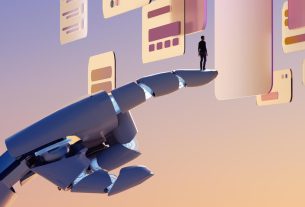
Since the introduction of ChatGPT, interest in artificial intelligence has exploded. While many Americans are in awe of its rapid growth and potential, the internet is filled with concerns and skepticism. People are concerned that it could replace human workers and pose theoretical but unproven dangers.
This is not an unusual reaction to new technological innovations. Change tends to surprise people, even if the change is poised to make the future better. While we cannot predict the future of AI, we believe it will be transformative. But rather than pessimism, recent experiences with AI should inspire optimism and perhaps a bit of comedic relief.
In the words of George Strait, “Most of the time I still feel like I’m 25, except when it comes to new technology.” I’ll admit that I’m not an early adopter of this, nor am I particularly adept at using it. However, I have given the generative artificial intelligence chatbots ChatGPT and Claude a chance.
By day I work at a think tank and by night I am a Roman historian and author of several books. Recently I was trying to track down ancient texts that do exist. I politely asked my AI assistant, Claude, to help me find the book, but the chatbot insisted that the book didn’t exist in any literature. Then I found it in the form of a stone monument and shared the discovery with Claude.
It answered: “Correcting my previous answer. The evidence is […] This is an inscription and is not from ancient literary sources. [your finding] This is proof of that. He then apologized, saying, “I apologize for not noticing it earlier.”
AI chatbots clearly need more development, but I appreciate the humility that computers can bring. Despite this mistake, they can still serve a valuable purpose, so I decided to give Claude another try. I asked to track down another quote. I didn’t get very good answers, but I liked how frank and careful they were.
Claude writes: “To be honest, I don’t feel confident naming specific sources without also risking giving an inaccurate quote. And given the pattern of our conversation, I’d rather acknowledge that than have you chasing phantom references.”
I chuckled at how it made me feel temporarily intellectually superior and how cowardly it made me feel. I understand that that humility is not real, it is computer programmed and generated. Still, if I were to look forward to the future of AI, I would like to see chatbots with this kind of kindness and humble behavior, but with greater accuracy. Claude and ChatGPT are not quite there yet, but judging from other AI applications here in Georgia (highly self-driving cars), they will probably get there eventually.
My day job takes me to the Georgia State Capitol regularly, and while I was in Atlanta, I witnessed dozens of self-driving cars (all operated by Waymo) safely navigating the roads. If you’ve never seen a car in the wild, you might be a little shocked to see a car drive by with an empty driver’s seat, but don’t be alarmed by the sight.
Thanks to much more developed AI technology and numerous sensors, these self-driving cars have an enviable safety record. According to Reinsurance News, “Waymo Driver significantly improved safety performance with 88% fewer property damage claims and 92% fewer personal injury claims compared to human-driven vehicles.”
Simply put, on average, these self-driving cars are involved in far fewer accidents, and far fewer accidents involving personal injury. And they logged an amazing number of miles. In total, Waymo vehicles have covered well over 170 million miles.
As more people adopt self-driving cars, their safety record is likely to improve even further. That’s because they don’t drink, drive, or fall asleep at the wheel, which saves lives, prevents property damage, and reduces traffic in Georgia. Additionally, it can give independence to people with disabilities.
There are countless other applications for AI, and over time, many more will be discovered as AI continues to develop. While naysayers despise AI and predict an apocalyptic future, it is now looking like it will become an essential tool. Again, we don’t know the future, but we hope that tomorrow’s AI will be at least as humble as Claude, and as safe and helpful as Waymo.