
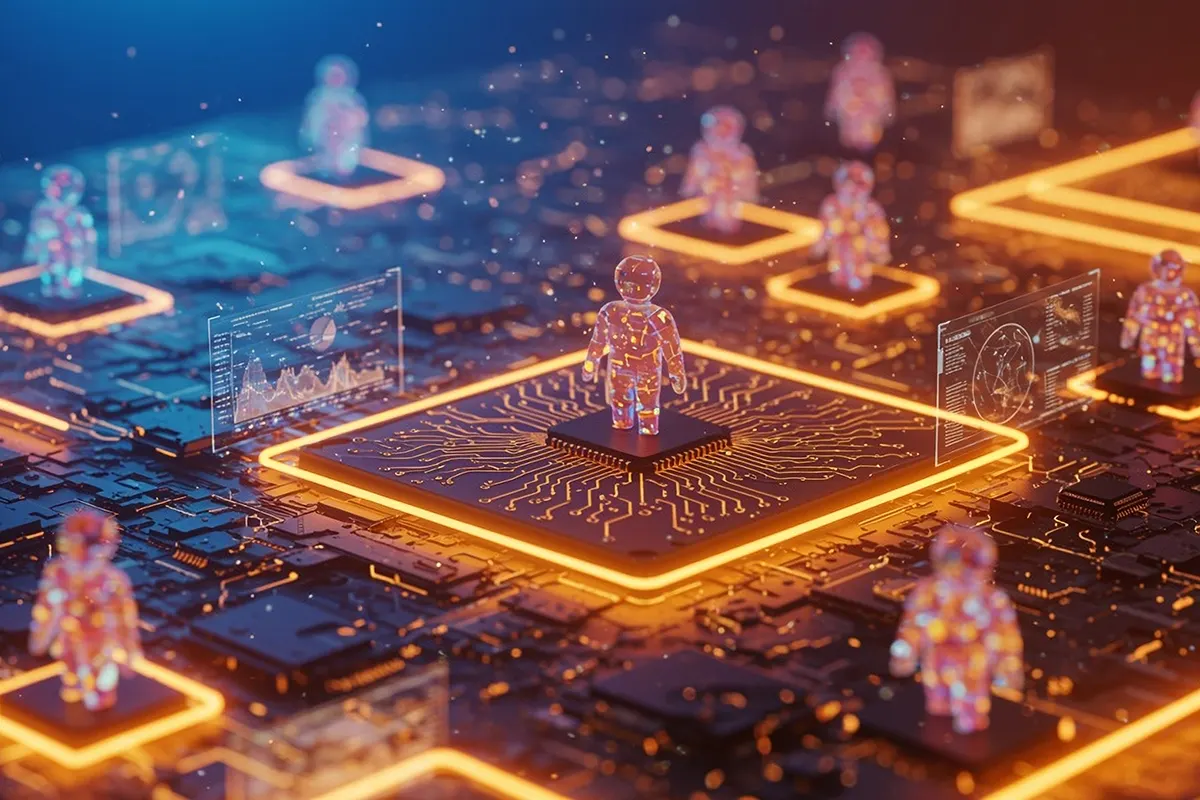
The advent of agents introduces a new paradigm where humans act as supervisors and AI autonomously makes most decisions based on defined goals.
Artificial intelligence is reshaping the relationship between humans and machines. Over the years, this relationship has been clearly defined. Machines do mechanical things, humans think and make decisions.
However, in recent years, algorithms and data have provided the tools to delegate decision-making tasks to machines. Recent developments in agent AI will only accelerate that divide.
An AI agent is a software system that uses artificial intelligence to make autonomous decisions and perform actions to achieve a set of objectives.

Agenttic AI will reshape retail, with 52 percent of Millennials and 25 percent of Gen Z planning to start shopping with AI assistants
Gartner predicts that by 2028, 33% of business software will include agent AI. The analyst firm says this will enable autonomous decision-making in 15% of daily tasks.
This new technology promises to revolutionize productivity by automating mundane tasks and providing intelligent insights. Streamlining operations and enhancing decision-making lays the foundation for an efficient, knowledge-driven economy.
Indeed, it could become a pillar of ambitious economic reforms such as the Saudi Vision 2030 and the UAE Artificial Intelligence Strategy 2031.
But even with all this talk, questions remain about how humans and AI agents can work together. Before you start realizing the benefits, it’s important to understand some of the dynamics of existing collaboration between humans and AI.
Evolution of human-AI collaboration
As our knowledge deepens and AI models become more capable, the relationship between humans and AI will evolve.
Common collaborations revolve around AI delivering results following human guidance. This is especially seen in customer support, where AI tools analyze data and generate personalized recommendations and solutions for customers.
The tech support paradigm is shifting towards increasingly intelligent and predictive AI capabilities that can self-heal technical issues. The advent of agents introduces a new paradigm where humans act as supervisors and AI autonomously makes most decisions based on defined goals.
One example is supply chain management. AI systems handle inventory tracking, forecasting, and adjustments while humans focus on strategic planning.
Building trust in human-AI collaboration
Opportunities for collaboration are exciting, but success depends on trust. To increase trust, companies need to be transparent about their AI processes and provide explanations about how the AI reaches its conclusions.
Transparency allows humans to have more trust in AI systems and their ability to achieve defined goals. Equally important is clearly delineating the roles and responsibilities of humans and AI in the ecosystem.
When individuals understand how AI complements their work, it creates a sense of stability and purpose. This clarity paves the way for efficient and responsible human-AI partnerships.
AI powers industries like sales, marketing, and engineering by streamlining tasks like customer insights and design optimization, freeing humans to focus on strategic roles.
Successful human-AI collaboration relies on transparency and clearly defined expectations to deliver transformative outcomes.
Human role as orchestrator
Despite AI’s technological capabilities, humans are at the heart of realizing its potential. As agent AI rises, so does the need for humans to move from being performers to orchestrators, setting goals and defining objectives for AI systems.
For example, with agent AI, humans define desired goals, provide nuanced insights, and make strategic adjustments based on the results generated by the AI.
These actions require judgment and expertise that cannot be achieved with software alone. As your workforce undergoes this transformation, your modern, flexible infrastructure must also keep pace.
Now is the time for companies to consider agent AI and its impact on their IT architectures, enabling human-machine partnerships to reach their full potential.
Unleash the power of human-AI synergy
We believe that when human ingenuity meets technology, extraordinary benefits can result. By integrating agent AI into workflows, individuals and organizations can achieve higher levels of productivity and creativity.
PwC predicts that the adoption of AI could boost the Middle East’s GDP by an additional 8.3% by 2035, primarily through productivity gains.
Creative professionals are already leveraging AI to bring their visions to life faster. Businesses are using intelligent systems to deliver better and more intuitive customer experiences. These advances remind us that the true potential of AI lies in expanding human capabilities.
By investing in human-AI partnerships, both in terms of technology and skills, companies can position themselves as leaders in innovation and adaptability. Join us in shaping a future where technology and humanity open up new opportunities.

Mohammed Amin is the Senior Vice President of CEEMETA at Dell Technologies.


