

The so-called hyperscaler revolution is reaching an unprecedented scale. Tech companies are betting hundreds of billions of dollars on artificial intelligence, but until recently that investment has only yielded astronomical and finite returns. The sector needs more data centers and is turning to the bond market to finance them, raising investor concerns and starting to dampen the market’s previous enthusiasm for the technology.
At the center of these allegations is Oracle, which has the most debt of any major company and whose future rests on its contract with OpenAI. The company’s stock price is down 33% from its September high. The company’s debt has also taken a hit, trading below par, while credit default swaps on its corporate bonds, a measure of financial risk, have risen to levels not seen in the past three years, trailing levels of other companies with high exposure to AI and weak credit histories.
The market is anticipating debt overhang and is increasing its vigilance. Financing an investment with debt is very different from paying for it out of millions of dollars in profits. JPMorgan estimates that building a global infrastructure of data centers and AI and the necessary energy supplies will cost more than $5 trillion by 2030. Only $1.5 trillion of that comes from corporate organic cash flow. For the rest, big tech companies will need to turn to capital markets. “This will be an unusual and sustained capital markets event,” the bank concluded.
The bank estimates that over the next five years, big tech companies exposed to AI (Alphabet, Amazon, Microsoft, Meta, Oracle) will need to issue $1.5 trillion in corporate bonds, with $300 billion expected in 2026 alone, more than half of what the U.S. Treasury will issue. “If things play out as we predict, the AI/data center sector could account for more than 20% of the market by 2030,” the report said.
So far, between September and October alone, tech giants have raised $75 billion in investment-grade corporate debt, and are expected to end the year with more than $200 billion in debt issuance, both through private placements (to less transparent venture capital funds) and the public markets. All of this is aimed at raising $380 billion in investments to build AI-related infrastructure.
So far, Oracle and Meta have shown the greatest ability to fund AI strategies, followed by Alphabet (despite Google’s parent company sitting on $100 billion in cash). Alphabet began operations in May with an $11 billion issuance, and Oracle followed with a $15 billion issuance in record demand in September. In October, Meta raised $30 billion in bonds and another $27 billion in private market deals to fund a data center in the US state of Louisiana. This was done through special purpose vehicles (SPVs), which allowed companies to raise funds for specific projects without taking debt on the balance sheet.
The surge has prompted UBS to express “concerns about concentration risk” as issuance is concentrated in a small number of companies, including Meta, Oracle, Alphabet, Broadcom and Dell. Spreads on some of these bonds are already widening. In response, banks are introducing a variety of exotic financial products, including data center-backed mortgage bonds and asset-backed securities (ABS). Bank of America estimates that the data center securitization market could reach $110 billion next year.
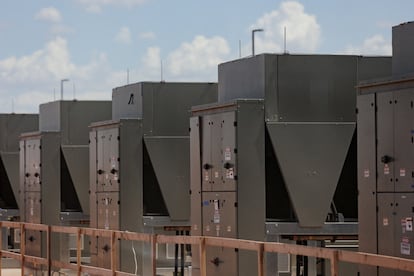
Increased investment and doubts about profitability
Meta founder Mark Zuckerberg has revealed that the company plans to invest approximately $600 billion in AI-related infrastructure in the US alone. It plans to spend $71 billion in 2025 alone, and expects this number to nearly double by 2027. For now, there is some leeway. It expects debt to increase 14 times (from $4 billion to $59 billion) over this period. But this comes at the cost of its share buyback program, which will drop from $35 billion to $5 billion and free cash flow by more than half.
In just a few quarters, Oracle’s AI bet with OpenAI has made it the most indebted investment-grade technology company and the only one with negative cash flow. JPMorgan says its debt maturities are manageable, but warns of rising interest rates and large future investment commitments.
Earnings pressure increases risk. By 2028, one-third of our revenue will come from a single client: OpenAI. This scenario led Barclays to predict that the rating agency could downgrade Oracle to BBB- (already on a negative outlook), just above junk status, and that the company may have to turn to less transparent and more expensive private debt markets. British banks are even recommending the purchase of Oracle’s credit default swaps (CDS), a signal that is already boosting the company’s CDS. Bondholders have recorded losses of up to 7% in just over six weeks.
While this instability has affected other tech companies exposed to AI but with weaker credit histories, the big hyperscalers remain unaffected and remain stranded. Shares in Coreweave, which is backed by Nvidia and has a key contract with Meta, fell 30% in a week, while its five-year corporate bond CDS rose 13% in the same period.
JPMorgan also has doubts about whether these huge investments will generate any real returns. To achieve a 10% return on all required investments over the next five years, large technology companies would need to generate $650 billion in annual revenue in perpetuity, according to the report. “A huge amount,” the report said. This equates to $180 per month from all Netflix subscribers, or $34.72 per month from all current iPhone owners. “Even if everything goes well, there will still be spectacular winners, and there will probably be equally spectacular losers,” he added.
Adding to concerns about profitability is the potential systemic impact AI will have on the market. The Bank of England recently noted that the sector’s systemic impact has so far been limited (mainly concentrated in stock market gains) and that the high financing needs of these companies could impact both debt and commodity markets, particularly copper, which is consumed in large quantities in data centers and AI infrastructure.
register to our weekly newsletter Get more news coverage in English from EL PAÍS USA Edition


