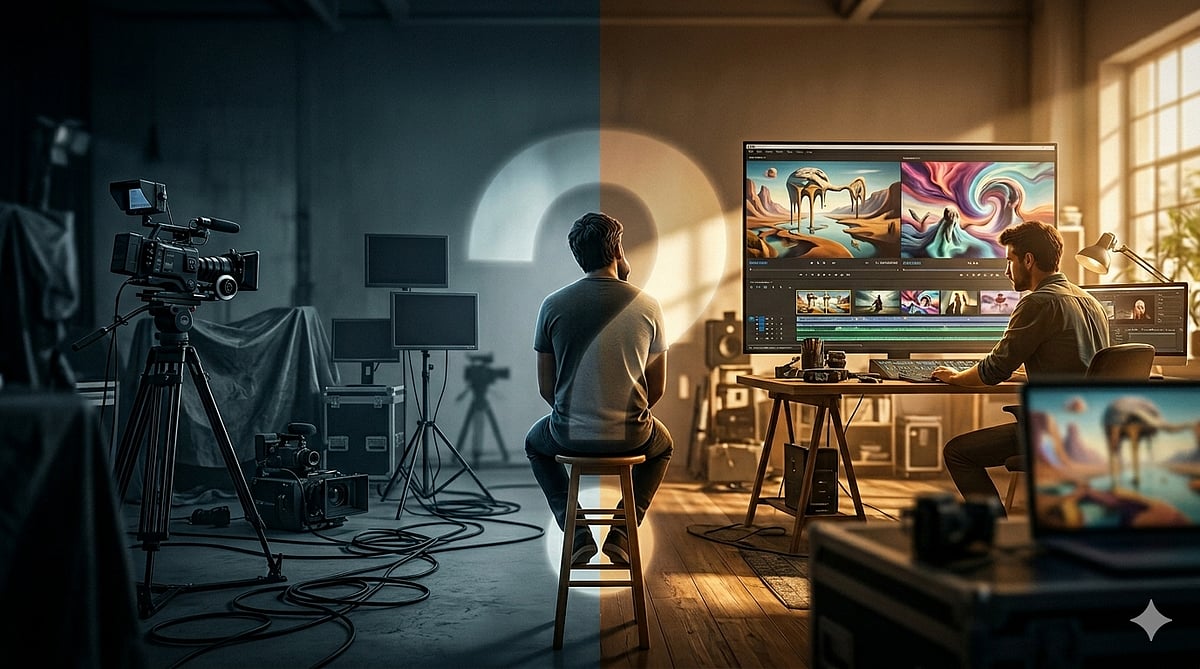
Google describes Flow as an AI creative studio built on its generative models designed to turn text prompts and reference images into cinematic clips, scenes, and stories. The company said it is working with creators around the world to test how these tools can be used across formats such as music videos and branded content.
Both things are simultaneously true. That’s why this moment is so noteworthy.
This technology works, at least in part. The business surrounding it is still unknown.
Sora’s shutdown has not been branded a failure. It is positioned as a shift in focus. But it’s not hard to read why. Video generation is expensive to perform. Unpredictable in scale. We’re in the middle of a battle over copyright and deepfakes.
None of these problems are easily resolved.
Google is being more careful about how it represents Flow. The idea that anyone can input a line and get a perfect film is not for sale. Pitch is more delicate. This is the tool you use to work with. Generate, adjust, and start over. It’s more like editing than magic.
Creators involved in early projects also reflect that learning curve. Vouditya, the filmmaker who produced Talwinder’s video, explained that the process is iterative and requires specific input regarding the camera, lens, and lighting to produce usable results. Talwinder also pointed out that the system allows for visuals that are difficult to produce on a typical budget, but requires time and direction.
It lowers expectations. It also makes it easier to place the product within existing creative workflows.
But if you take a step back, both companies have the same problem.
Videos like Talwinder usually require a film crew. Camera, lighting, sets and post production. It pays people, so everything costs money.
Using AI eliminates a significant portion of that cost. More precisely, it moves. From people to platforms.
That change is already starting to appear. The United Nations Conference on Trade and Development has pointed to job losses in some parts of the entertainment industry related to the introduction of AI. Industry estimates predict that the market for AI-generated content will grow rapidly in the coming years. The same estimates also mention the loss of income for creators.
Both trends can exist simultaneously.
There’s another layer to this that no company answers directly.
These systems are trained on existing movies, images, and art. A work created by people over decades. Legal questions about who owns what and who gets paid are still unresolved. The case is progressing through the courts. There are no clear results yet.
That’s why it’s too early to call this a completely subversive story.
Talwinder’s video shows what can be done when the tools work well. It also shows how AI is starting to enter mainstream creative workflows, especially for artists balancing scale and cost. Meanwhile, Sora’s closure shows what happens when a model no longer works as a product.
When you combine these, the picture becomes less dramatic and more uncertain.
AI video is not the future yet. This is a space being tested publicly by companies who are still figuring out how to make it work.