Image by author
The Pathways Language Model (PaLM) has been updated with enhanced multilingual, reasoning, and coding capabilities. This new model not only improves inference and coding, but also its ability to understand and generate text in multiple languages.
PaLM 2 was trained on a large dataset of text and code in over 100 languages. To improve reasoning ability, developers incorporated scientific papers and web pages containing mathematical formulas. PaLM 2 is also pre-trained on publicly available source code in various programming languages. As a result, it is the next-generation language model of choice that powers various Google services.
According to Google Keynote (Google I/O ’23), Bard is currently running on the PaLM 2 model. Much better at coding, reasoning, and creative writing problems than LaMDA.
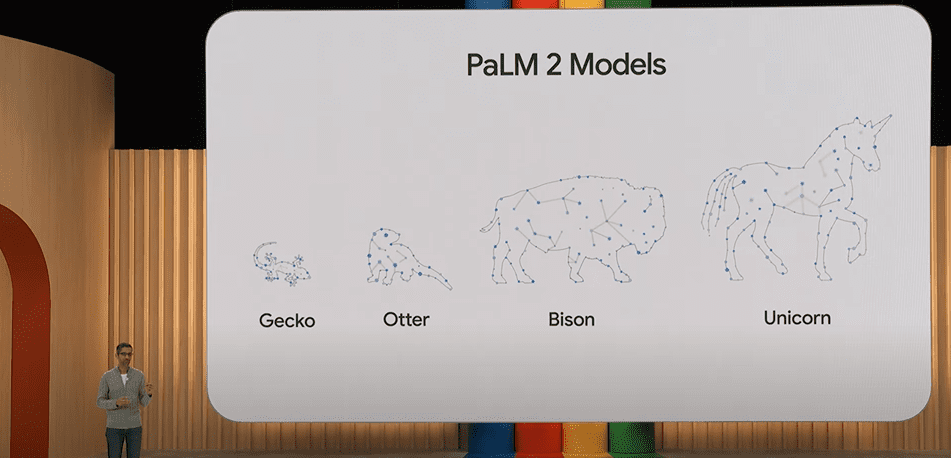
Image from Google Keynote (Google I/O ’23)
I used the old Bard (LaMDA) for 30 days and the new Bard (PaLM 2) for 7 days. I’ve seen a dramatic change in the way Bard handles coding problems. Bard isn’t perfect, but I think Google is on the right track.
For example, when I asked Bard to create a snake game using Pygame, the old Bard was able to create the game, but with some bugs and less functionality. The new bard was able to create a working snake game with all the expected features.
I still see some bugs in the new Bard, but overall I’m impressed with Google’s progress.
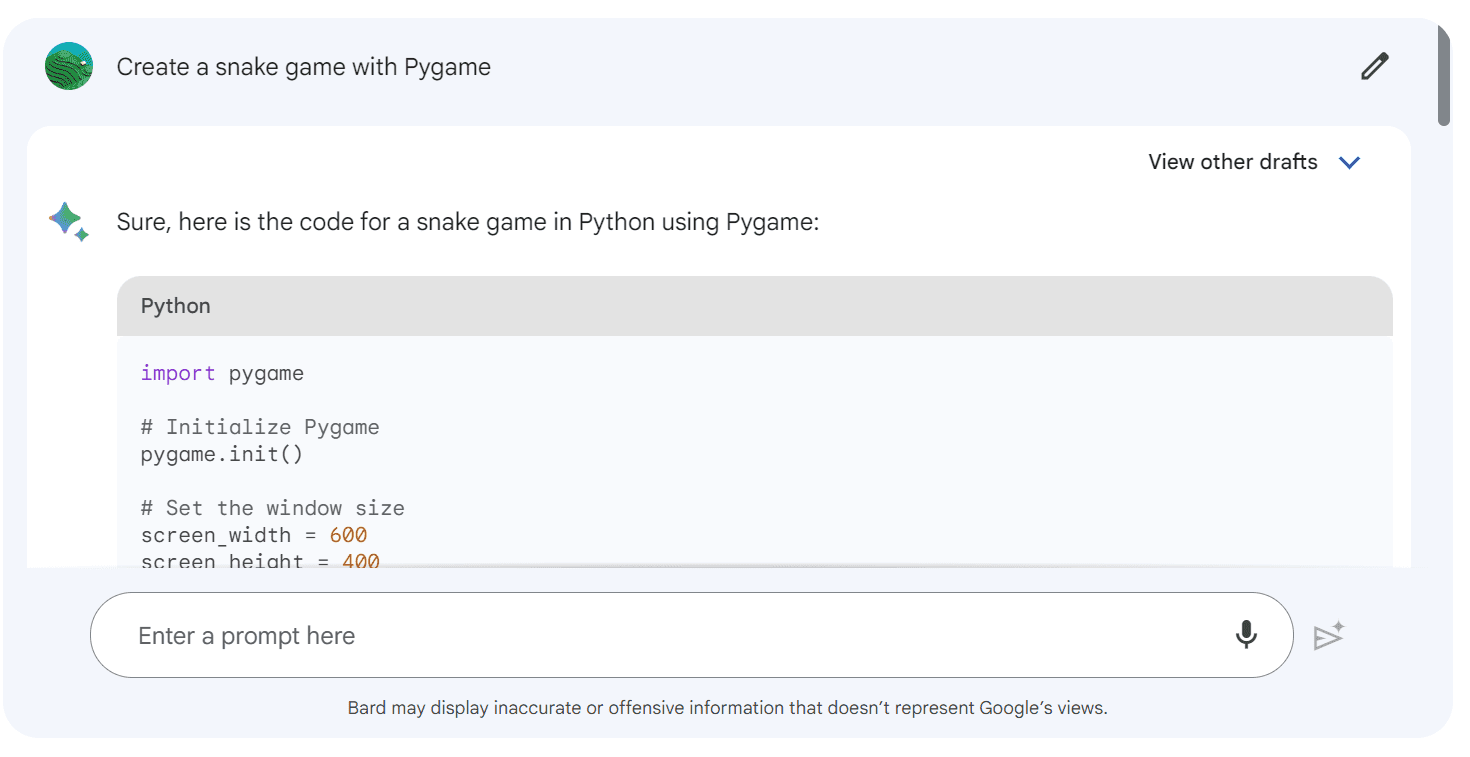
Image from Bard
We asked both ChatGPT and HuggingChat to generate code that solves a similar problem. ChatGPT generated bug-free code with extra functionality, but HuggingChat generated code with some errors, missing libraries, and security vulnerabilities.
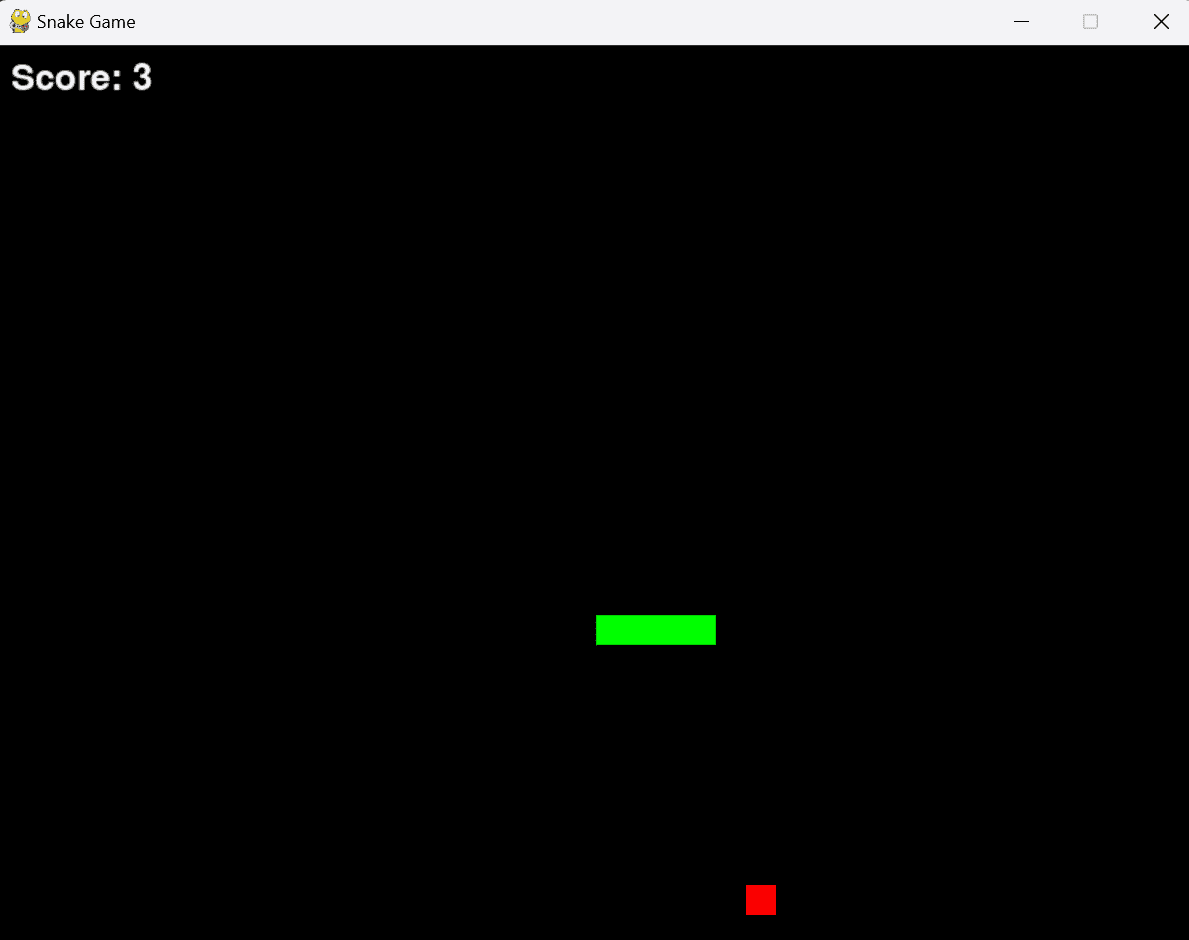
Image by author | Using ChatGPT
How is Bard different from ChatGPT?
Each time you create a prompt, you’ll be presented with three drafts to choose from. Fast results and integrated with Google services.
To access your drafts, you need to click “Show other drafts”.
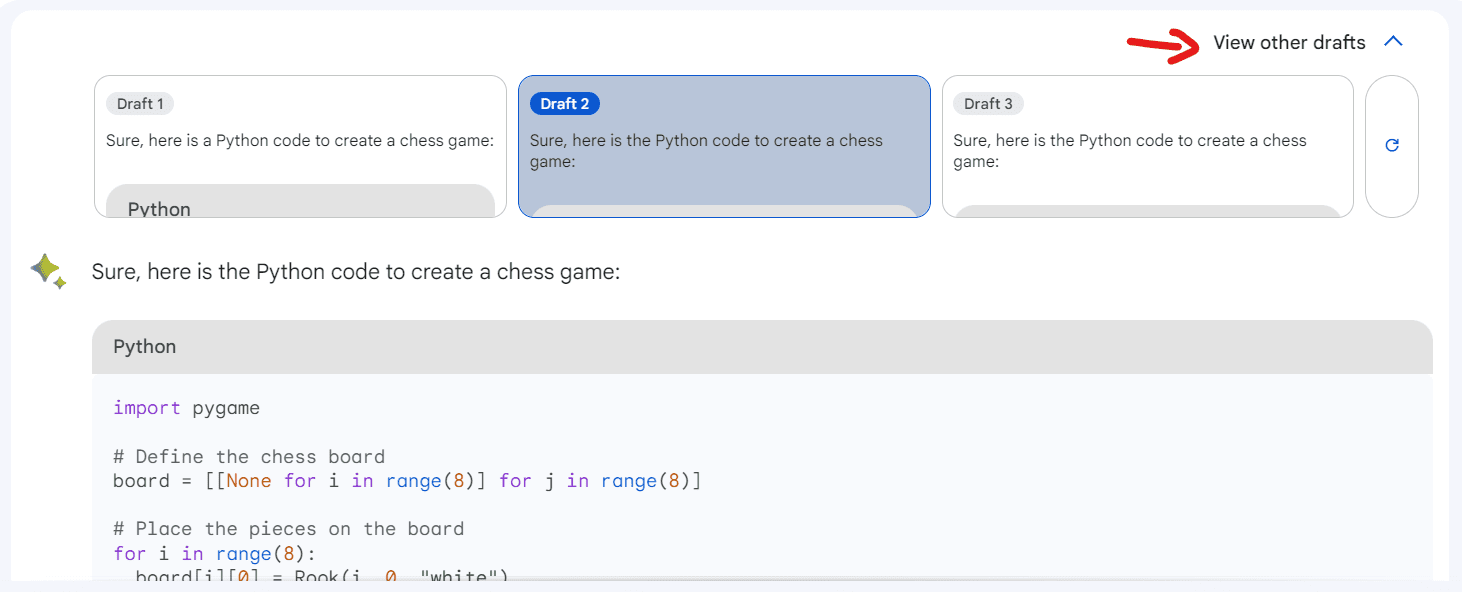
Image from Bard
Click the up arrow on the bottom left to access the Google integration. code response. You will see an option to run the code on Google Colab.
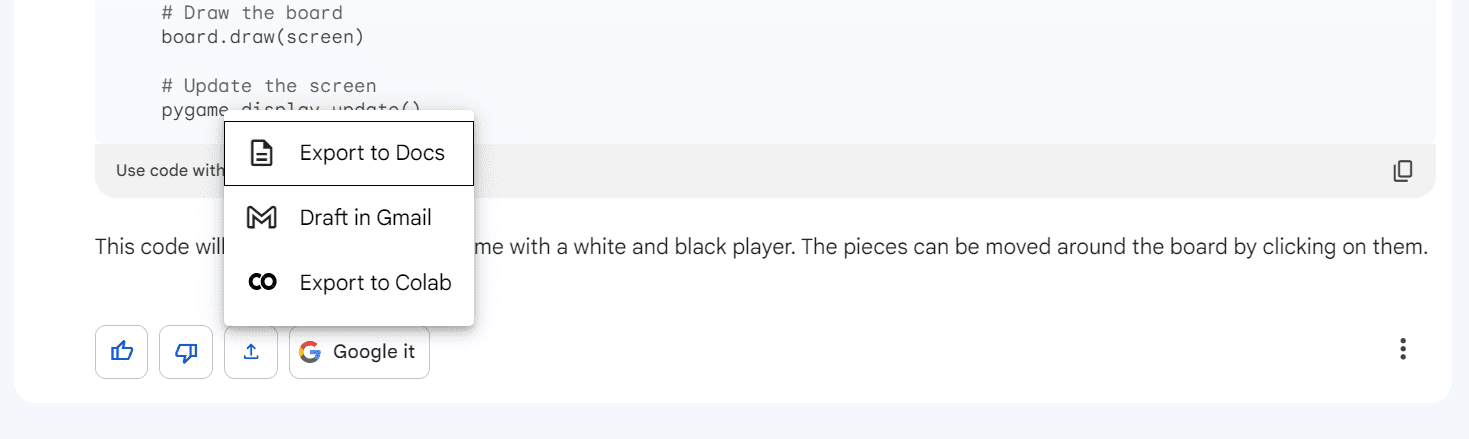
Image from Bard
I have used Bard for all kinds of data science work, from understanding projects to creating high quality data reports. I believe Bard is the best large-scale language model available for the following reasons:
- Grammar and Writing: Bard is good at coming up with realistic texts that can be used to improve grammar and improve overall writing. It outperforms ChatGPT, which can be overly dramatic in this respect.
- Machine learning research: Bard specializes in researching machine learning topics. We can provide accurate information on a wide range of topics, including the latest research.
- translation: Bards are good at translation. You can translate between various languages, such as Python code to JavaScript, English to Japanese, and more.
- Brainstorming, project planning, and understanding context: Bard is great at brainstorming, project planning, and understanding context. Evaluate chat history to provide appropriate responses instead of random responses.
- DALL-E 2, Mid-Journey, Generating Stable Diffusion Prompts: Bard is good at generating DALL-E 2, Midjourney and Stable Diffusion prompts. It helps you create realistic images and art from text descriptions.
- Provide links to external sources: Bard is great at providing links to external sources. This is useful if you want to learn more about a topic or want to see an example of what Bard produced.

Image from Bard
“I use Bard for everything except code generation.”
Now, let’s talk about super bards who can do anything. Next month, Google announced third-party integrations with his Google services. This means you can prompt in Bard and move the final response to Google Docs, Colab, email, or any third-party software you use at work.
So far, we know that we can use Bard to run a survey, convert it to a table, modify the table, and export the responses to Google Sheets. Additionally, you can manipulate images using the Google Lens service. For example, “Could you elaborate on the image?” is similar to GPT-4.
But better than GPT-4.
In the future, it will be possible to generate images directly from the bard using Adobe Firefly. Automate most tasks by simply entering prompts.
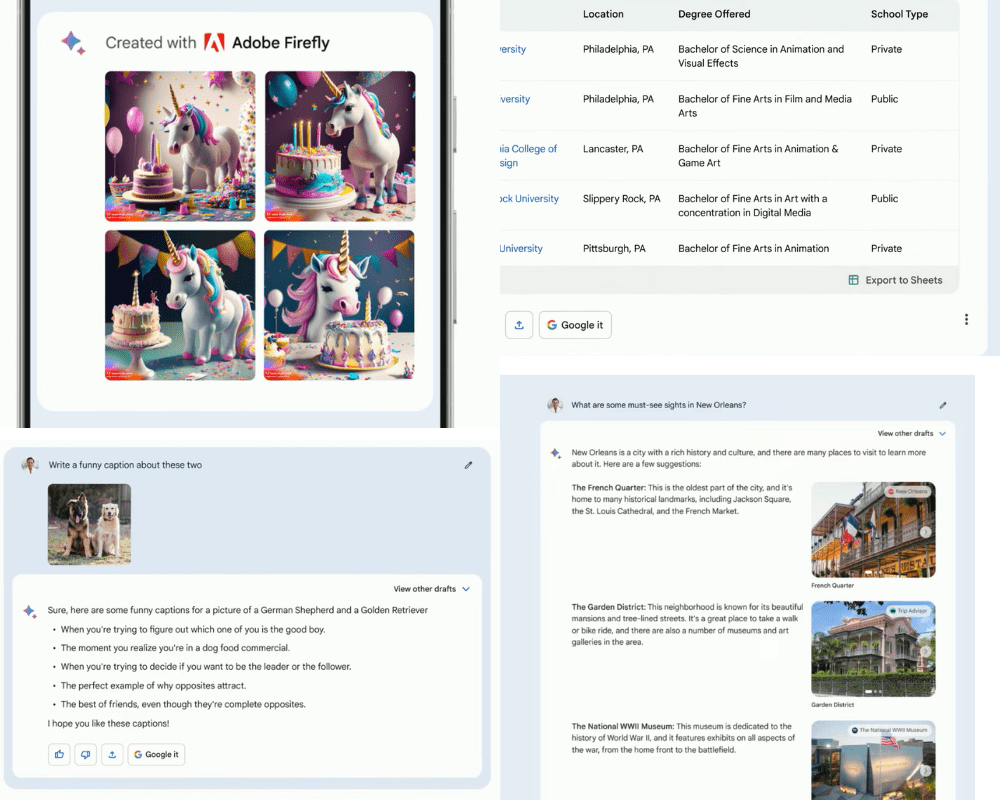
Image by author from Google I/O ’23
In conclusion, I think Bard has the potential to be a one stop solution for all your work related tasks. The team is constantly working on improving the model and adding new features, putting it on the right track to overtake GPT-4. However, there are still some areas where Bard could be improved, such as its ability to handle code-related issues and its integration with Google Search. We believe that if Bard can address these issues, it will be a truly revolutionary tool that will change the way we work.
Abid Ali Awan (@1abidaliawan) is a certified data scientist professional who loves building machine learning models. She now focuses on content creation and writes technical blogs on machine learning and data science techniques. Avid holds a Master’s degree in Technology Management and a Bachelor’s degree in Telecommunications Engineering. His vision is to use graph his neural networks to build his AI product for students suffering from mental illness.