
Smart people: IBM’s AI warning sparks new apocalyptic fears

AI For Business


IBM stock fell more than 25% by market close on Tuesday after the company said it misread the AI ​​spending boom.

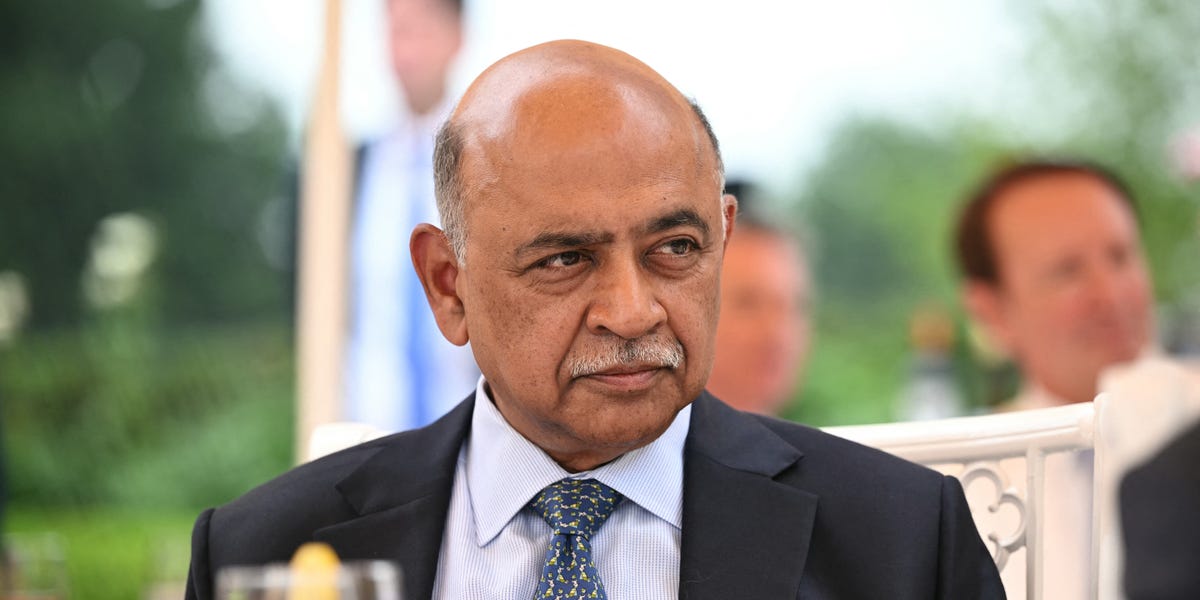
On Tuesday, eight days before the scheduled earnings release, Chief Executive Officer Arvind Krishna released a letter to shareholders detailing quarterly “underperformance,” including lower-than-expected revenue.

“While our forecasts anticipated some supply chain-related impacts, we did not anticipate the magnitude of the change in capital investment priorities,” he said. “Additionally, customers were distracted during the quarter by rapidly evolving industry-wide cybersecurity concerns.”

The warning quickly reignited talk about SaaSpocalypse, or concerns that AI could erode the value of some traditional software companies. Investors have been concerned for months that companies will need fewer software subscriptions as AI agents automate and build custom tools.

IBM is not a pure software-as-a-service company, and Krishna isn’t saying that AI has made its products obsolete. Instead, he said, customers are redirecting their spending to increasingly expensive servers, storage and memory, reducing the amount of money available for some of IBM’s software and consulting services.

The shortage continues to worry industry heavyweights. As companies pour money into the infrastructure needed to power AI, investors are increasingly questioning how much of that spending will ultimately flow to existing software providers.

Here’s what smart voices in the business and technology worlds are saying about early announcements.

Chamath Palihapitiya — 8090 and Social Capital CEO


Chamath Palihapitiya.

Chamath Palihapitiya.

JC Olivera/Variety (via Getty Images)

Chamath Palihapitiya said IBM’s stumble reflects a larger problem facing the AI ​​industry. Companies that sell intelligence make huge profits, but it’s unclear whether customers will be able to turn those costs into profits for themselves.

“The downstream ecosystem has to benefit as well,” Palihapitiya said on CNBC on Tuesday when asked about Krishna’s letter. “And the ultimate purchasers of these tokens should also benefit.”

Rather than blaming IBM for its problems with its pivot to AI and cloud computing, he praised Mr. Krishna for repositioning the company.

Palihapitiya was less receptive to IBM’s suggestion that rapidly evolving cybersecurity concerns distracted some customers during the quarter.

He said AI companies and their investors have repeatedly oscillated between extremes, describing the technology as an all-powerful breakthrough when raising capital and warning it poses an existential threat when seeking regulation.

Jacob Bourne — EMARKETER Analyst

Bourne told Business Insider in an email that IBM is facing a “triple whammy.”

He said enhanced AI is directing business spending toward hardware rather than software and services. At the same time, investors are punishing traditional companies that appear to be falling behind. Finally, AI-native challengers such as Anthropic are putting further pressure on traditional software business models.

“We expect to see more quarters like this one, but I think this is a story of disruption and not necessarily a story of extinction for legacy software companies,” he said. “Spending patterns will shift from their current focus, and vendors who adapt their products to the changing market will remain competitive.”

EMarketer is a sister company of Business Insider.

Sonali Basak — Chief Investment Strategist at iCapital


Sonali Basak headshot

Sonali Basak of iCapital

Business Wire/AP

Bassak, a strategist at iCapital and a former Bloomberg TV anchor, said in a post on X that there have been “brutal results” for IBM and that investors should pay attention to how long IBM customers will put their capital elsewhere.

“While we directly acknowledge that customers have shifted their AI capital spending to core infrastructure, the question is how long that ‘reprioritization’ will last,” Basak wrote on Tuesday.

Nicholas Mugali — CEO, World Trade Securities

Mugali wrote to X that he believes IBM will be the first big casualty of the broader changes in corporate spending.

He argued that IBM’s failure showed the limits of corporate budgets. As hardware became scarcer and more expensive, executives began prioritizing servers, storage, and memory over potentially delayed software deals.

“This is the expected arrival of SaaS, not cancellation, but deprioritization,” Mugali wrote.

Mugali predicted that IBM would not be the last enterprise software company to feel such pressure, citing Palantir and ServiceNow in particular.

Dan Niles — Founder of Niles Investment Management

Niles wrote to X that IBM’s warning is an example of the AI ​​”speed bump” he expected.

He also said customers shifted spending toward AI in the second half of the quarter, making inroads into IBM’s mainframe and related software business. He said much of that revenue should be recurring, making the shortfall even more concerning.

“Given that software is a backend-heavy business, I doubt this will be the last casualty,” he wrote.

Amit Daryanani, Evercore ISI Analyst

Evercore ISI analysts led by Daryanani said in a note Tuesday that IBM’s disappointing quarter was largely due to weaker-than-expected sales of mainframes and related software, rather than broader weakness.

He added that while customers are shifting IT spending to servers, storage and memory due to supply constraints and cybersecurity concerns, other companies, including Red Hat, are remaining resilient.