Recruitment serverless inference This enables modern enterprises to seamlessly deploy machine learning models without having to worry about managing the underlying infrastructure. Businesses are leveraging a robust ecosystem to improve operational efficiency, including: FPT AI Factory Ensure that your computing resources dynamically scale to meet your exact needs. Explore today how you can optimize your workloads with this advanced platform.
1. What is serverless inference?
serverless inference is a modern cloud computing execution model designed specifically for deploying artificial intelligence and machine learning models. Instead of provisioning and maintaining dedicated servers, developers simply upload their trained models to a cloud platform. This approach allows engineering teams to fully focus on improving the application without worrying about hardware provisioning.
The provider automatically handles the computing resources required to process incoming requests and scales seamlessly from zero to millions of operations. By eliminating the need for manual server configuration, organizations can reduce time to market for intelligent applications. This allows even the most complex AI deployments to be agile and responsive to changing business needs.
When you use serverless inference, instead of paying for idle server time, you pay only for the exact compute time consumed while processing a request. This on-demand availability ensures that sudden spikes in user traffic are handled smoothly without system crashes or latency issues. Ultimately, it transforms complex operational tasks into highly streamlined and automated processes.
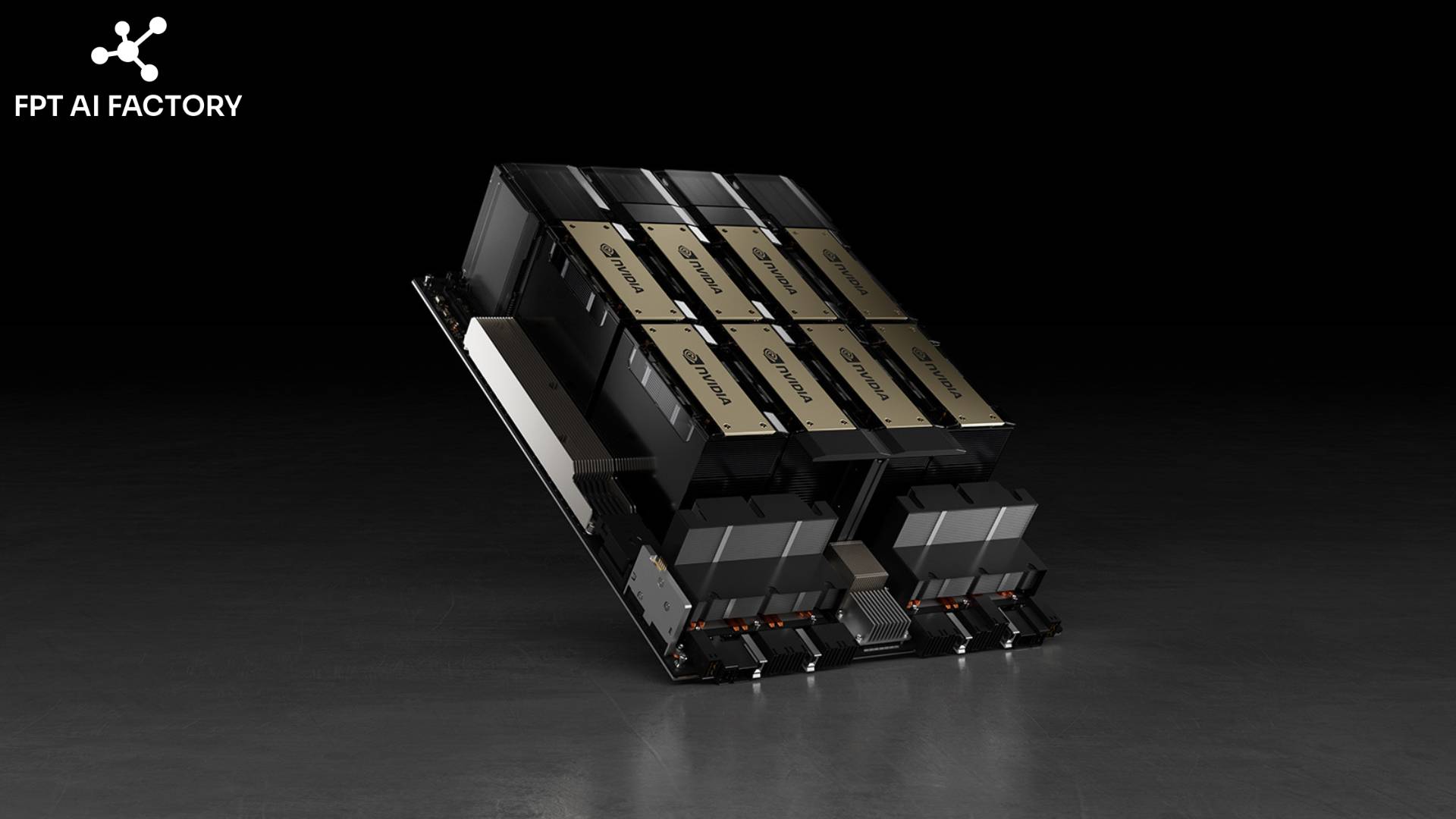 Serverless inference allows developers to deploy AI models without managing servers, enabling automatic scaling and pay-as-you-go efficiency.
2. Why traditional AI infrastructure is not enough
Traditionally, deploying machine learning models has required organizations to maintain dedicated physical servers or long-running virtual instances. However, this traditional approach often creates significant resource inefficiencies and operational bottlenecks for modern enterprises.
- Resource inefficiency: AI workloads typically have highly variable traffic, resulting in expensive hardware remaining idle during off-peak hours, even though enterprises pay full maintenance costs.
- Limited financial flexibility: Maintaining a static infrastructure wastes IT budgets because organizations are forced to pay for peak capacity regardless of actual usage.
- Scaling difficulty: Traditional setups have difficulty adapting to unexpected spikes in demand, often requiring manual intervention and causing temporary outages during traffic spikes.
- Operational burden: Engineering teams need to focus on ongoing capacity planning, security patching, and hardware maintenance rather than core development.
- Lack of agility: These rigid frameworks do not have the capabilities to match the rapid pace and flexibility required in today’s AI-driven business environment.
 Traditional AI infrastructure often wastes resources, limits scalability, and creates operational overhead. (Source: Freepik)
3. Why enterprises should adopt serverless AI
The move to serverless inference is primarily driven by the ability to orchestrate technical performance and business efficiency. By separating model execution from hardware management, organizations can achieve a level of operational agility previously unattainable.
- Unrivaled cost efficiency: Businesses are billed strictly based on compute duration and exact number of requests, completely avoiding financial penalties for over-provisioning hardware.
- True pay-as-you-go model: Zero application traffic means zero associated costs, making advanced AI technology accessible and affordable for businesses of all sizes.
- Accelerate your deployment lifecycle: Data science teams can push model updates instantly, avoiding complex infrastructure bottlenecks and the need to negotiate server space.
- Automatic dynamic scalability: The system scales resources in real time, so performance is consistent whether your application receives 10 or 10,000 requests per minute.
- Enhanced innovation: By removing operational hurdles, organizations can innovate faster and more effectively deliver responsive, intelligent capabilities to end users.
 Enterprises embrace serverless AI to reduce costs, automatically scale, and deploy AI models faster without managing infrastructure. (Source: Freepik)
4. Limitations to consider
Despite its benefits, deploying models via serverless inference faces challenges such as the “cold start” phenomenon. This occurs when the idle function is triggered and the system needs time to allocate resources, resulting in a short delay. Such delays may be unacceptable for real-time applications that require ultra-short response times. To maintain performance, teams should prioritize optimizing model size and streamlining initialization code.
Additionally, serverless architectures often impose strict limits on execution timeouts, payload size, and memory allocation. These boundaries can cause large underlying models and complex deep learning tasks to fail. Organizations should also consider potential vendor lock-in, as migrating proprietary configurations between cloud providers can be technically challenging. A balanced deployment strategy is essential to weigh these limitations against long-term operational benefits.
5. The need for a unified AI platform
Modern enterprises need a unified AI platform to replace isolated serverless functions. A single platform supports the entire machine learning lifecycle, from initial training to production deployment. By integrating a variety of compute options, teams can choose the exact environment that matches their workload requirements at any time. This holistic approach breaks down data silos and facilitates seamless collaboration between data scientists and engineers.
For example, teams can start with AI notebooks for analysis, move to GPU clusters for intensive training, and then deploy via serverless inference. Accessing resources such as GPU containers, GPU virtual machines, and metal clouds within FPT AI Factory greatly streamlines complex workflows. These flexible options allow you to intelligently scale your infrastructure while efficiently performing even the most demanding tasks.
6. Platforms like FPT AI Factory
platform like FPT AI Factory We help businesses manage complex machine learning workflows more effectively. This platform provides a highly optimized, integrated environment with simple deployment of serverless inference. It provides a comprehensive set of tools to manage your entire pipeline without complex infrastructure management. As a result, businesses can transform data into actionable insights faster and scale their operations with confidence.
Recruitment serverless inference Ensure long-term competitiveness in a rapidly evolving technology environment by enabling businesses to stay agile, reduce infrastructure overhead, and focus on innovation. An integrated ecosystem like FPT AI Factory Deliver the flexibility and computing power you need to efficiently deploy and scale AI applications. Contact our team today to discuss the right solution for your organization.
Starter Plan – Get $100 free to get started
- $100 credit for new users to explore FPT AI Factory for 30 days.
- GPU Containers for $10, GPU Virtual Machines for $10, AI Notebooks for $10, and AI Inference and AI Studio for $70.
- Your card is encrypted. A $1 verification fee will be added to your balance.
- Up to 5 million tokens for Llama-3.3 and 20+ models.
contact address:
- Hotline: 1900 638 399
- Email: [email protected]
- address:
- Tokyo: 33rd floor, Sumitomo Fudosan Tokyo Mita Garden Tower, 3-5-19 Mita, Minato-ku
- Hanoi: No. 10 Pham Van Bach, Dich Vong Ward, Cau Giay District
- Ho Chi Minh: PJICO Building, 186 Dien Bien Phu, Xuan Hoa Ward