A seminar on the application of blockchain and AI in the healthcare sector was held for over 400 students and lecturers at Pham Ngoc Thach University of Medicine.
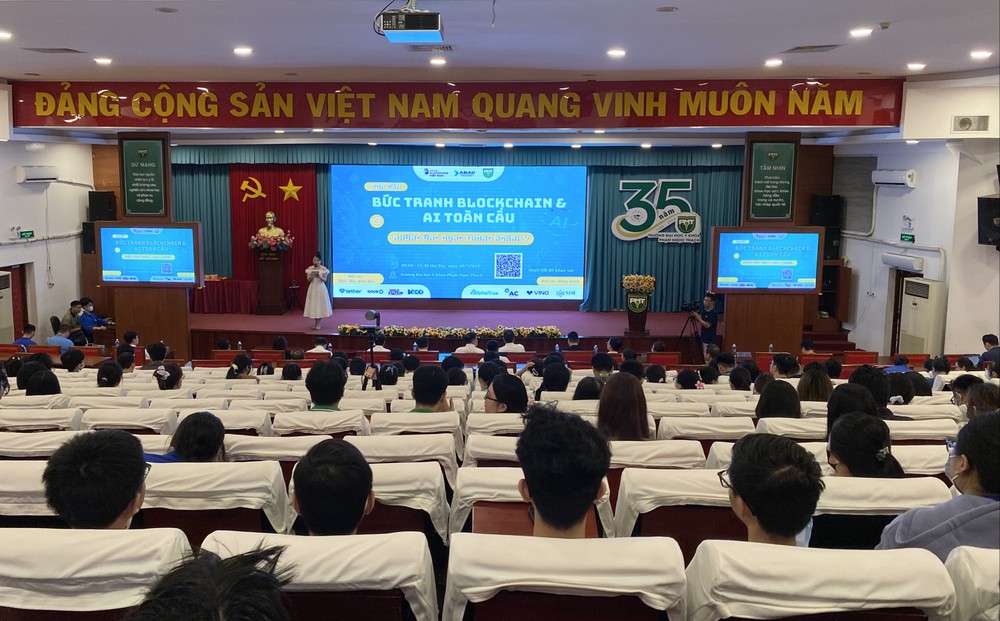
At the seminar
Vietnam Blockchain Association, ABAII Blockchain Technology and Artificial Intelligence Research Institute, in collaboration with Pham Ngoc Thach University of Medicine in Ho Chi Minh City, hosted a discussion on the theme of “Current Status of Global Blockchain and AI – Applications in the Medical Industry” for over 400 students and lecturers from Pham Ngoc Thach University of Medicine.
The application of blockchain and AI in the healthcare field is expected to be a breakthrough step in human healthcare. Currently, AI can assist doctors in diagnosing diseases, predicting health risks, supporting treatment, managing medical records, developing medicines, monitoring the medical supply chain, assisting patient care, and so on.
Additionally, the convergence of AI and advanced technology solutions is transforming community healthcare. The synergy between AI and biotechnology will enable a range of applications, accelerating drug development, reducing costs, and improving research outcomes.
According to Dao Trung Thanh, deputy director of the ABAII Institute, AI is revolutionizing many fields, including the economy, medicine, culture, and education. In the medical field, AI can reduce treatment costs by up to 50% and improve health check results by up to 40%.
Notably, a study conducted by the University of Hawaii found that the introduction of AI techniques significantly improved the accuracy of breast cancer risk prediction. AI algorithms trained on millions of medical images outperform radiologists. Moreover, medical facilities can reuse these algorithms at no additional cost beyond the hardware.
At the seminar, Associate Professor Tran Thi Canh Tuong, Head of the Department of Internal Medicine at Pham Ngoc Thach University of Medicine, shared her views on how AI and blockchain can positively impact the healthcare industry. These technologies can enhance disease diagnosis, manage medical records, control the origin of drugs and streamline distribution processes.
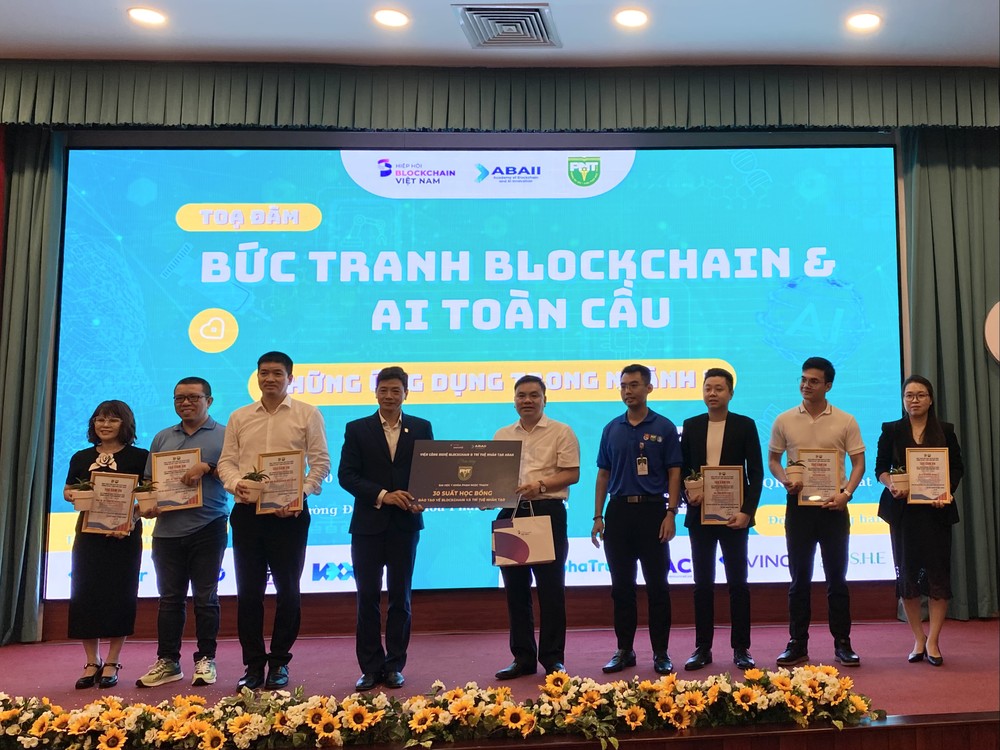
Scholarships awarded to students and faculty at Pham Ngoc Thach University of Medicine
The healthcare sector is therefore keenly interested in exploring these applications and is researching appropriate training programs to equip students with the knowledge and skills in this rapidly evolving technology field.
The seminar was the eighth event in the Unitour series, which aims to promote blockchain and AI in universities across the country. As part of this effort, the association awarded 30 scholarships to students and faculty from Pham Ngoc Thach University of Medicine. These scholarships cover training courses focusing on fundamental AI, blockchain and coding knowledge.
According to the Ministry of Health, the use of AI in healthcare is a global trend. Vietnam's healthcare sector is actively adopting AI technology to improve and enhance patient care activities. AI helps improve diagnostic capabilities, even in cases of complex and rare diseases.
However, it is important to keep in mind that AI cannot replace doctors. Instead, with its algorithms and data integration capabilities, the device can assist doctors in determining the right treatment options for each patient. Additionally, AI can also help manage health records and databases, monitor health, provide advice, and manage medicines.
Written by Bui Tuan – Translated by Dang Thuy