
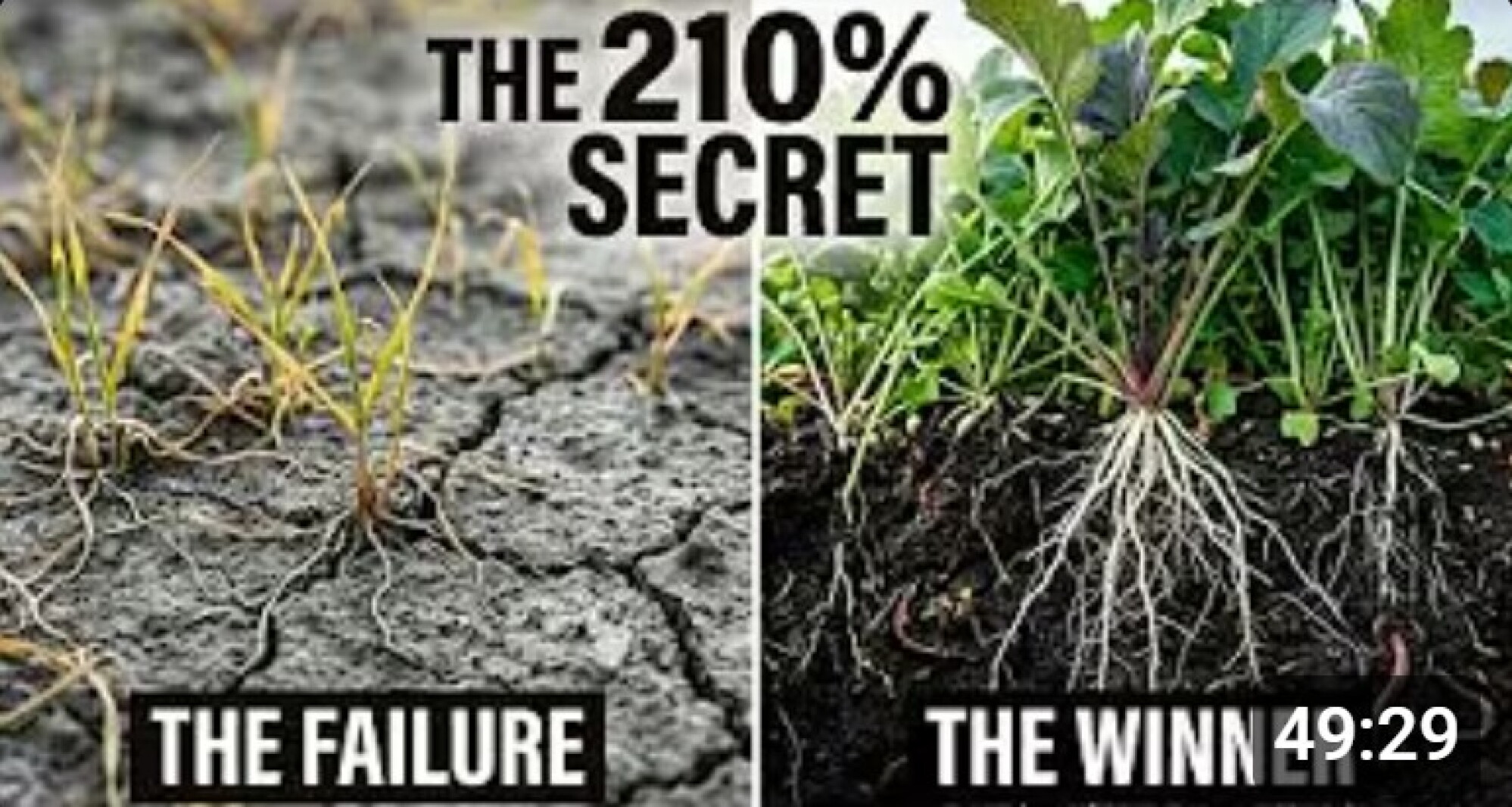
A YouTube video titled “Scientists Tested 41 Cover Crop Mixes for 6 Years” claims that a team of researchers at the University of Minnesota conducted a six-season trial and found that one cover crop mix of three species was 210% better than any other combination. A 49-minute video posted by the channel Soil & Centuries on May 6 says the research team tracked nitrogen transfer rates, mycorrhizal network density, and weed suppression across hundreds of thousands of data points.
None of that happened. Research does not exist.
Educators at the University of Minnesota Extension said the video was artificial intelligence “slop,” or fabricated content designed to collect clicks and ad revenue. They reported it, commented on it, and it’s still up. As of mid-July, the video had been viewed more than 36,000 times. When extension educators first learned about this, the number was about 11,000.
“I don’t see how a study like the one cited in this video could realistically be done,” said Liz Stahl, a crop extension educator at the University of Minnesota who first publicly flagged the video. “It’s too big, I can’t do it.”
Stahl learned about the video this spring in an email with the subject line, “Is this true?” The sender worked for the Soil and Water Conservation District, and Stahl said she initially thought the message itself might be a scam.
“Is this phishing or something? Is this legal?” she said. “I was a little reluctant to click on the link, but then I looked for the real thing. I Googled it and was like, Wow, this place actually exists.”
Then she saw the beginning of the video.
“They’re immediately talking about formulating 41 different cover crops, and they’ve been working on this for over six years,” Stahl said. “Where would we have the space, time and money to carry out such a large-scale project?”
In the video, Stahl named a University of Minnesota faculty member she had worked with for years on cover crops, so she called him.
“I don’t think he’s doing anything like this,” Stahl said. “But I thought I’d better double check, because you never know for sure. I don’t want to just assume.”
He also told her he didn’t know who made the video, according to a May 27 Extension blog post in which Stahl described the incident. A second university is also named in the video.

Ariana Schumacher / Agweek
“Someone, or something, created a video using fabricated information while claiming we were the source,” Stahl wrote in the post.
The University of Minnesota Extension’s communications team confirmed that the video was generated by AI and told Stahl that the motive appeared to be ad revenue from clicks. She declined to reveal the name of the video or the names of her co-workers quoted in it, saying she didn’t want to send any more traffic.
She, too, had never seen it all.
“I have better things to do than watch a 49-minute video that I know is trash,” she said. “From the first moment I knew it was trash.”
Reports and comments about the video do not move the needle for deletion. The Soil & Centuries page lists 67 other videos, all clearly with AI-generated cover screens.
“I did what I had to do,” Stahl said. “I reported it. I commented on it. Colleagues commented that it was fake. They reported it too. But since we first learned of its existence, the number of viewers has tripled.”
The video description lists resource links to possible exam data. Stahl said commenters requested working links but received promises that were never fulfilled.
“They don’t send the link because the link doesn’t exist,” she said. “That study doesn’t exist.”
Stahl pointed out to several witnesses that the video was fake and warned others to watch for warning signs when viewing similar content. Sensational claims, stock photos, quotes that lead nowhere, and a narrator that never stumbles. This was reported to her by another viewer who found the video.
“They said, ‘Oh, they speak so perfectly. You know, they pronounce everything,'” Stahl said. “This is an AI voice. We don’t speak like that. We have diapers and everything.”
In the comments, she said viewers were taking the allegations at face value.
“There are a lot of people who just believe these things,” she says. “It’s pseudoscience. It’s not real science.”

Noah Fish / AgWeek
Colleagues from other universities have since contacted her. Some said they had never heard of AI content fabricating land grant studies. Stahl doesn’t expect this to be the last.
“This is just one example, so who knows how many others there are,” she said. “I’m not trolling the internet trying to find fakes. Fortunately, someone contacted us. But I’m afraid this is just the first of many.”
Her advice is to go to the source. University of Minnesota Extension publishes research through field days, webinars, podcasts, strategic agriculture programs, the MN Crop News blog, and operates a verified YouTube channel.
“If you’re interested in soil health or cover crops, reach out to the people doing it at your local land-grant university,” Stahl says. “Take advantage of what we have to offer to these unknowns.”
The alternative is a smoother product with nothing behind it.
“We don’t have everything shiny, but at least it’s true,” Stahl said.


