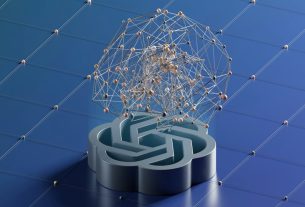
Incorporating AI into business use cases has become a key priority for enterprises. But to reap the potentially game-changing productivity and innovation benefits of AI, organizations need to connect large-scale language models to internal data and services. Introducing the Model Context Protocol (MCP) server. It acts as an intermediary or bridge between the LLM and corporate tools.
Anthropic created the MCP open standard in late 2024, leaving security in the hands of users without native role restrictions or access controls. In the rush to realize the business value of agent AI, many organizations have deployed MCP servers without proper safeguards in place. In one recent analysis, researchers discovered nearly 2,000 MCP servers with no security controls in place, exposing AI systems and corporate data to the open web.
Because MCP servers are useful to enterprises, they are also attractive targets for attackers. MCP servers provide access to critical and sensitive digital assets and enable privileged actions. Therefore, it is important for CISOs and their teams to implement appropriate security measures (policies, practices, and controls) to block unauthorized access, defend against arbitrary command execution, prevent data loss, and ensure compliance.
MCP server security best practices
Effective cybersecurity always requires the right combination of human intelligence, defined processes, and technology controls. The same goes for protecting MCP servers. Consider the following best practices:
Implement a zero trust strategy
MCP servers often access a treasure trove of private corporate data and should be subject to a Zero Trust policy.
MCP servers often access a treasure trove of private corporate data and should be subject to a Zero Trust policy. CISOs must enforce the principle of least privilege and ensure that only authenticated and authorized entities can communicate with MCP servers. Classification of data. Fine-grained, just-in-time permissions policies. Continuous monitoring. Strong governance restricts access to only the human users, AI agents, devices, and workloads that need it, and only when necessary.
Maintain an AI audit trail
Organizations must maintain an audit trail of all AI activity for both compliance and continuous threat detection. This is especially important when working with high-value data or in critical operating environments. Privileged access management with dynamic credential provisioning helps prevent data theft while ensuring detailed logging of human and non-human user activity.
Manage, monitor, and isolate MCP servers
Enterprise security teams should continually assess MCP servers for vulnerabilities by reviewing configuration, functionality, permissions, and hardening protections against threats such as prompt injection.
Consider a platform that provides contextual security intelligence with an AI orchestration layer to help security professionals better architect their environments for risk management and compliance purposes. Enterprises can also containerize and sandbox their MCP servers to minimize damage in the event of a breach.
Without a doubt, the most important element in establishing strong MCP server security remains the human element. As MCP server technology and security standards continue to emerge and evolve, companies need an experienced team that can provide foundational experience and judgment.
Amy Larsen DeCarlo has covered the IT industry for more than 30 years as a journalist, editor, and analyst. As a Principal Analyst at GlobalData, she is responsible for managed security and cloud services.