
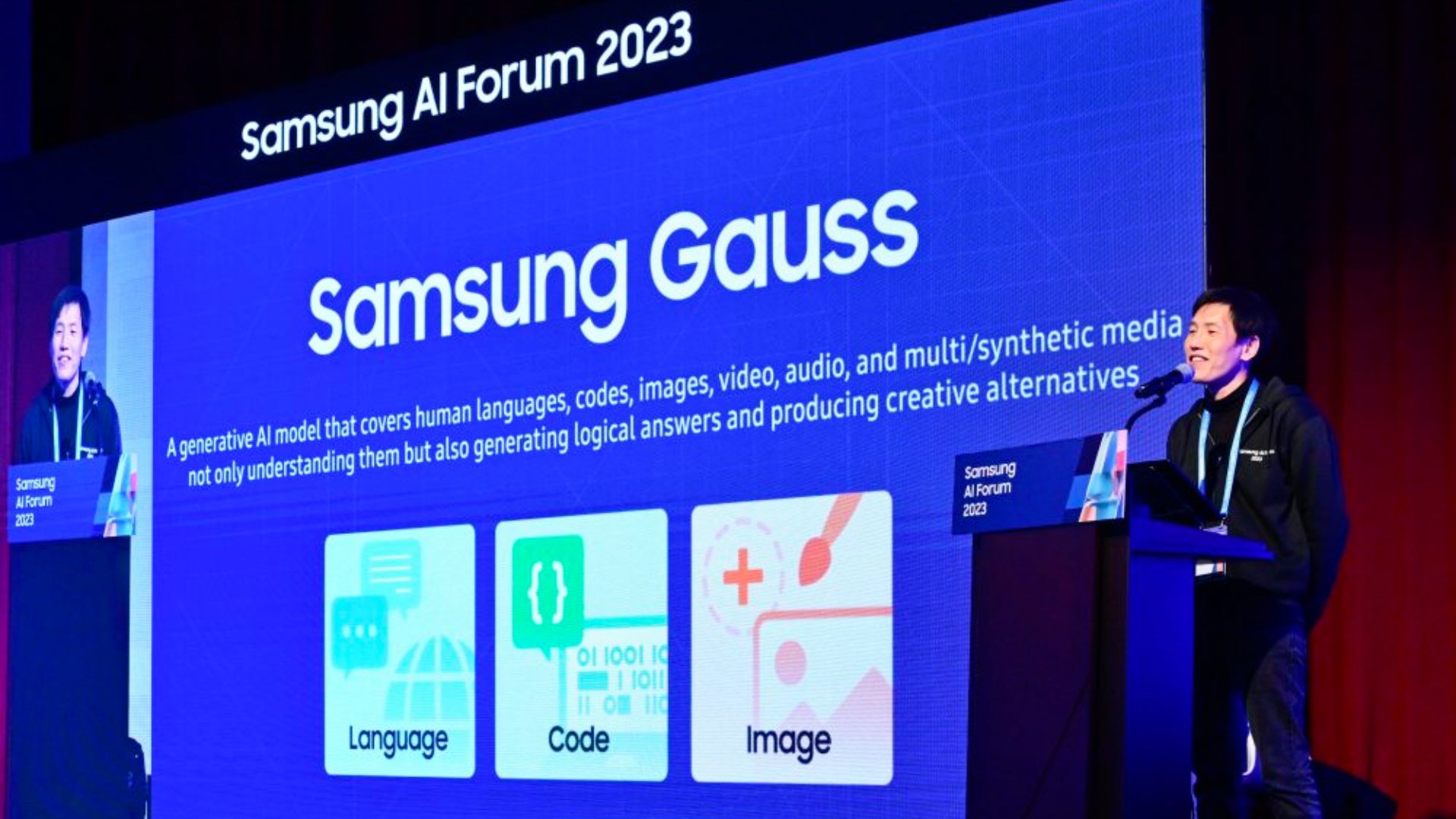
In 2024, Samsung introduced Gauss, an in-house AI model family. In 2025, the company further improved this and launched Gauss 2.0. Now, Samsung seems to be further enhancing its AI models and developing its own Agentic AI tools as part of its self-reliance strategy in the AI era.
Samsung improves Gauss Gen AI model and develops Agentic AI builder
According to reports from South Korea, Samsung Research, the advanced research arm of Samsung Electronics, has developed an “Agent Builder.” It is an Agentic AI production tool developed using Samsung’s new Large Language Models (LLMs): Gauss 2.3, Gauss 2.3 Think, and Gauss O Flash.
Currently, Gauss is used as a no-code, interface-based Agent Builder for internal use. It is also reportedly being used to power a multimodal information retrieval system codenamed “Sirius.” Agent Builder lets you quickly develop business-critical AI agents by simply putting together the necessary components like agent building blocks.
Components of Samsung’s AI agent may include input/output windows, AI models, a “DoXA” logical structure that uses a drag-and-drop interface, and more. DoXA is Samsung’s internal document analysis engine developed by Samsung Research. Add DoXA to your AI agent to understand business context.
Samsung leveraged the multimodal nature of Gauss to develop Sirius, an internal knowledge search service. It is reported that they focus on knowledge graph systems to overcome the limitations of traditional search methods. It can handle text, numbers, tables, images, and attachments.
Samsung’s Sirius and later image generation models are used internally
A Samsung Research Software Innovation Center official said: Zaerek,”Sirius is currently available as a beta service for employees. It is primarily used to search for knowledge related to product development, or to find information about specific technical tasks or personnel.“
The Korean company also appears to have developed a better image generation AI model that overcomes the limitations of other image generation models. For example, it can’t generate an image as requested, and it can’t create an image of something it hasn’t learned. Samsung has created a structure that uses additional reference images. AI models can transform objects based on natural language prompts without distorting their key characteristics.
Samsung announced that internal use of its image generation model has increased by 153% since the release of the new version. The company said it has developed and optimized a special dataset to help open-source models, which primarily rely on latent diffusion models (LDMs) and are not capable of additive learning, learn more.
The South Korean company aims to start using the new and improved Gauss AI model internally and even in future products. The Galaxy S26 is set to be the first Samsung smartphone to support Agentic AI system-wide. Multiple AI models including Gauss, Gemini, and Perplexity are rumored to be supported on the next flagship phone.


