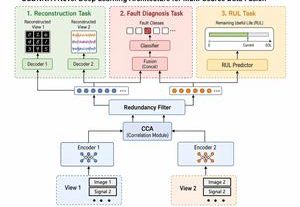
In recent years, the convergence of machine learning (ML) and metal additive manufacturing (AM) has ushered in a new era of possibilities for quality control and process optimization. Metal AM, a cutting-edge technology that enables layer-by-layer manufacturing of complex metal parts, faces unique challenges such as defects, geometric inaccuracies, and unpredictable material properties. These problems result from the complex interaction of multiple physical phenomena during the manufacturing process, such as temperature gradients, fluid flow, and mechanical stresses. Machine learning is now emerging as an innovative tool to decipher these complexities and enhance the quality and reliability of metal AM components.
Metal additive manufacturing involves highly nonlinear multiphysics interactions that govern melt pool dynamics, solidification behavior, and microstructural evolution. Traditional approaches to quality control often rely on simplifying assumptions and empirical process parameter adjustments, which are insufficient to capture the full range of physical mechanisms that affect the final product. In this context, machine learning excels at analyzing vast multimodal datasets collected from sensors and process monitoring systems, uncovering hidden patterns and correlations that are difficult to model explicitly. By integrating ML algorithms, researchers can better characterize the temperature field, fluid dynamics within the melt pool, and stress/strain distribution throughout the build.
One of the crucial areas where machine learning is showing significant potential is in real-time defect identification and suppression. Defects such as porosity, cracks, and keyholes significantly reduce mechanical performance and have traditionally been difficult to detect until post-process inspection. ML models trained on high-fidelity sensor data such as infrared imaging, acoustic emissions, and optical tomography can detect anomalies almost instantly. This predictive capability can be leveraged to reduce defect formation during builds through closed-loop control strategies by dynamically adjusting process parameters such as laser power, scan speed, and hatch spacing.
Another major benefit of ML-powered quality control is the ability to optimize geometric fidelity. Additive manufacturing inherently introduces distortions due to thermal gradients and residual stress build-up, resulting in deviations from the intended design. Machine learning models facilitate accurate prediction of deformation trends by correlating process inputs and build results. As a result, compensation strategies can be implemented to pre-adjust machining paths or customize support structures to ensure higher dimensional accuracy and consistency across batches.
Tuning material properties represents a further frontier where ML algorithms have proven invaluable. Metallic AM parts often exhibit anisotropic mechanical properties and microstructural inhomogeneities due to complex thermal histories. Traditional modeling techniques have difficulty predicting these outcomes accurately. Machine learning approaches enable greater control over attributes such as hardness, tensile strength, and fatigue resistance through supervised and unsupervised learning of microstructural imaging and mechanical testing datasets. This capability opens the door to bespoke manufacturing of components with site-specific properties tailored to functional requirements.
The future direction of machine learning in AM is based on the ability to fuse multiphysics simulation data, multimodal sensor inputs, and real-world experimental observations into a unified digital framework. In particular, the integration of digital twins, which are virtual replicas of physical processes, enhances the predictive power of ML models and allows practitioners to simulate process adjustments in silico before physical implementation. When combined with edge computing architectures, such real-time data processing enables rapid feedback loops and autonomous decision-making directly on the manufacturing floor, minimizing latency issues and maximizing production throughput.
However, significant challenges remain to fully leverage ML for quality control in metal additive manufacturing. The complex closed-loop nature of the process requires cross-scale coordination between microstructural phenomena and macroscale mechanical behavior, which current models only partially address. Furthermore, collecting high-quality labeled datasets suitable for training robust ML models remains a bottleneck due to experimental costs and variations in experimental settings. Addressing these gaps requires a multidisciplinary collaborative effort involving materials scientists, mechanical engineers, data scientists, and control systems experts.
Fundamental to advancing this technology is further exploration of multiphysics coupling, or how temperature, fluid flow, and mechanical stress interact in time during construction. Machine learning, particularly physics-based neural networks, promises to bring new insights into these tightly coupled phenomena by embedding physical laws directly into the learning architecture. Such hybrid models outperform purely data-driven or physics-only approaches, increasing their interpretability and generalizability.
The potential for real-time closed-loop control in metal AM has the potential to revolutionize the manufacturing of critical components for the aerospace, biomedical, and automotive industries, where quality assurance is paramount. ML-assisted systems can significantly reduce costs and lead times by reducing trial and error, increasing reproducibility, and enabling adaptive manufacturing practices. As research advances, the combination of ML, digital twins, and edge computing is poised to transform additive manufacturing from an artisanal craft to a highly automated and intelligent production platform.
In conclusion, the convergence of machine learning and quality control in metal additive manufacturing represents a paradigm shift towards smarter and more reliable production processes. By elucidating fundamental physical mechanisms and enabling active process adjustments, these advanced computational tools break new ground for manufacturing complex metal parts with unprecedented precision and customized properties. The continued development of robust ML models, integrated multiphysics simulation, and comprehensive sensor networks will be key drivers of this transformation effort, guiding the future of metal AM quality assurance toward a fully autonomous, data-driven manufacturing ecosystem.
Research theme: Not applicable
Article title: Machine learning-assisted quality control in metal additive manufacturing: A review
News publication date: September 16, 2025
Web reference:
https://doi.org/10.1016/j.apmate.2025.100342
https://www.sciencedirect.com/journal/advanced-powder-materials
image credits:Zeqi Hu, Changlin Huang, Lechun Xie, Lin Hua, Yujie Yuan, Lai-Chang Zhang
keyword
material
Tags: Challenges in metal 3D printing Data-driven approaches in additive manufacturing Machine learning in manufacturing Melt pool dynamics analysis Metal additive manufacturing Microstructure evolution in 3D printing Multiphysics interactions in metal printing Predictive modeling for manufacturing Metals Process optimization in AM Quality control in 3D printing Sensor data analysis in manufacturing Transformational technologies in manufacturing