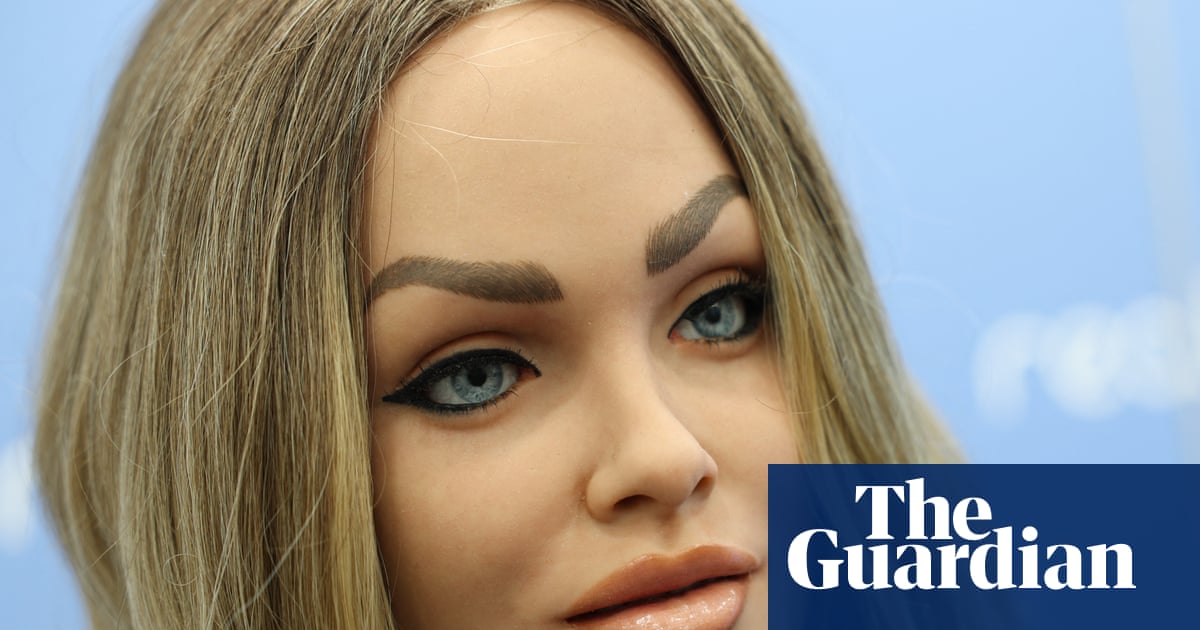
The humanoid robot is being deployed with an AI educational assistant as part of a pilot program at Salamanca High School in Salamanca, New York, in the Seneca Nation Allegany Territory.
Teachers have criticized the program, deeming it “inappropriate” and saying it dehumanizes the profession by introducing human-like robots. Some local Native Americans have also criticized the pilot program, calling its implementation “culturally tone-deaf.”
The robot, named Sally, was purchased by the Cattaraugus County School District, which includes Salamanca High School, for $57,590. Although Sally is a closed-loop system, it is available virtually 24/7 to students who have access and offers personalized learning options, according to the program’s presentation.
According to a press release from Realbotix, the school district will be the first in the United States to deploy humanoid robots and AI educational assistants.
“The Salamanca pilot also includes the introduction of Realbotix M-series humanoid robots that use natural speech, facial expressions, and real-time interactions to create engaging, hands-on learning experiences,” the press release states.
Realbotix (formerly Tokens.com) is a Toronto-based company that acquired Simulacra, a Las Vegas-based company known for its realistic sex dolls, for $16.7 million in April 2024, marking a turning point for the company from cryptocurrencies to humanoid robots.
Realbotix denies any relationship with the sex doll company and denied any inference that dolls made by Realbotix subsidiary Abyss Creations were connected to the pilot program.
“The Salamanca Teachers Union as a whole is concerned about the background of Realbotix. We are very concerned about the security of the software they have in place, whether or not data is stored, how it is collected, the recording capabilities, etc.,” said Lacey Pilblad, president of the Salamanca Teachers Union and a teacher at the high school.
“We want districts to pause the deployment of robots and the software side of this AI technology until more individuals can participate.”
He said New York state is currently transitioning away from excessive technology in the classroom.
“There is a growing consensus that students should have less exposure to technology. I believe that putting humanoid robots in the classroom to interact with children is a huge step in the wrong direction, and I think the majority of our teachers feel the same way,” she added. “I feel like if you’re going to do something this large, you need to make sure it’s done the right way, and I don’t know if that’s currently being done properly.”
Pilblad said the union has completed negotiations for a new union contract and intends to include protections regarding artificial intelligence.
Melinda Parson, president of the New York State United Teachers Association, the parent union of the Salamanca Teachers Association, which represents teachers at the high school, told the Guardian that teachers across the state are concerned about the robot program.
“Our members in Salamanca and educators across the state are sounding the alarm that this is truly inappropriate,” Parson said. “I think our first reaction is that this is kind of creepy.”
The person said it was “way outside the scope of what schools are supposed to do.”
“The answer to the challenges in education is not more screens, more algorithms, or more robots. What we need in schools now is more caring adults and more human interaction,” she said.
She said teachers are not anti-technology, but rather pro-kids and take positions based on whether something is beneficial to students.
“It’s a bad idea to put lifeless machines in front of students,” she says. “Machines meant to simulate human relationships are just young people learning skills like how to interact, how to get along with their peers, and how to resolve conflicts, so installing robots that look like humans and leading to the dehumanization of the teaching profession is exactly the wrong thing we’re doing.”
Local residents have also criticized the choice of a high school with a large Native American population as a testing ground for humanoid robots in classrooms. Nearly 40 percent of the high school’s students are Native American.
The Seneca Nation declined to comment to the Guardian.
“Of all the schools in the state of New York, let alone the United States, they chose to experiment with Native American children again,” said Sierra Mae Abrams, a substitute teacher at Salamanca High School and a local resident. “Our culture is struggling to stay alive because of the influence of Native American boarding schools and what they did to our elders. It’s just insane that we’re ‘trying it out’ when we live on the only reservation in a city.”
Alison Brown, a community health specialist and local resident who graduated from Salamanca and is a Seneca citizen, said several students have connected to the trauma of Native American boarding schools.
“Many students have ties to relatives who attended Thomas Indian School in our Cattaraugus Territory. Many Native families see this pilot program as history repeating itself,” Brown said. “I don’t think it will have any positive effects if this is introduced in the classroom. I’m concerned about the cognitive development of young people who are exposed to this kind of environment.”
A spokesperson for Realbotics declined to comment on the criticism from teachers and Native Americans, or on calls for the company to cease operations from the Salamanca Teachers Association.
“Realbotix and the Salamanca City Central School District have announced a limited fall 2026 pilot involving Optio, an AI-powered educational assistant, and one new Realbotix M-Series humanoid unit,” a spokesperson said in an email.
“This program is intended to complement, rather than replace, teachers by providing students with supervised access to new AI and robotics tools as part of the district’s existing Stem. [science, technology, engineering and mathematics] curriculum. This partnership also provides educators with the opportunity to evaluate these technologies in a controlled classroom environment with district oversight. ”
Salamanca City Central School District and Superintendent Mark Beeler did not respond to multiple requests for comment.
JP O’Hare, deputy director of communications for the New York State Department of Education, said the agency has been in contact with school districts about purchasing the robots and has expressed “serious concerns about student privacy, appropriate safeguards, and the risk that robots could be used to perform functions that should be the responsibility of trained and qualified professionals.”
“While technology can and should support educators and students, it should not replace the human judgment and responsibility that are essential to a safe and effective learning environment.”