Quinnipiac University’s School of Computing & Engineering is introducing a bachelor’s degree in artificial intelligence and computing in response to growing interest in AI.
A new bachelor’s degree program in artificial intelligence and computing, launched last semester, is expected to attract new students to Quinnipiac University next fall.
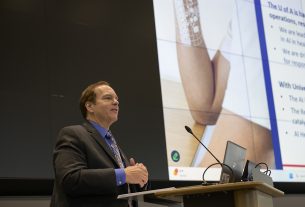
“We know students are interested in artificial intelligence, so we want to cater to that. High school seniors want to major in AI. Let’s see if we can meet that,” said Brian O’Neill, associate dean of the School of Computing Engineering.
Quinnipiac was one of the first companies to announce and launch an artificial intelligence degree program. This comes from both student demand and recent announcements from competitors.
“We also saw some of our competing schools launching AI majors and we thought, ‘Oh, we need to do that too,’” O’Neill said.
Last September, Fairfield University announced a new program in artificial intelligence. Other schools have followed suit, with many schools nearby now offering AI minors.
AI is a rapidly growing phenomenon, and some parents and students are wondering how artificial intelligence will impact their students’ career paths. This new degree program aims to address concerns that AI will take some jobs out of the market.
“Our hope is that by getting an AI degree, we can sell people a little bit of peace of mind and say, ‘No, you can be an AI major, too,'” O’Neill said.
Enrollment in Quinnipiac’s existing AI courses has increased significantly over the past year, indicating increased student interest, and faculty believe the new degree program will be a major success for the university.
“From an actual major standpoint, this was a quick build. We had interest from upper administration and computing and engineering faculty this fall,” Professor O’Neill said.
The new bachelor’s degree program was built in August and September and did not officially launch until Quinnipiac began accepting applications for the fall 2026 academic year.
“This was a project that the entire computing department worked on. There was a lot of discussion about it, a lot of discussion,” O’Neill said.
This program expands on the courses offered in the existing AI minor.
“We’re taking some of the content from the AI minor and some of the content from existing computer science programs and integrating it a little bit,” O’Neill said.
In addition, new courses on AI were created based on the knowledge and existing professional skills of professors.
“This will initially be very similar to the computer science and software engineering programs that already exist on campus,” O’Neill said.
The current curriculum is designed to help students learn the basics of both programs so they can make informed decisions about their junior year. New AI and computing programs will work as well.
“We want the AI and computing majors to share the same freshman core and sophomore core beginnings, so students will be able to switch between any of these three programs,” O’Neill said.
In their third and fourth years, students in the AI program delve deeper into code and learn what it takes to create and run artificial intelligence.
“This allows students to become developers and builders, not just users and consumers,” O’Neill says.
He said the program will be continually reviewed to keep pace with rapidly changing technology and student demands.
“We know that the program that is approved and listed in next year’s catalog is probably not the same program that will be listed in the catalog five years from now, and we have to make changes as technology changes, depending on the student body,” O’Neill said.
O’Neill looks forward to seeing students take advantage of this unique program next fall and watching it continue to grow as AI technology continues to expand and evolve.