
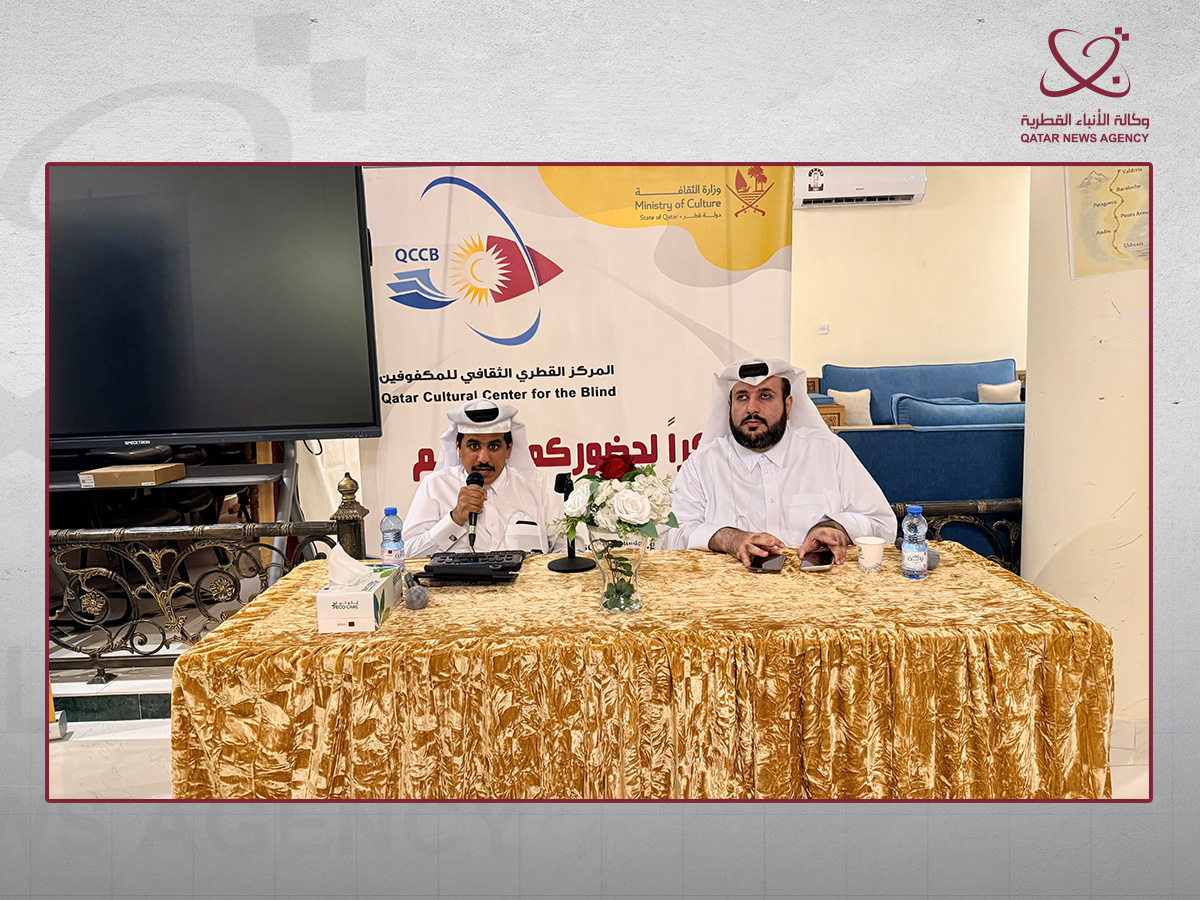
Doha, July 22 (QNA) – The Qatar Cultural Center for the Visually Impaired held a cultural seminar entitled “Artificial Intelligence: Between Support and Trust”, with the aim of raising awareness about the optimal use of AI tools and their conscious and responsible application.
At the beginning of the seminar, Mohamed Shafi Al Fahida, a member of the center, said that AI is not a replacement for humans, nor is it a tool that should be relied on completely. Rather, it is an assistive tool that, when used effectively, increases productivity and improves performance efficiency.
He discussed the role of AI in various professional fields, giving examples from journalism and public relations.
He explained that while these tools can create a first draft or summarize information, the quality of the content still relies on the user’s experience and ability to evaluate, analyze and make decisions.
Speakers emphasized the importance of maintaining and continuously developing basic skills despite rapid advances in technology.
He noted that relying entirely on AI could not only reduce critical thinking and analytical abilities, but also reduce the ability to identify errors and assess the accuracy of information without specialized knowledge.
The event also covered several guidelines to follow when using AI applications, the most important being to avoid inputting personal data or sensitive information belonging to individuals or employers, and not relying on these tools for medical, health, or religious matters without consulting relevant authorities and sources.
From a practical perspective, Al Fahida reviewed the most prominent AI applications that have contributed to increasing the independence of visually impaired people, emphasizing that AI is not a replacement for human skills, but a partner to help them work and learn.
He emphasized that conscious use of these technologies is the way to maximize their benefits while maintaining critical thinking and analytical skills. (QNA)


