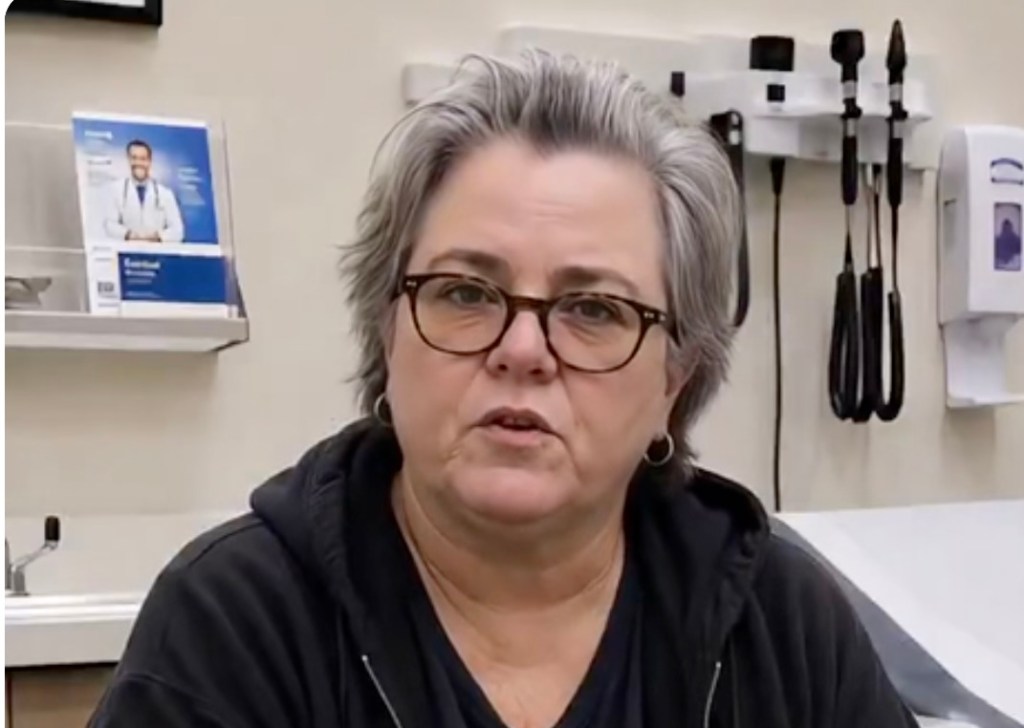
Donald Trump has turned his attention to AI deepfakes again, this time posting a video of himself as a doctor treating celebrities such as Rosie O’Donnell, Robert De Niro, and Julia Roberts who suffer from “Trump Derangement Syndrome.”
The video, posted on Truth Social, comes as the entertainment industry pushes for legislation that would limit deepfakes, which include audio and video distributed without a performer’s permission. The most recent bill, the Anti-Counterfeiting Act, passed the Senate Judiciary Committee last month.
In the video, a deepfake of President Trump wearing a white hospital gown says, “I’m Dr. Trump and I have a treatment plan.”
O’Donnell’s deepfake says, “I’ve been suffering for over 10 years, but after listening to Dr. Trump, I’m starting to see some results.” Also featured are deepfakes of Whoopi Goldberg, John Leguizamo, Edward Norton, Julia Roberts, and Robert De Niro.
“I couldn’t eat. I couldn’t sleep. I was always angry. I made everyone around me miserable,” De Niro said.
Fake Trump says in the video, “The cure is simple: eliminate fake news, pray, and if you feel anxious, just drink a Diet Coke like I did and you’ll see a noticeable change in your life.”
The Anti-Fake Act, which has bipartisan support, gives individuals the right to authorize the use of their voice and likeness in digital reproductions. However, it is unlikely to restrict the types of videos posted by President Trump, as it would exclude videos intended for news, documentaries, sports, biographical works, commentary, criticism, parody, etc. Last month in the Senate Judiciary Committee, its chairman, Sen. Ted Cruz (R-Texas), raised the issue of ensuring that the bill does not cover satire by politicians, such as when Los Angeles mayoral candidate Spencer Pratt featured an AI-generated image of Mayor Karen Bass in a campaign ad.
The bill has broad support among many entertainment industry guilds and unions, studios and record labels, as well as technology companies OpenAI and Google/YouTube. The White House has also expressed support as part of the National Legislative AI Framework announced in March.