A multidisciplinary team of researchers funded by the National Science Foundation created a teacher-led curriculum called Shark AI. This optional online program introduces Florida Middle School teachers and students to artificial intelligence through the science of paleontology. With Shark AI, science teachers learn how to incorporate AI and machine learning concepts into the classroom, helping students build essential skills and prepare for a 21st century STEM career.
“Most K-12 AI learning occurs at computer science standards and learning goals,” says Bruce McFadden, a well-known professor and principal investigator (PI) at the University of Florida (UF). “Shark AI is using a new approach by using AI to teach concepts related to the nature of biology, paleontology and science, while also leading to the goals of computer science education,” he said.
Credit: University of Florida Christine Usilko
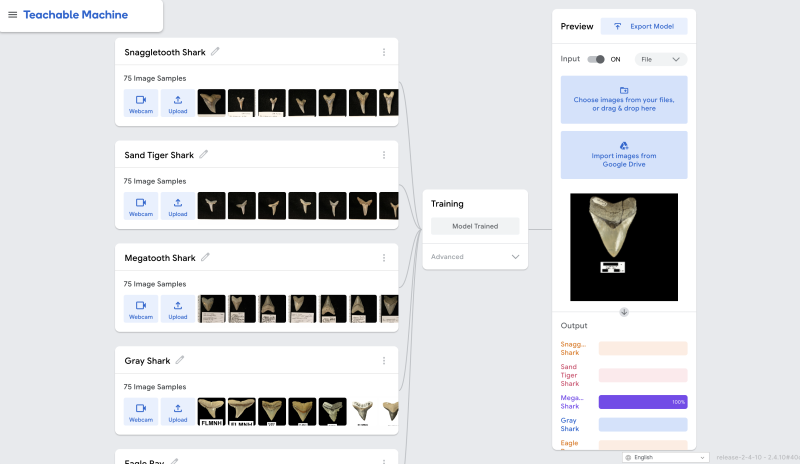
Developed alongside teachers, Shark Ai is five flexible modules that allow teachers to choose to integrate into their teaching plans (all a free and optional online curriculum alongside middle school science standards). The lesson aims to measure AI by teaching students about data collection and object classification using fossil shark teeth. The aim is to help students create their own AI models by showing how to train and evaluate machine learning models while acknowledging the limitations of the model.
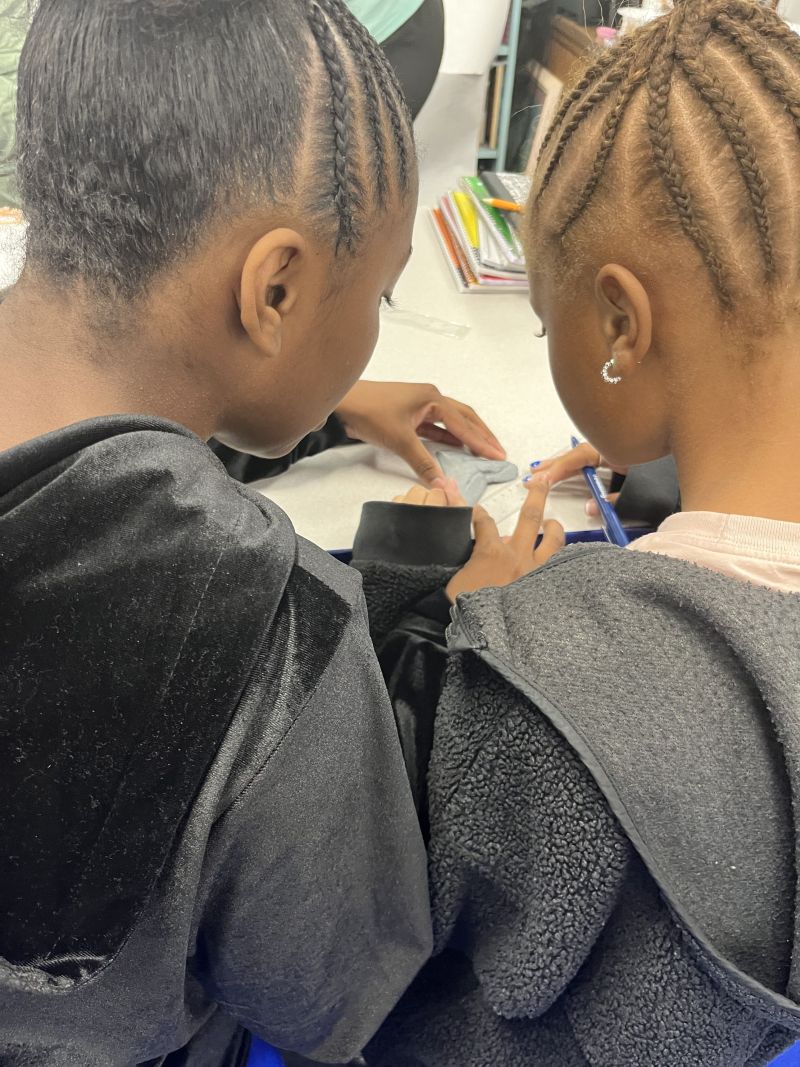
However, in order for students to do their best to use AI, teachers must also know how to use technology. One of the key components for using Shark AI is the ability to access actual fossils.
Credit: University of Florida Christine Usilko
“Shark AI gives students access to high quality, authentic fossils that they can touch and feel,” MacFadden said. “Kids love having it, and so are teachers.”
Another important piece is the support provided through professional development for Florida Middle School educators who are voluntarily implementing shark AI in their classrooms.
“If teachers are not given the opportunity to learn, they will never be able to return that knowledge back to school,” said Sheema Naik, an engineer-turned-grade sixth and eighth grade educator, who is the teacher of this year's career technical education rookie teacher at a Broward County school. “I never imagined that we could actually make a connection between fossils and AI. We could train a model and do this. It was very appealing,” she said.
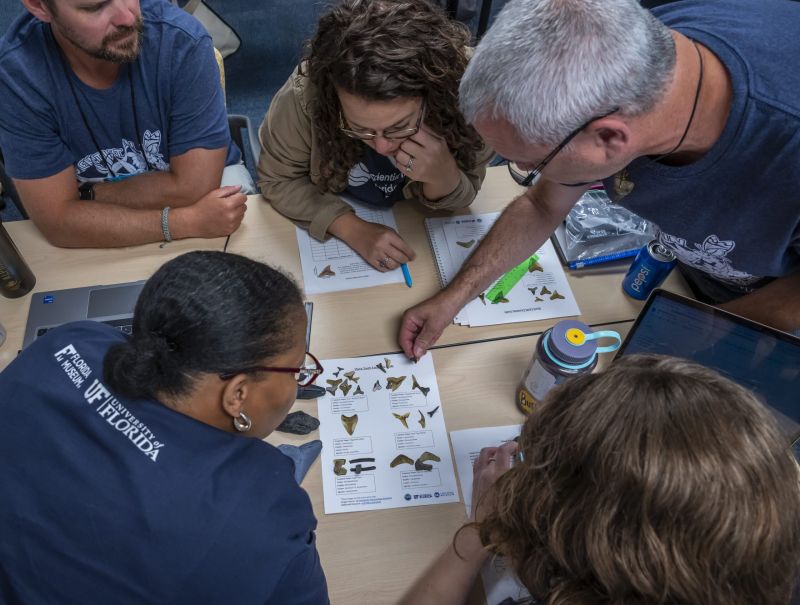
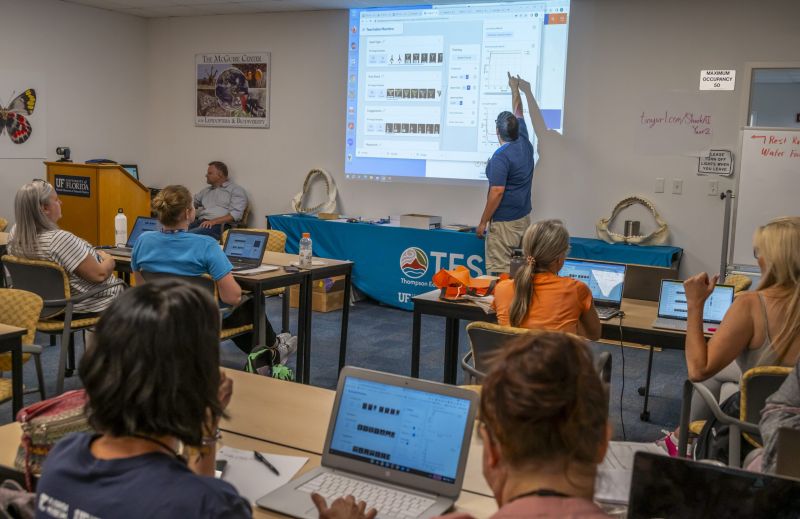
The Shark AI team hosts week-long summer workshops to support a cohort of teachers. Educators learn from a variety of experts, including “teacher leaders” from other middle schools who use the curriculum.
Credit: Erika Nortemann/Florida Museum
“One of the things teachers enjoy most about professional development is working with other teachers (their peers) who promote many of these AI learning experiences,” says Pavlo “Pasha” Antonenko, professor of education technology for the project and professor of CO-PI. “From this project we learned the teacher. can Use AI. teacher teeth Use AI. We need to help them do it more effectively,” Antonenko said.
Importantly, this peer-to-peer engagement helped teachers like Naik unlock some of the common misconceptions she and others had about AI.
“Before I was trained, I had some questions and concerns about technology, but now I'm used to using AI in my class,” she said. “Learning how to actively use AI has been extremely powerful.”
Credit: University of Florida UF University of Education
Community teachers develop while participating in Shark AI training. It is also important when navigating new curricula. For example, NAIK said some Florida schools use Microsoft applications, while others use Google. This created some technical hurdles for some shark AI teachers, but they worked together to share troubleshooting and ultimately best practices.
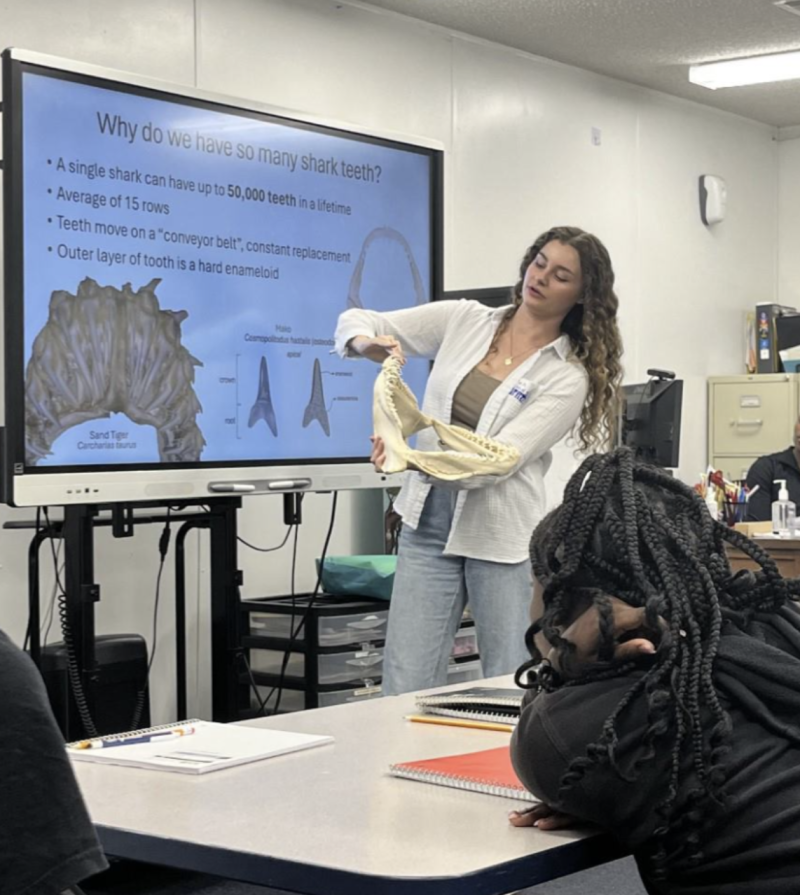
The project also offers a “role model visit” to help teachers create clear connections to students between the science classroom and the STEM workforce. In this project, research teams visit science classes and engage directly with students using shark AI.
“I went to class and said, 'I'm a real scientist and if you want, you can do that too. You use machine learning tools to classify fossils. That's exactly what I do as a scientist.'” It's very powerful for teachers, not just because of content support, but also because of the scientific identity that students may come in,” MacFadden said.
Credit: University of Florida Christine Usilko
For Naik, Shark Ai not only gave her better understanding and confidence to use AI in science classes, but she also recognizes that the curriculum gives students “ownership of learning.”
“This project really advocates for teachers,” emphasized Christine Wusylko, UF postdoctoral researcher on the team. “Shark AI teachers feel special and feel part of the club. The curriculum is flexible and led by teachers.