
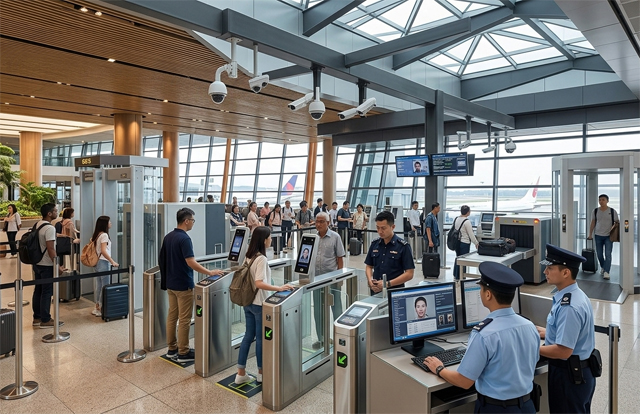
In the contemporary architecture of aviation security, artificial intelligence assumes an ever more prominent role, not as a panacea but as an evolutionary instrument of operational efficiency, predictive insight and human augmentation. That airports and airport managers would look towards advanced analytics to anticipate threats, expedite passenger screening and harmonize the manifold demands of security, facilitation and passenger experience is both logical and inevitable. Yet to apprehend artificial intelligence merely as a technological instrument is to misunderstand its deeper significance: AI possesses epistemological power — the power to interpret patterns at scales transcending human cognition — and concomitantly, the responsibility to do so in ways that respect procedural fairness, legal norms, human dignity and operational integrity.
The integration of AI into airport security screening is not a recent phenomenon; it is an iterative response to the exigencies of mass mobility in an era of persistent threat. Over the past decade, imaging technologies — X‑ray, computed tomography, millimeter‑wave scanners — have been augmented by machine learning algorithms that identify, classify and prioritize signals suggestive of prohibited items. These systems are calibrated on vast datasets comprising both benign and threatening signatures. They offer to reduce the cognitive load on human operators, to flag anomalies rapidly, and to cultivate a degree of consistency that human interpretation alone may not sustain in the face of fatigue or operational stress. Yet, to confine AI to the reduction of human workload is to underutilize its potential utility; more profoundly, AI can furnish airport managers with predictive insights — forecasts of risk patterns, congestion points, staffing needs and anomalous behaviors — thereby allowing security resources to be deployed proactively rather than reactively.
Application of AI in Airports
In the contemporary evolution of aviation security management, artificial intelligence has begun to assume a practical and increasingly indispensable role in assisting airport managers to interpret complex operational environments and respond to emerging risks with greater precision and foresight. The aviation industry, which has historically relied upon layered security frameworks combining technology, procedure, and human vigilance, now finds itself incorporating AI as a complementary analytical instrument capable of processing vast quantities of operational data and identifying patterns that may elude the unaided human observer. The success of such systems, however, lies not merely in their technological sophistication but in the judicious and professionally governed manner in which airport managers integrate them into the broader security architecture.
One of the most instructive examples of AI deployment in airport security management can be observed at Heathrow Airport, where advanced computed tomography scanners enhanced with machine-learning algorithms have been progressively introduced to improve the detection of prohibited items within passenger baggage. These systems analyse three-dimensional images of carry-on luggage and compare object shapes and densities against extensive datasets of known threat signatures. The practical benefit to airport management has been significant: security officers are able to detect concealed objects with greater accuracy while reducing the number of unnecessary manual inspections. For airport managers responsible for maintaining the delicate equilibrium between security and passenger facilitation, this technological enhancement contributes not only to improved detection rates but also to more efficient passenger throughput.
Similarly instructive is the experience of Amsterdam Airport Schiphol, where artificial intelligence has been integrated into passenger flow analytics and surveillance systems. Using machine-learning algorithms applied to real-time video feeds and operational data, the airport is able to analyze passenger movement patterns throughout the terminal environment. By identifying congestion points and forecasting potential bottlenecks at security checkpoints, AI systems enable airport managers to deploy additional screening personnel, open supplementary screening lanes, or redirect passenger flows before operational disruption occurs. This predictive capability exemplifies the strategic utility of AI: rather than responding belatedly to crowding or delays, airport management can anticipate and mitigate operational pressures in advance.
An even more comprehensive application of artificial intelligence may be seen at Singapore Changi Airport, widely regarded as a pioneer in airport technological innovation. At Changi, AI has been incorporated into multiple layers of the airport’s security framework, including automated baggage screening and intelligent video surveillance. Machine-learning algorithms analyze the contents of baggage in real time and identify objects that resemble prohibited items, thereby assisting security officers in focusing their attention on high-risk images. In parallel, AI-driven video analytics monitors sensitive areas of the terminal complex, detecting behavioural anomalies such as prolonged loitering near restricted infrastructure or attempts to access secure zones without authorization. For airport managers, these systems contribute to a form of proactive situational awareness in which potential threats are detected at an early stage, allowing security personnel to intervene before incidents escalate.
In the United States, AI has also been deployed extensively within aviation security operations overseen by the Transportation Security Administration. A prominent example is the integration of automated threat recognition software within advanced imaging technology used for passenger screening. These millimetre-wave scanners employ AI algorithms to detect concealed objects beneath clothing and display the results to security officers through a generic body outline indicating the location of any anomalies. By removing the need for human operators to interpret raw body images, the system simultaneously enhances privacy protection and operational consistency. From a managerial standpoint, the adoption of automated threat recognition has contributed to reduced screening times and diminished operator fatigue, both of which are important factors in maintaining reliable security performance.
Artificial intelligence has also demonstrated practical utility in addressing the long-recognized challenge of insider threats within airport environments. Large international airports employ thousands of staff members who possess varying degrees of access to restricted areas, and monitoring such access manually is inherently difficult. At Hartsfield–Jackson Atlanta International Airport, data-driven monitoring systems have been introduced to analyze employee access records, badge swipes, and movement patterns within secure zones. AI algorithms identify anomalies, such as unusual access to restricted areas outside normal working hours or patterns of movement inconsistent with assigned duties. When such irregularities arise, the system alerts security managers who may conduct further investigation. Crucially, these alerts serve as early warnings rather than automatic disciplinary triggers, thereby ensuring that human judgment remains central to the evaluation of potential insider threats.
Another manifestation of AI’s contribution to aviation security is the deployment of biometric identity verification systems. Airports such as Hartsfield–Jackson Atlanta International Airport have introduced facial recognition technologies that compare a passenger’s live facial image with passport or visa photographs stored in official databases. These AI-enabled systems can verify passenger identity within seconds, reducing opportunities for document fraud while simultaneously expediting the boarding process. For airport managers, the integration of biometric verification illustrates how security enhancements can coexist with improvements in operational efficiency and passenger convenience.
In Europe, artificial intelligence has also enhanced the monitoring capabilities of airport surveillance systems. At Frankfurt Airport, intelligent video analytics analyze live CCTV feeds across the terminal complex and automatically detect unattended baggage, unauthorized entry into restricted areas, or suspicious behavioural patterns. In conventional surveillance systems, human operators must observe dozens of camera screens simultaneously, a task that inevitably leads to diminished attention over time. AI systems alleviate this burden by continuously scanning video feeds and generating alerts whenever anomalous activity is detected. As a result, response times to potential security incidents have been significantly reduced.
Artificial intelligence is also increasingly integrated with border security operations that interact with airport security management. The U.S. Customs and Border Protection has implemented machine-learning tools that analyze passenger travel histories, visa records, and customs declarations to identify irregular travel patterns associated with smuggling or identity fraud. Although such systems operate primarily within the domain of border control, their outputs provide valuable intelligence that airport security managers may incorporate into risk-based screening strategies. The ability to identify high-risk travellers before they reach airport security checkpoints enhances the efficiency of screening operations and allows resources to be allocated where they are most needed.
Another example of AI’s contribution to security preparedness can be observed at Dubai International Airport, where predictive analytics platforms are used to simulate potential security incidents and assess the resilience of airport infrastructure. By analyzing historical data and real-time operational variables, these systems allow managers to model the effects of various emergency scenarios, including security breaches or evacuation situations. Such simulations assist airport authorities in refining emergency response protocols and ensuring that contingency plans remain effective under different operational conditions.
Taken collectively, these examples illustrate the practical success of artificial intelligence in strengthening aviation security management across diverse operational contexts. AI’s greatest value lies not in supplanting human expertise but in augmenting it, enabling airport managers to interpret complex datasets, anticipate emerging risks, and allocate security resources with greater precision. When deployed within a framework of professional oversight, ethical governance, and continuous evaluation, artificial intelligence can transform airport security from a reactive system into one characterized by predictive intelligence and strategic foresight. In this sense, the modern airport manager’s engagement with AI represents not merely a technological adaptation but a fundamental evolution in the philosophy of aviation security management.
How AI Works
If one is to speak of AI’s ability to confer predictive insights, it is necessary to understand its analytical architecture. Most AI systems in security screening rely upon statistical learning: they discern patterns from historical data, correlate them with threat indicators, and generate probabilistic assessments of new inputs. Thus, in baggage screening, AI may assign a threat score to a particular image slice, signalling to the operator that an object merits closer scrutiny; in behavioural monitoring, AI may detect irregular movement patterns or unusual dwell times in restricted zones and prompt a human supervisor to investigate further. Airport managers, equipped with dashboards that consolidate these AI outputs alongside operational metrics — flight schedules, passenger volumes, security queue times — can discern emergent trends, allocate personnel to critical nodes, and recalibrate workflows with a granularity that was previously unattainable.
Yet, the promise of AI in aviation security is matched by the reality of its limitations. The very nature of machine learning — its dependence on historical data — constrains its capacity to identify novel threat vectors or to interpret behaviours that lie beyond the scope of its training data. False positives, wherein benign items are flagged as threats, can lead to unnecessary manual inspections that erode throughput and frustrate passengers. False negatives, more perilously, may permit genuine threats to remain undetected. These errors speak not to a failure of technology per se, but to a failure of governance: poor data quality, inadequate retraining protocols, or misguided expectations that AI can substitute for human judgment.
Moreover, AI’s interpretative processes are not transparent in the way human reasoning is. Many advanced models — especially deep learning networks — operate as so‑called “black boxes”, wherein the mapping from input to output is opaque even to system designers. This opacity complicates accountability. When an imaging system erroneously flags a harmless object, or when a biometric match is incorrect, airport managers must be able to explain, to regulators and to the affected passengers, why the error occurred and what remedial steps were taken. Explainability — the capacity to articulate the reasoning behind AI outputs — becomes as crucial as accuracy itself. Without such explainability, AI risks becoming a generator of inscrutable decisions that erode trust rather than reinforce security.
Another dimension of AI risk relates to bias and discriminatory outcomes. Biometric systems that employ facial recognition have been shown in multiple independent studies to disproportionately misidentify certain demographic groups. In an aviation security context, such misidentifications can result in unwarranted delays, intrusive secondary screenings, or even wrongful detentions. Though the humanitarian harm of such errors may not always be fatal in a physical sense, they can be deeply injurious in a legal and ethical sense, harming reputations, infringing on civil liberties, and undermining the legitimacy of security practices. Airport managers, therefore, must not only measure the accuracy of AI systems in aggregate but must also assess whether error rates vary across demographic categories. This demands robust bias‑detection protocols, diversified training datasets, and continuous auditing.
Behavioral profiling — the attempt to infer threat propensity from observable behaviours — exemplifies another area of complexity. Early initiatives in behaviour detection, such as the Transportation Security Administration’s Behaviour Detection and Analysis programme, were criticized for their reliance on pseudo‑scientific cues and their potential to embed racial or cultural bias within screening decisions. Although modern AI aims to transcend simplistic behavioural rules by employing pattern recognition at scale, the underlying risk remains: if the data used to train behavioural models reflects past discriminatory or culturally biased practices, the AI will replicate and amplify those biases. Airport managers must therefore be vigilant not only about the technical performance of behavioural AI but also about the ethical propriety of the datasets and the values embedded within them.
Yet another frontier in the use of AI in airport security is the monitoring of staff — the so‑called insider threat. Aircraft handlers, maintenance personnel, aviation security officers themselves, and other airport employees have unescorted access to sensitive areas of the airport environment. Insider threats — whether through malicious intent or inadvertent negligence — pose a significant vulnerability. AI can assist by analysing access logs, performance data, and behaviour trends to identify anomalies. However, these systems have parallels with workplace surveillance technologies that have been critiqued for eroding employee privacy or chilling workplace civility. Airport managers must balance the legitimate need for security with respect for employee rights. AI alerts about potential insider risk should be treated as early warnings, triggers for human investigation, not as immediate grounds for disciplinary action. There must be protocols that ensure fairness, transparency and proportionality.
My Take
The wise use of AI in airport security demands a governance framework that places human judgment at its core. AI ought to be understood as a decision‑support instrument — one that informs and augments professional expertise rather than supplants it. The concept of a “human‑in‑the‑loop” is not mere rhetoric, it is a practical necessity. AI may triage alarms, highlight anomalies, and prioritise risks; but the final determinations — whether to detain a passenger for secondary screening, whether to escalate an incident, whether to alter staffing allocations — must rest with trained human professionals who can interpret AI outputs in context.
Such a governance orientation calls for continuous training and validation of AI systems. Models should be updated not only with new threat signatures but also with real‑world feedback from security operations. A periodic audit schedule — involving both technical performance metrics and ethical assessments — should be institutionalised. Performance evaluation should include stress testing the systems against edge cases and synthetic anomalies to assess robustness. Without such ongoing calibration, AI systems risk ossifying around outdated paradigms of threat that do not reflect the dynamic nature of risk in the aviation environment.
Airport managers must also cultivate predictive analytics not just for threat detection but for operational planning. By analysing historical flight data, passenger flow trends, and security queue performance, AI can forecast periods of high demand for screening resources. These forecasts enable managers to pre‑position personnel, adjust screening lane allocations, and mitigate bottlenecks before they materialise. In doing so, AI contributes not only to security but to facilitation — enhancing the efficiency of passenger throughput without compromising safety.
Risk, however, is not a static target; it is a fluid construct shaped by geopolitical events, technological innovation and the evolving calculus of malicious actors. AI systems trained on historical terrorism incidents or contraband concealment techniques may fail to detect novel threats that differ qualitatively from past patterns. Therefore, airport managers must resist complacency and maintain engagement with global intelligence communities, research institutions and security agencies to ensure that their AI systems are informed by up‑to‑date threat intelligence. Integration with external data sources, while respecting privacy and legal constraints, enriches predictive models and enhances preparedness.
Another imperative is the protection of privacy and adherence to legal norms. AI systems often process sensitive personal data — biometric identifiers, behavioural patterns, travel histories — that are subject to data protection laws and fundamental rights norms. Airport managers must ensure that the collection, storage and processing of such data are lawful, necessary and proportionate. Data minimization principles should be observed: only that data which is essential for security purposes should be retained, and it should be purged in accordance with clear retention policies. Individuals should, where feasible, be afforded transparency about how their data is used, and there should be mechanisms through which they can seek redress for errors or misuse.
The quest for explainability is not merely technical; it is ethical and legal. AI outputs that are inscrutable to operators impede accountability. When an AI system flags a passenger incorrectly, the airport must be able to provide a coherent account of why the alert was generated and what safeguards exist to prevent recurrence. Explainability enhances trust — among passengers, among staff, and among regulators — and it anchors AI within a framework of procedural fairness.
Finally, contingency planning must acknowledge the fallibility of AI. Systems may fail, connectivity may be disrupted, models may drift. Airport security must be resilient; there must be fallback procedures that enable continued operations without reliance on AI. Simulation drills — in which AI is purposely disabled or behaves unpredictably — can prepare staff to maintain security standards under degraded conditions.
In essence, the intelligent and professional use of AI in airport security is not merely a matter of acquiring advanced technology. It is a matter of cultivating institutional intelligence — the capacity to integrate technology with human expertise, ethical governance, legal compliance and adaptive learning. AI, properly governed, can be an ally in the perennial challenge of safeguarding civil aviation. Left unguided by human prudence, it can become a source of error, bias and unintended harm. The task for airport managers is not to embrace AI uncritically, nor to resist its integration, but to steward its use in ways that uphold the twin imperatives of security and respect for the rights, dignity and lawful treatment of all who traverse the aviation system. In doing so, they reinforce not only the safety of the airport environment, but the legitimacy of the security practices that protect it.


