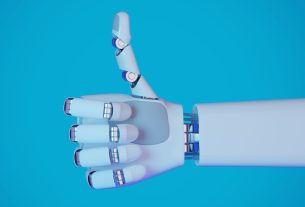

I don’t think the answer is abstinence – I think it’s discipline.Luke Jones via Unsplash // https://unsplash.com/license
At Cambridge, I noticed a pattern. Compared to friends at home, school, and even your own family, people here can be almost desperately anti-AI. There’s a kind of puritanical aversion to anything generated by AI. My coursemates told me they didn’t even know what ChatGPT’s chat interface looked like. Whether it’s true or just a performance of academic snobbery doesn’t really matter. What’s interesting is that in institutions like this, people are so resistant to something that clearly won’t go away.
Now, this is not to misunderstand my stance. Technology (like any kind of change) comes with risks. Cheating and plagiarism are obvious, but they are only part of the picture. In theory, you could even outsource your entire degree to AI. There are also more extreme concerns, such as psychological problems caused by AI, the rise of “AI slop” in the arts, and fears that it will erode critical thinking and true creative intent. And the environmental costs cannot be ignored. The enormous power demands of large language models, the resulting carbon footprint, and the enormous amounts of water required to cool the hardware have real and significant impacts.
“You can’t protect yourself from what’s coming by burying your head in the sand.”
Sure, there’s good reason to care if it’s written by an LLM, but I think some of the disgust usually comes from AI being perceived as a threat. Part of it is simple. People don’t like change. People like this have always existed. These are people who resist the transition from manuscript to print, from letters to email, or from landlines to mobile phones. But there are also deeper layers. For some, AI threatens not only their jobs, but also their value, whether it’s their hard-earned Cambridge degree or their ambitious future careers. I understand that concern. If copying and pasting from an LLM is easier than reading, writing, or thinking, questions naturally arise about effort and fairness. Those who did not have access to these tools may expect others to experience the same intellectual labor as them. In that sense, we are often reacting to something legitimate: dissatisfaction with scammers and free riders.
But boycotting AI entirely, or ignoring what it produces simply because it’s machine-generated, doesn’t actually solve the problem. Burying your head in the sand won’t protect you from what’s coming. I’m not going to list all the ways AI can help. Some people have quietly admitted that they have used this tool to interrogate essays in front of directors, asking them to simulate familiar Socratic questions. Some people use it for SPAG checks, emails, LinkedIn posts, and even recipes.
“The problem isn’t the technology; it’s the user’s refusal to make decisions.”
More broadly, technology has never directly undermined creativity in the way people feared. Factory automation did not eliminate jobs, photography did not eliminate paintings, and the Internet did not eliminate printed materials. These arguments assume that human creativity manifests as a fixed amount, whereas in reality it tends to expand and adapt. There is a contradiction in fearing AI as the end of creativity, even though AI itself is a product of human creativity. So perhaps the question is not about the tool, but about how people choose to use it.
Personally, I don’t think the answer is abstinence. I think it’s a discipline. Like any tool, AI requires skill. It rewards judicious use and punishes laziness. You can see that by looking at the output. Overuse creates clichés and stylistic repetition, a slightly empty tone that everyone has come to recognize. At that point, the problem isn’t technology. It is the user’s refusal to judge. The idea behind the prompt still sets the standard. That’s why the real danger may not be AI itself, but unreflective intellectual passivity and overdependence. Yet, what if AI does not so much reveal passivity as create passivity?
I also think there is a certain kind of snobbery at play. That is, a reluctance to engage in machine learning coupled with intellectual independence and a strong sense that knowledge is personal and individually curated. Completely refusing to even consider how it might be used productively starts to look like some kind of gatekeeping. That is, the claim that scholars, through lectures, supervision, and books, are the only legitimate sources of knowledge. AI has the potential to challenge its lack of scholarship and thereby certain kinds of authority.
Some of the backlash, in faculty newsletters and pre-submission warnings for coursework, suggests that students can’t be trusted or are no longer worth teaching, and feels more like a mixture of moral panic and tarnished reputation than principled resistance. At the same time, there’s something strangely contradictory about the way we talk about AI. On the one hand, we reduce it to a set of practical possibilities. On the other, we inflate it into something almost mythical, like a vaguely malevolent looming superintellectual force. Both frames are missing something. Environmental, psychological and educational influences should not be ignored, but neither should we panic or feel that decline is inevitable. If we approach AI with only contempt and fear, we risk missing out on what it really has to offer. And more importantly, it avoids the more difficult question: not whether to use it, but how to use it successfully.