


Large-scale language models (LLMs) are the backbone of many computing platforms and drive innovation that impacts a wide range of technical applications. These models are critical to processing and interpreting vast amounts of data, but are often hampered by high operational costs and inefficiencies associated with the use of system tools.
Optimizing the performance of LLM without incurring prohibitive computational costs is a key challenge in this field. Traditionally, LLMs operate under a system that uses different tools for specific tasks, regardless of the specific needs of each operation. This extensive tool activation wastes computational resources and significantly increases costs associated with data processing tasks.
The new methodology improves the approach to tool selection in LLM by focusing on the accuracy of task-based tool deployment. By identifying the underlying intent of user commands through advanced reasoning capabilities, these systems can selectively streamline the toolset needed to perform a task. This strategic tool launch reduction directly contributes to increased system efficiency and reduced computational overhead.
of Geckopt This system, developed by researchers at Microsoft Corporation, represents a cutting-edge approach to intent-based tool selection. This methodology includes preemptive user intent analysis, which enables optimized selection of API tools before task execution begins. The system works by narrowing down potential tools to those most relevant to the specific requirements of a task, minimizing unnecessary activations and focusing computing power where it is needed most.
Preliminary results implementing GeckOpt in a real-world environment, particularly on the Copilot platform with more than 100 GPT-4-Turbo nodes, show promising results. The system significantly reduced token consumption by up to 24.6% while maintaining high operational standards. These efficiency gains translate into reduced system costs and improved response times without significantly sacrificing performance quality. The conducted tests showed that the deviation of the success rate was within a negligible range of 1%, highlighting the reliability of his GeckOpt under different operating conditions.

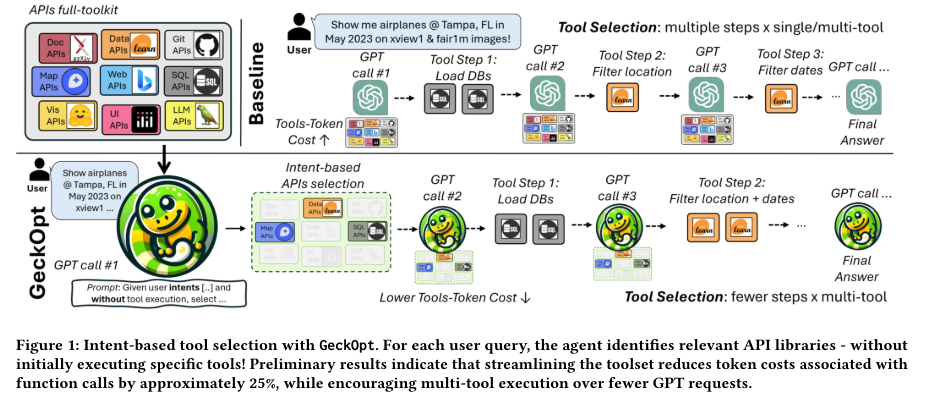
GeckOpt's success in streamlining LLM operations makes a solid case for widespread adoption of intent-based tool selection techniques. The system effectively reduces operational load and optimizes tool usage, reducing costs and enhancing the scalability of LLM applications across various platforms. The introduction of such technologies will change the computational efficiency landscape and provide a sustainable and cost-effective model for future large-scale AI implementations.

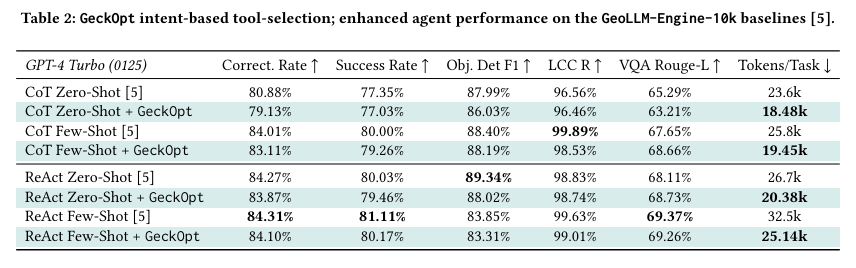
In conclusion, integrating intent-based tool selection through a system like GeckOpt is a progressive step towards optimizing language model infrastructure at scale. This approach significantly reduces the operational demands of LLM systems and facilitates a cost-effective and highly effective computing environment. As these models evolve and their applications expand, technological advances will be critical to harnessing the potential of AI while remaining economically viable.
Please check paper. All credit for this research goes to the researchers of this project.Don't forget to follow us twitter.Please join us telegram channel, Discord channeland linkedin groupsHmm.
If you like what we do, you'll love Newsletter..
Don't forget to join us 40,000+ ML subreddits


Sana Hassan, a consulting intern at Marktechpost and a dual degree student at IIT Madras, is passionate about applying technology and AI to address real-world challenges. With a keen interest in solving practical problems, he brings a new perspective to the intersection of AI and real-world solutions.


