

OpenShot 3.5, the open source video editor, has been released with a redesigned default timeline and various workflow and stability enhancements.
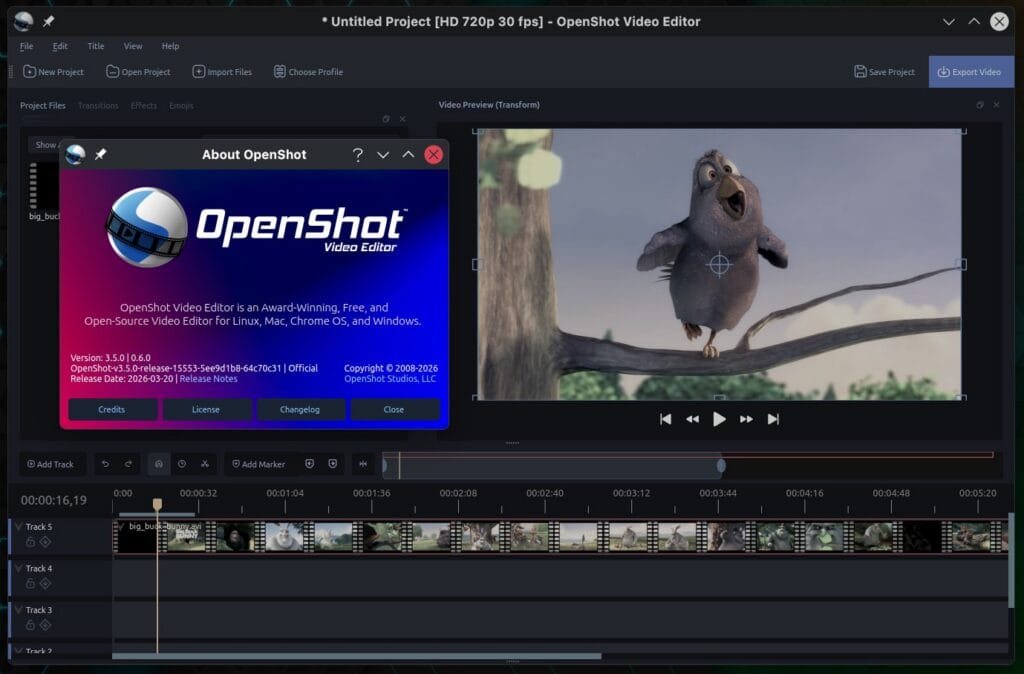
The main update is a new QWidget-based timeline, which is now enabled by default. Experience smoother zooming, scrolling, dragging, cropping, and snapping, especially on large projects. Multi-clip editing is also more consistent and responsive.
Additionally, the new Keyframes panel is now part of the default workflow, making editing more precise. Enjoy smoother keyframing, better selection, improved snapping, high DPI thumbnails, and live trim feedback.
Export performance has also been improved, with updated presets producing smaller files with sophisticated encoding without sacrificing quality. Blender GPU rendering is now the default for animated titles, resulting in faster rendering. Hardware decoding checks are also more reliable and user-friendly.
OpenShot 3.5 introduces experimental ComfyUI integration, providing early support for AI-driven workflows such as content generation, object tracking, segmentation tools, and custom JSON pipelines. This update also improves remote server handling and progress reporting, but this feature is still in development.
In terms of performance, developers report that OpenShot 3.5 has achieved an overall improvement of approximately 35%, particularly in effects processing and frame processing. Users can expect faster previews, better editing responsiveness, and a smoother experience.
Audio features have also been improved. Transitions now use equal power crossfades by default, making it easier to fade in and fade out. Faster audio decoding and improved waveform generation help you work more efficiently with audio-intensive projects.
Effects include masking improvements and chroma key updates. The new default Chroma Key mode gives softer edges and handles halos better. In addition, we’ve expanded mask support and improved animated masks to make compositing and selection effects more accurate.
Finally, there are numerous bug fixes addressing timeline behavior, thumbnail generation, file handling, and playback. Additional updates improve cross-platform consistency, including improved dependency management for libraries such as libsndfile for AppImage builds.
For more information, see the changelog or read the announcement.


