Kennesaw, Georgia | April 21, 2026
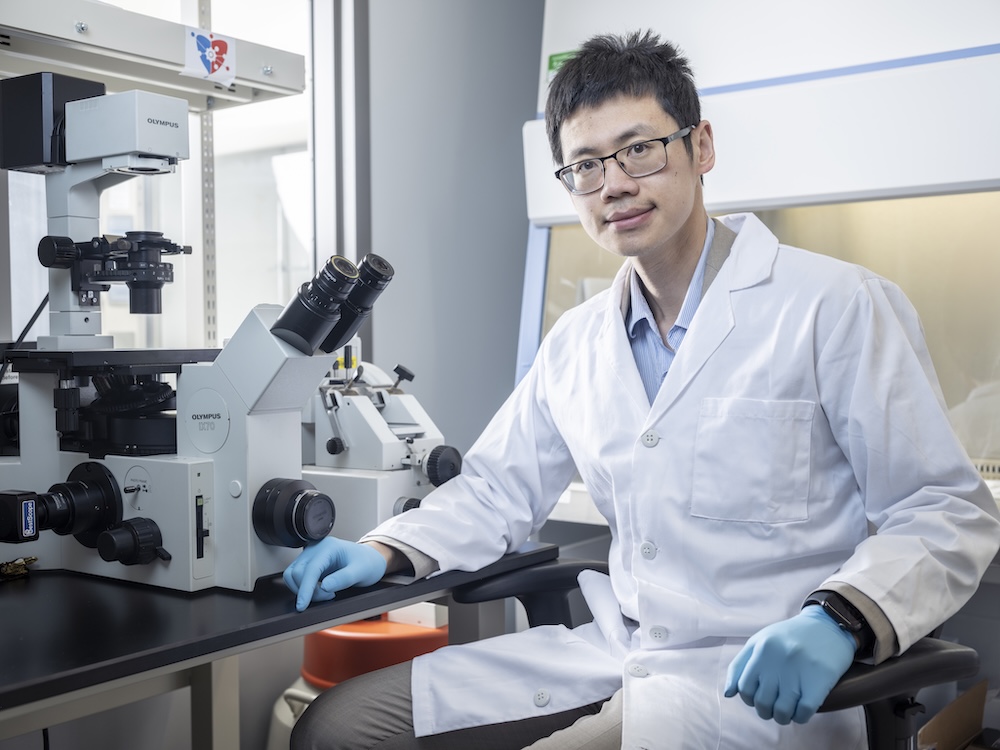
What if doctors could determine heart health before entering the operating room? At Kennesaw State University, researchers are leveraging artificial intelligence to do just that, transforming the way heart disease is diagnosed and treated.
The $522,695 project is led by Assistant Professor Lei Shi of the Department of Mechanical Engineering at Southern University of Technology. National Institutes of HealthExplore how generative AI can be integrated with biomechanical heart modeling to improve the diagnosis and treatment of heart disease.
The research focuses on analyzing 3D medical images of the heart and using AI to predict how the heart will function. Traditional cardiac modeling relies on computational methods that divide the heart into millions of small elements, requiring significant processing time. Shi’s approach uses AI trained on thousands of simulations to replicate those calculations almost instantly, allowing the system to go from raw medical images to functional analysis in a fraction of the time.
“Traditionally, this type of simulation could take hours or even weeks to complete,” Shi says. “With AI, we can reduce that time to milliseconds while maintaining accuracy.”
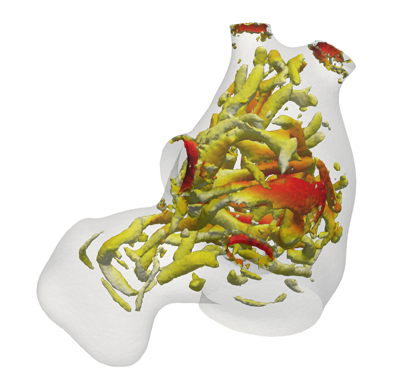
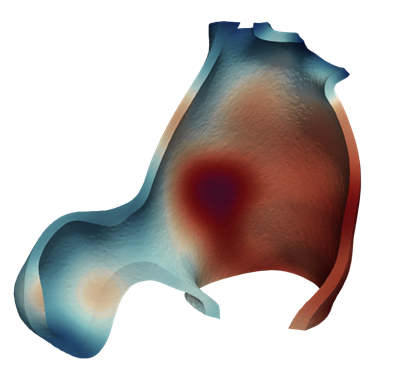
At the heart of this project is the process of converting standard medical scans, such as CT or MRI images, into detailed computational models of a patient’s heart. These models go beyond visualization, allowing researchers to simulate how the heart moves, how stiff the tissue is, and where stress is concentrated with each heartbeat.
Shi’s goal is to create patient-specific models that reflect everyone’s unique characteristics. This research reflects a broader effort within Kennesaw State to apply engineering principles to real-world health challenges.
“Each patient’s heart is different not only in shape but also in hardness and internal structure,” Shi says. “We want to build a model that captures these differences to help doctors better understand each patient’s condition.”
The speed of this process has important implications for patient care. By providing faster insights, clinicians can make more informed decisions and respond more quickly to patient conditions.
This technology also allows doctors to test treatment options before performing surgery. By simulating different approaches, doctors can assess how the heart will respond without putting the patient at risk.
“Doctors can virtually change the structure of the heart and test different treatment plans to see what happens,” Shi said. “This allows us to choose the best option before performing the actual surgery.”
This project is supported through collaboration with clinicians. emory universityprovide medical imaging data and help validate models against real patient outcomes. Access to this data remains one of the most important challenges in the field, making partnerships essential for research.
SPCEET Dean Lawrence Whitman said the project highlights the university’s commitment to innovation at the intersection of engineering and medicine.
“This study highlights the power of interdisciplinary collaboration in addressing global health challenges,” Whitman said. “Beyond the current hype surrounding artificial intelligence, Dr. Lee’s approach demonstrates practical applications of AI that can have a meaningful and positive impact on an individual’s health.”
Beyond clinical applications, this project creates opportunities for Kennesaw State University students. Undergraduate researchers contribute to data processing and model development, gaining practical experience in a rapidly evolving field.
Shi said the long-term goal is to create a complete end-to-end system that directly connects medical image processing to machine analysis and makes advanced modeling tools more accessible in the clinical setting.
“Our goal is to create a framework for understanding how the heart works directly from medical images,” he said. “If we can do that quickly and accurately, we can help physicians make better decisions and improve patient care.”
This research was funded by National Institutes of Health grant number 1R15HL181637-01.
– Story by Raynard Churchwell
Photo by Darnell Wilburn.
Related articles
A leader in innovative teaching and learning, Kennesaw State University offers undergraduate, graduate, and doctoral degrees to more than 51,000 students. Kennesaw State University is a member of the University System of Georgia, which has 11 academic colleges. The university’s vibrant campus culture, diverse population, strong international connections, and entrepreneurial spirit attract students from across the country and around the world. Kennesaw State University is a Carnegie-designated doctoral research institution (R2), one of an elite group of only 8 percent of U.S. universities with R1 or R2 status. For more information, visit kennesaw.edu.