NEW YORK — New York City public schools released long-awaited artificial intelligence guidance Tuesday. The guidance encourages teachers to “explore” using new technology in planning lessons, units and drafting communications, but prohibits the use of artificial intelligence in grading, discipline and other important decisions about students.
More than three years after the city temporarily banned AI chatbots on school networks and devices, this guide marks the first time the nation’s largest school district is providing real-world decision support for the use of artificial intelligence in the classroom.
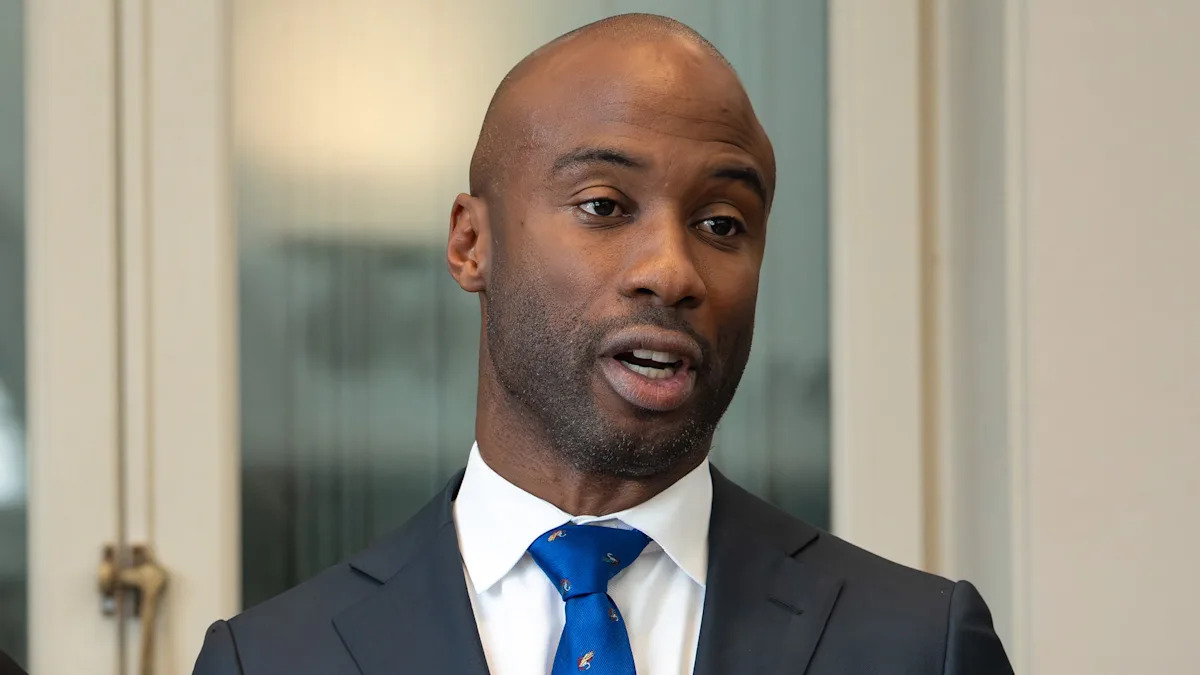
“While no tool or resource can replace what teachers bring into the classroom every day, AI can be used as a powerful tool to streamline educators’ work, giving them more time to focus on helping students develop essential critical thinking skills,” Superintendent Kamal Samuels said in a statement.
“This guidance is designed to help educators choose tools that support students without compromising safety or academic integrity, and to teach kids how and when to use AI appropriately.”
After 45 days of public comment, the city plans to release a more comprehensive AI “playbook” in June. The material is likely to spark strong reactions across the city, with multiple school boards and community boards passing resolutions calling for an “AI moratorium,” with some calling for a moratorium of up to two years.
As the Daily News reported on Monday ahead of the announcement, the guidance features a “traffic light” framework, outlining the use of AI in education as prohibited or “red”, approved or “green”, and “yellow” applications in between.
Students will be allowed to use AI – “yellow” applications, which principals and teachers are told to proceed with caution – for “research, exploration and creative projects.”
Tuesday’s release did not include guidance for teachers on how to design instruction so that AI supports, rather than replaces, student thinking. Education officials said such a guide is still in the works.
School systems are also still developing instructional plans for each grade level, recognizing the differences in appropriate usage for elementary, middle school, and high school students. Officials also promised to provide more information on academic integrity and a public list of all AI tools approved for classroom use.
“Red” uses include employing AI to make decisions about students related to discipline, graduation or promotion, or placement in advanced classes. Schools cannot use this new technology to create individualized education plans for students with disabilities. It also cannot be used for student monitoring or counseling.
Student data cannot be used to train AI models. The use of AI tools in public schools requires a 10-step data privacy review process that follows federal, state, and city laws. However, educators acknowledged that the review process does not currently evaluate AI tools for algorithmic bias or effectiveness in the classroom.
“NYCPS is committed to building its expanded assessment capacity,” officials wrote in the guidance.
However, the guidance encourages teachers to use AI to “investigate lesson ideas, approaches, and unit planning.” It can also be used to support teacher training, scheduling, or resource planning.
“Green” applications also include drafts of non-essential communications, while “important” messages fall into the “yellow” category.
The guidance also suggests that AI can be used as a tool to better educate students with disabilities and those who do not speak English at home. But at the same time, translations and disability accommodations “must be reviewed by qualified staff,” officials wrote.