Artificial intelligence can produce videos so realistic that they are becoming increasingly difficult to distinguish from real footage. But a computer science team led by researchers at the University of California, Riverside has developed a tool that does more than just identify whether a video is fake. It also determines which AI system created it.
The new framework identifies visual patterns within fake video frames unintentionally introduced by an AI video generator, providing a forensic path to identifying the system that created the video.
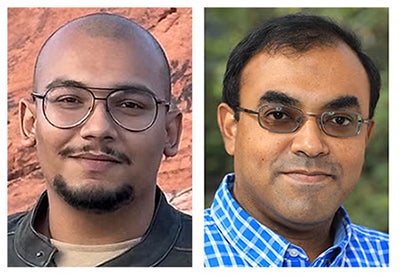
“Patterns are like fingerprints that a generative model leaves behind, and our goal here was to see if the signatures could be distinguished between different generators. Indeed, we found that there were distinct fingerprints,” said Rohit Kundu, a UCR doctoral student who led the study under the guidance of Professor Amit Roy Chowdhury and in collaboration with researchers from YouTube and Google DeepMind. (Roy-Chowdhury is also co-director of the UC Riverside Artificial Intelligence Research and Education (RAISE) Institute.)
The new framework is called SAGA (short for Source Attribution for Generated AI Video). This is one of the first large-scale efforts to trace AI-generated videos back to their origins.
This innovation comes as generative AI systems advance rapidly and synthetic video is increasingly used in entertainment, advertising, education, social media, and politics. At the same time, there are growing concerns about abuse in misinformation campaigns, fraud, and other deceptive activities.
“Knowing that a video is fake is often not enough,” the researchers wrote. “The critical need has shifted from whether something is fake to where it comes from.”
The ability to identify the source of AI-generated content can help digital forensic investigators track misinformation campaigns, help regulators enforce transparency requirements, and help technology companies understand how synthetic media spreads online.
Unlike still images, videos contain motion and temporal information, how visual elements change from one frame to the next over time. Various AI video generators generate subtle patterns in those changes, creating unique artifacts.
To detect these artifacts, the team analyzed both spatial details within individual frames and temporal relationships across the entire video sequence. Rather than examining a single frame, the system studies how visual information evolves from moment to moment.
A key innovation is a technology called Temporal Attendant Signatures (T-Sig). These signatures visualize unique patterns associated with different video generators. By averaging patterns across many videos produced by the same AI system, SAGA generates a distinctive profile that helps distinguish one generator from another.

The researchers tested SAGA using a public dataset containing videos produced by 19 different AI video generators. These included both text-to-video systems, which create videos from written prompts, and image-to-video systems, which animate static images.
The system can also determine whether a video is real or synthetic, identify whether it was created from text or images, distinguish between different versions of the underlying AI model, and identify the development team behind the model.
This research is described in the paper “SAGA: Source Attribution for Generated AI Video.” In addition to Kundu and Roy-Chowdhury, co-authors include YouTube’s Vishal Mohanty, Shan Jian, and Athula Balachandran, and Google DeepMind’s Hao Xiong.
Last year, Kundu and Chaudhry led a team that developed an artificial intelligence model to detect video tampering. Their current efforts are part of a continued effort to make generative AI more secure as increasingly sophisticated AI video tools become widely available, Kundu said.
“It’s definitely a game of cat and mouse,” he said.