
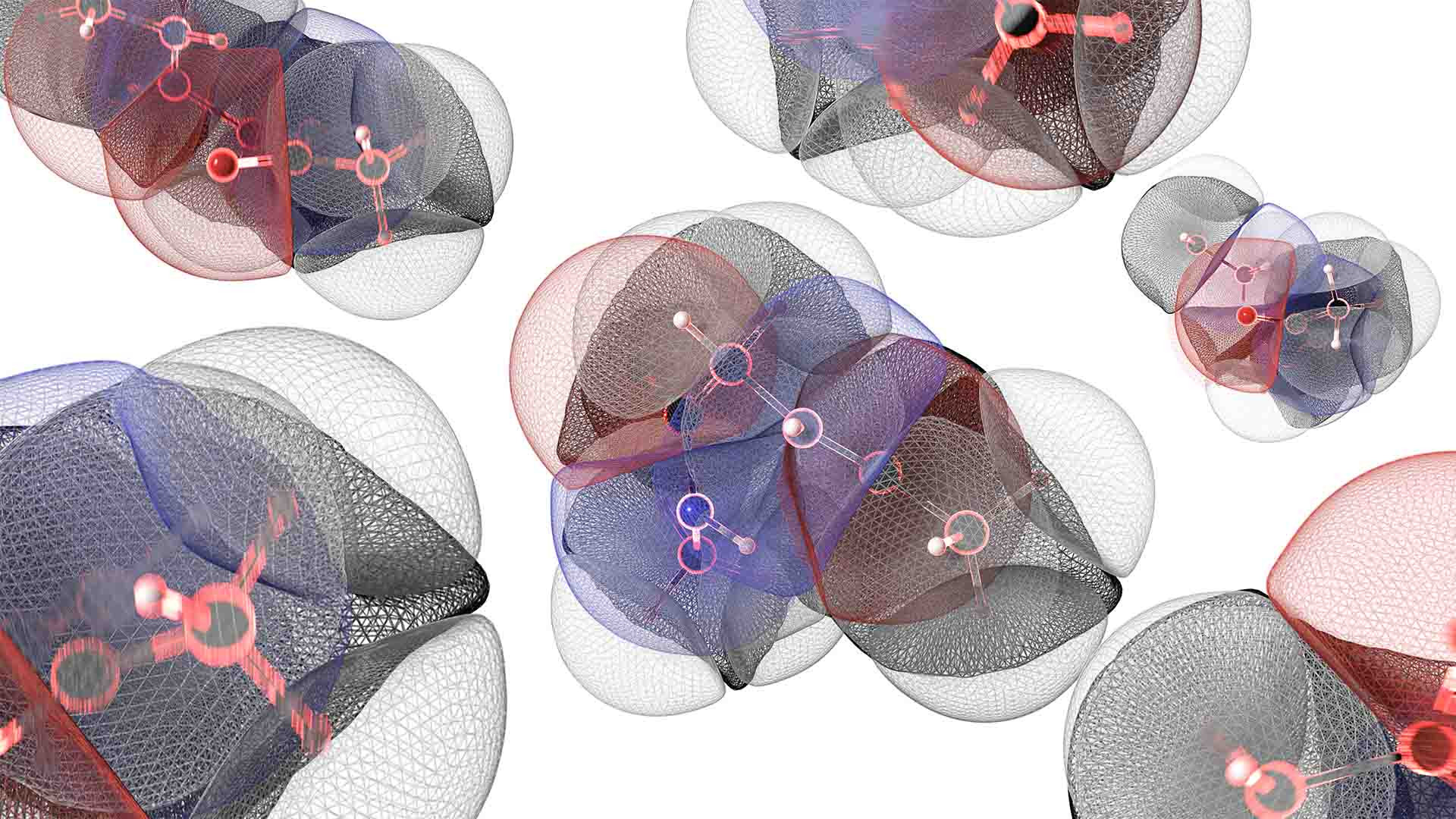
This research communication chemistryExplore the first AI-powered model that can keep molecular simulations running safely and smoothly, even when molecules are pushed to extreme conditions. Simply put, this model prevents molecules from “breaking down” in simulations, allowing researchers to study how molecules behave over long periods of time and at very high temperatures. This stability opens the door to more reliable discoveries in areas such as drug development, new materials, and sustainable chemistry without relying on expensive supercomputers.
Building more reliable AI molecular models
Machine learning potentials (MLPs) are widely used to approximate the quantum mechanical behavior of molecules, but most existing models become unstable when molecules experience thermal, motion, or structural distortion. This makes it extremely difficult to achieve reliable simulations over long periods of time.
The team in Manchester (Bianfe Kabuyaya Isamra, Olivia Aten, Mohammadsein Nosratchou and Professor Paul Poplier) solved this long-standing challenge by integrating deep physics knowledge directly into the model.
Researchers built a new AI model using Gaussian process regression to understand how atoms in molecules behave naturally. To do this, they fed the model with detailed information about how atoms actually interact, based on the rules of quantum physics, allowing the AI to make more realistic predictions about how each part of the molecule should move.
They also found that a small mathematical choice called the “prior mean function” affects the stability of the model. Introducing this feature gave the AI the right “starting point” to create and maintain a stable model even when the molecules were stretched, heated, or vibrated.


