image:
Our integrated multi-omics and machine learning framework makes two important interrelated contributions. First, we establish a highly accurate and robust nine-gene expression signature for the diagnosis and stratification of PSCs, providing an easily accessible molecular tool. Second, we significantly advance mechanistic understanding by establishing disruption of ribosomal homeostasis as a causal pathway in PSC and naming plasma SBDS proteins as important protective factors and high-priority therapeutic targets, particularly through genetic causal inference. Therefore, this study not only provides a powerful biomarker panel for clinical use, but also goes beyond genetic associations and reveals druggable causal mechanisms. The strategies outlined here provide a generalizable blueprint for translating complex disease genetics into causal biomarkers and mechanistic treatment hypotheses.
view more
Credit: Guangming Li, Yabo Ouyang
Background and purpose
Primary sclerosing cholangitis (PSC) is an immune-mediated cholestatic liver disease. Its molecular pathogenesis remains poorly defined, hindering the development of mechanism-based diagnosis and treatment. Therefore, this study aimed to identify the key molecular drivers and causal biomarkers of PSC by integrating transcriptomics, machine learning, and genetic causal inference.
method
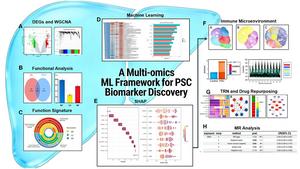
We have deployed an integrated computational framework that combines transcriptomics, network biology, machine learning, and genetic causal inference. Peripheral blood transcriptomes from PSC patients and controls were analyzed to identify disease-associated modules. Candidate genes were purified by protein-protein interaction network and multi-algorithm machine learning screening. Causal inference was performed using two-sample Mendelian randomization that integrates summary statistics from plasma protein quantitative trait loci and PSC genome-wide association studies.
result
Transcriptome analysis revealed PSC-associated modules enriched in ribosome biogenesis and proteostasis pathways. A nine-gene signature optimized for machine learning, including PTMA, SUMO1, Schwachman-Bodian Diamond syndrome (SBDS), RPL7, EIF1AX, ANP32A, PCNA, FAM98A, and MPHOSPH6, achieved high diagnostic accuracy (mean AUC = 0.908) and was consistently downregulated in PSCs. This feature was associated with a remodeled immune microenvironment characterized by bone marrow bias and specific transcriptional-immune covariation patterns. Mendelian randomization identified SBDS as a putative causal protective factor, with genetically engineered elevated plasma SBDS protein levels strongly associated with reduced PSC risk (IVW OR = 0.525, 95% CI: 0.356-0.773, P = 0.001). Sensitivity analyzes supported the validity of Mendelian randomization assumptions.
conclusion
Our integrated multi-omics and machine learning framework makes two important interrelated contributions. First, we establish a highly accurate and robust nine-gene expression signature for the diagnosis and stratification of PSCs, providing an easily accessible molecular tool. Second, we significantly advance mechanistic understanding by establishing disruption of ribosomal homeostasis as a causal pathway in PSC and naming plasma SBDS proteins as important protective factors and high-priority therapeutic targets, particularly through genetic causal inference. Therefore, this study not only provides a powerful biomarker panel for clinical use, but also goes beyond genetic associations and reveals druggable causal mechanisms. The strategies outlined here provide a generalizable blueprint for translating complex disease genetics into causal biomarkers and mechanistic treatment hypotheses.
Full text
https://www.xiahepublishing.com/2310-8819/JCTH-2025-00676
This research recently Journal of Clinical and Translational Hepatology.
of Journal of Clinical and Translational Hepatology (JCTH) is owned by the Second Affiliated Hospital of Chongqing Medical University and published by XIA & HE Publishing Inc. JCTH publishes high-quality peer-reviewed research in the translational and clinical human health sciences of liver disease. JCTH has established high standards for the publication of original research. This standard is characterized by novelty of research, quality, and ethical conduct in the scientific process and communication of research results. Each issue includes articles by leading authorities on hepatology topics germane to the latest challenges in the field. Special features include reports on the latest advances in drug development and technology related to liver disease. JCTH’s regular features also include editorials, communications, and invited commentaries on the rapidly evolving field of hepatology. All papers published by JCTH, solicited and unsolicited, must pass a rigorous peer review process.
Follow us on: @xiahepublishing
Follow us on LinkedIn: Xia & He Publishing Inc.
journal
Journal of Clinical and Translational Hepatology
Article title
Multi-omics and machine learning framework identifies plasma SBDS as a causal biomarker and therapeutic target for primary sclerosing cholangitis
Article publication date
March 20, 2026
Disclaimer: AAAS and EurekAlert! We are not responsible for the accuracy of news releases posted on EurekAlert! Use of Information by Contributing Institutions or via the EurekAlert System.