
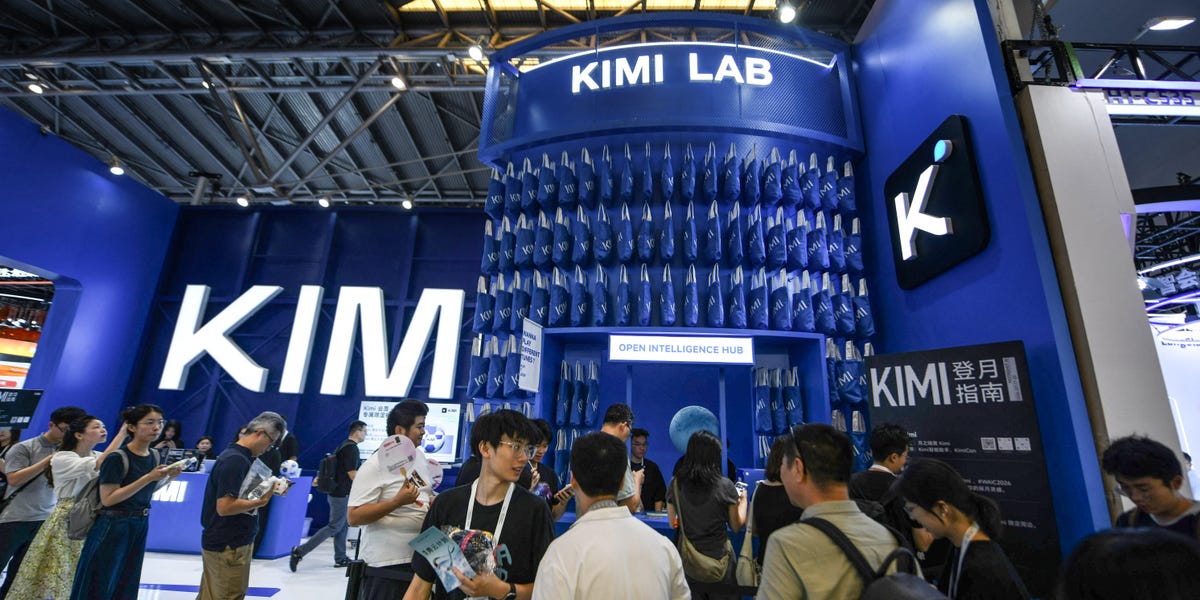
One of China’s biggest AI players is struggling to cope with new success.
In a post on Sunday X, Chinese startup Moonshot AI wrote that its recently released Kimi K3 model has received “much more love” than expected, putting a strain on the GPU.
“Over the past 48 hours, demand has approached the limits of our current production capacity,” the company wrote. “To protect the experience of existing subscribers, we are pausing new subscriptions and prioritizing compute for current members.”
It added that existing subscribers are not affected and that it is adding capacity as soon as possible to “reopen new subscriber spots in bulk.”
Moonshot AI announced the launch of Kimi K3 on Friday, calling it “Open Frontier Intelligence” and promising to rival models from Anthropic and OpenAI. The company said Kimi K3 has “cutting-edge intelligence” for tasks such as coding, knowledge work, and reasoning.
The company said it plans to release the complete open weight model on July 27th. This means developers can download the model’s trained parameters and run, modify, or build them themselves.
Moonshot AI added in the X post that it is testing another way to use compute more efficiently: splitting the membership tier into two plans. The two plans are “Kim Membership for Web, Apps, and Work, and Kim Code Membership for Coding Workflows.”
“This allows us to more accurately match our compute and stabilize the experience,” the company wrote.
The release of Kimi K3 is the latest sign that the gap in capabilities between frontier models from Chinese and American AI labs is closing. Anthropic and OpenAI have repeatedly called for stronger government regulations to help the U.S. maintain its lead over China in the AI race.
The Chinese model is ripe for business as many companies see it as a cost-effective alternative to the U.S. model. Several US executives, including Coinbase CEO Brian Armstrong and Airbnb CEO Brian Chesky, have spoken publicly about their companies using models such as Kimi, Z.ai’s GLM-5.2, and Alibaba’s Qwen.