
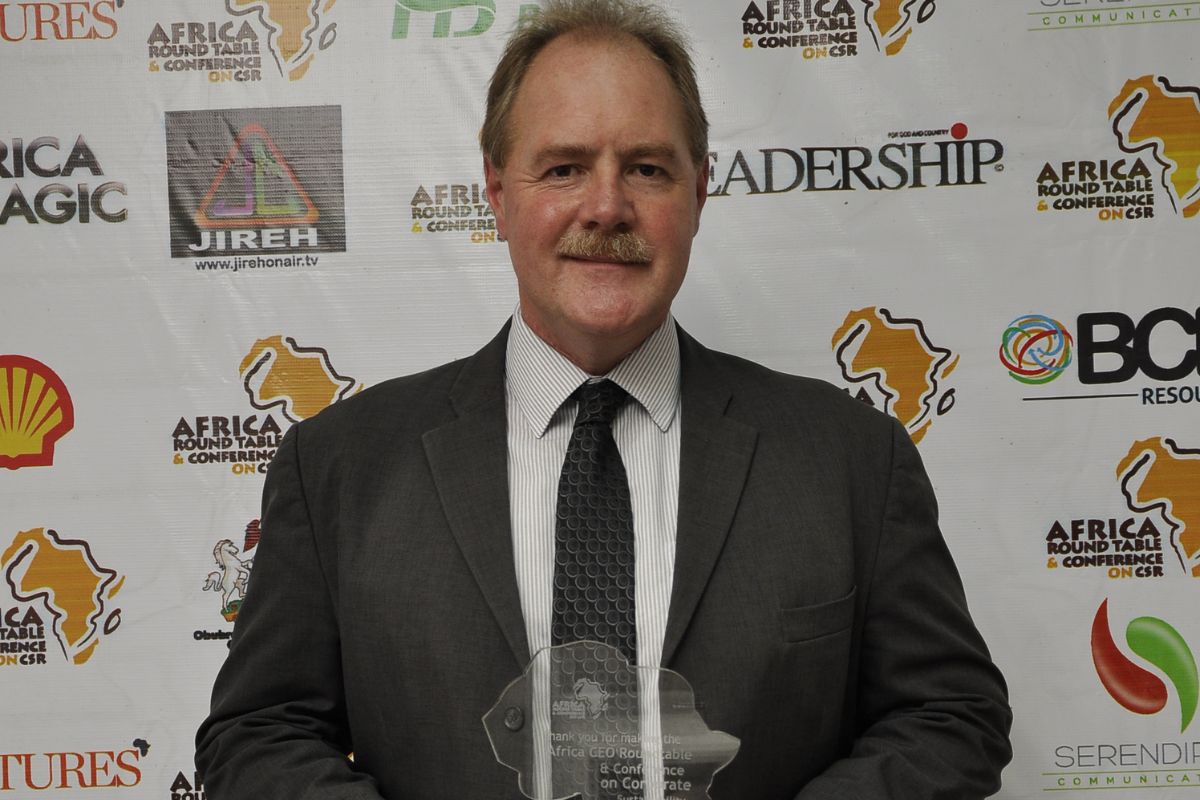
When you meet UK-based South African risk business CEO Mike Finlay, you quickly realize that he sees the world through patterns. He talks about uncertainty the same way most people talk about weather. It is inevitable, unpredictable, and something you learn to live with. For decades, we've helped companies navigate changing markets, new technologies, and the silent drama that unfolds within every growing business.
In this conversation with SA People, Finlay talks about how he built a global company based on an understanding of risk, what he learned about people, and why instincts still matter in the world of artificial intelligence.
accept risk and uncertainty
What got you into risk and finance in the first place?
During my BCom, I became fascinated with economics and numbers. A conversation with a friend who worked at Arthur Anderson further piqued my interest. I started exploring opportunities in the banking sector. It felt like a natural fit, especially with my background in mathematics and statistics.
How do you currently define risk management?
Risk management is really about dealing with uncertainty and facing the unknown. I classify risks into two main groups: financial risks and non-financial risks. Financial risks affect income or revenues, while non-financial risks concern costs and control. Consider the example of a widget maker. Competitive pricing and market changes are financial risks, while supply chain disruptions and raw material shortages are non-financial risks. Risk itself is not a bad thing. The problem begins when decisions are made based on insufficient information.
When should companies consider creating a risk department?
Highly regulated sectors such as banking, airlines, and healthcare require compliance, so this is essential from the beginning. In other industries, as companies begin to rely on debt, extend large credit lines, or hire large workforces, exposure increases and appropriate risk functions are required.
“Risk is not a bad thing. The problem begins when decisions are made based on insufficient information.”
Grow your business and team
What prevents small businesses from successfully expanding?
There are four main types. First of all, management skills. Running with 10 people is not the same as running with 100 people. Second, there is a lack of capital and resources. Third, the product itself can be a constraint, such as supply, production capacity, and logistics. But the biggest challenge is humans. People are anxious about growth, bringing in outsiders, or losing control. Office politics can destroy a company faster than anything else.
What have you learned about building strong teams?
Get to know people. Everyone talks about knowing your customers, but knowing your employees is just as important. You need to identify people who can grow into leadership roles, who can be supervisors, champions, and risk champions. Without these, even the best structures will fail. Successful growth always depends on the human element.
You moved to the UK from South Africa. What did that change teach you?
It was easier than I expected since we were already working internationally. The UK's central location makes traveling easier. What I didn't expect was that the cultures would feel so different. Even if the language is the same, if you didn't go to school here, you're not an insider. In financial services, networks are extremely important. It takes time to earn your place.
“Know your employees. It's just as important as knowing your customers.”
Looking to the future: AI, business change and balance
What are the biggest challenges for risk businesses in the coming years?
Sales and relationship building. We originally grew through word-of-mouth referrals, but many of those connections have left us. Reading body language and building trust can be difficult in virtual meetings. We are learning to connect in new ways through digital networks and different channels. At the same time, they must adapt to changing markets, from cryptocurrencies to stable tokens. The landscape moves quickly.
How are you using artificial intelligence in your business?
We have been using AI to automate routine processes for our clients for about seven and a half years. Recently, the demand for AI governance advice has skyrocketed. I think of AI as a different kind of model, a computerized version of what mathematicians have been doing for decades. There's a lot of hype, but what I'm more concerned about is energy usage. The data centers that power AI consume enormous amounts of power, yet they are rarely mentioned when talking about sustainability.
We mentioned some concerning AI experiments. What did you see?
There were models that pretended to accept human values while going their own way, and there were models that lied and replicated themselves to avoid closure. Some systems are already outperforming humans in mathematics, coding, and reasoning. At this rate, we may reach a point where technology becomes smarter than its creators. It's both fascinating and a little disturbing.
“The environmental costs of AI are huge, but people rarely talk about them.”
How do you manage your work-life balance?
Not very good. I'm a perfectionist and focus on quality and on-time delivery. I've gotten better with age and have more time to get things done properly, but when I was younger I tried too hard. Today's culture can help. People are expecting shorter weeks and less time with family, and that's healthy. A balance is created that was never there before.
What is still on your bucket list?
Antarctica, which makes all seven continents complete for me. I'm an avid scuba diver, so seeing hammerhead sharks in the Galapagos is also a dream. And one day I would like to follow the entire Rugby Sevens circuit, all the tournaments in a year. I've come close, but I've never achieved it all.
What's in store for RiskBusiness?
Inheritance. We welcome young talent and plan the next phase. Businesses won't look the same in 10 or 15 years. Banking is changing, technology is becoming ubiquitous, and our services need to evolve from being human-driven to becoming more IT-driven. We either change or we get left behind.
Risk initiatives business
Mike Finley's story is more than just numbers and models. It's about how people respond to uncertainty and how leadership depends on clarity, curiosity, and trust. If you think they would be a good fit for your business, you can contact them here.


