
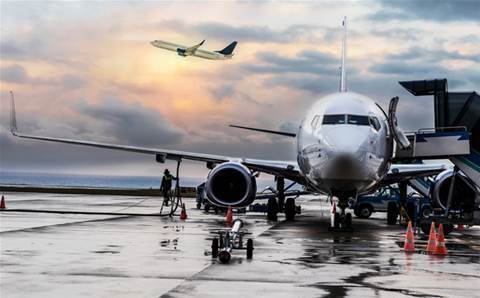
Melbourne Airport has begun leveraging agent AI for incident response across the airport and terminals, including scenarios that require rapid response.
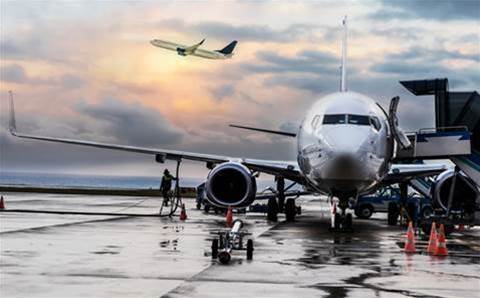
Irfan Khan, the airport operator’s head of data analytics, told attendees at the Sydney Microsoft AI Tour that the company has started integrating its agents with its SharePoint repository in a way that allows staff to quickly follow standard operating procedures (SOPs).
It also leverages AI to save time in creating shift incident reports for senior executives at airport operators.
Khan said the SOP document includes airport policies that can be applied to responses to everything from runway incidents such as aircraft tire bursts to passenger medical emergencies.
But until now, applying the information has relied on people who have experience with past cases or who have somehow gained knowledge of the procedure, he said.
“Historically, this information has been stored in people’s heads or in SharePoint, but when an event occurs, you need to respond immediately. You can’t wait for someone to tell you what to do, and you can’t access an SOP document to work or what to do,” Khan says.
“If you need an SOP for something, you need to know, ‘What should I do with this event?’
”[Now]we guarantee you’ll always have the most up-to-date information just by asking an agent. Whenever new SOPs are added or updated, you will always have the latest version. ”
Melbourne Airport also has an off-site operations center that continuously monitors events across the facility.
Facility staff are required to produce reports, but key executives at Melbourne Airport, including the chief executive, are fed up with them.
Mr Khan said producing reports was often a tedious task for staff who were already suffering from fatigue after long shifts. Staff can now prepare using AI agents.
He said the agency also gave staff the ability to create reports with detailed information specific to specific areas for the airport operator’s leadership team.
“It’s very common for people to get these ad-hoc questions or for leaders to want to know that an event has occurred or something needs to be prepared, but the people who have to provide information are very short on time. Agents help us a lot,” Khan explained.
Khan said airports continue to identify use cases for AI where demand is often driven by staff sharing their experiences internally.
However, he acknowledged that the deployment faced challenges at times. For example, agents were able to surface sensitive personal information that was accidentally shared from OneDrive accounts, he said.
Mr Khan said the situation had caused the airport to “take a step back” and begin reconsidering permission for staff to enter.
“Currently, our agents running on SharePoint are on sites and areas, but if there’s anything sensitive there, it’s clearly not meant to be accessed. So I think the biggest barrier we have right now in terms of running agents everywhere is that we have to manage them,” Khan said.


