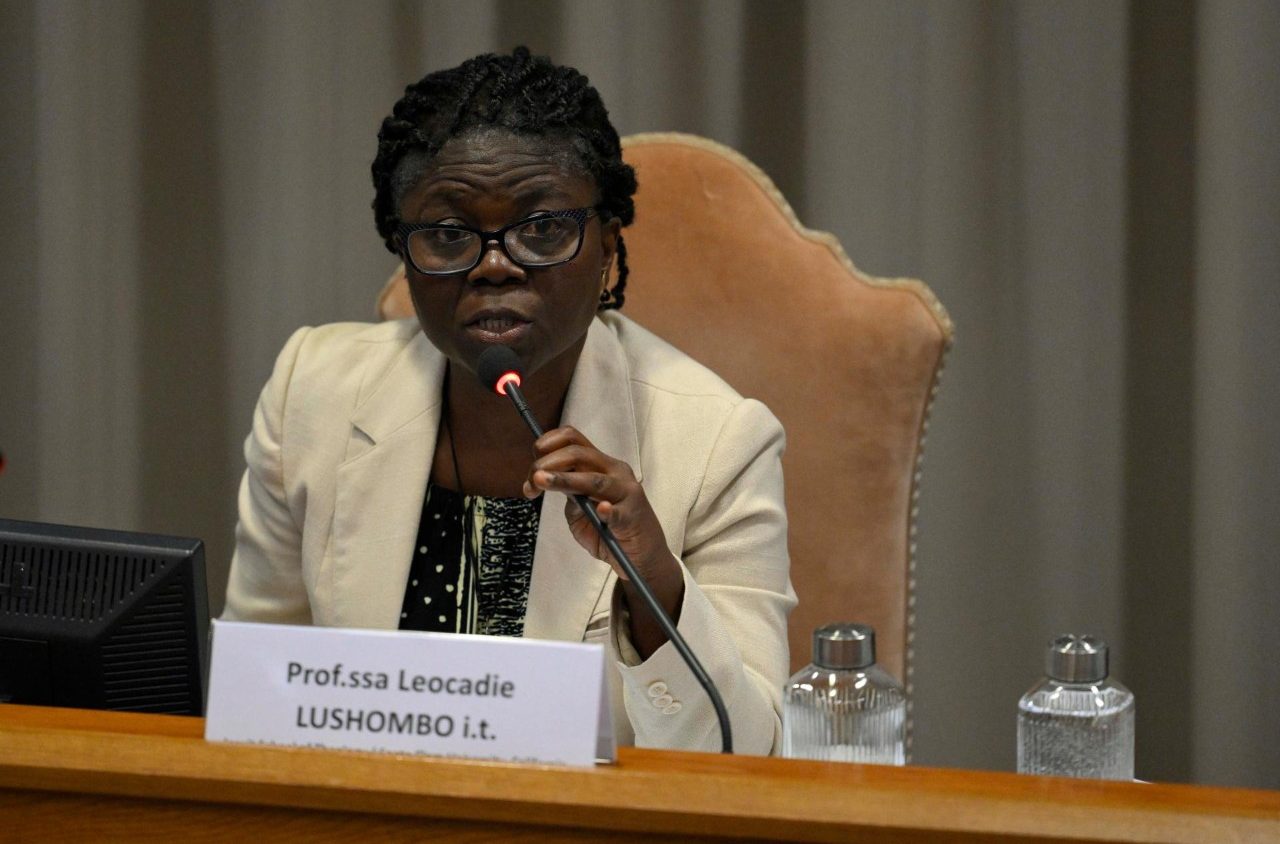
Professor Leokadi Wabo Rushombo, a Congolese theologian based at the Jesuit School of Theology at Santa Clara University in Berkeley, US, emphasized that the civilization of love, which Pope Leo XIV emphasized in his first encyclical Magnifica Humanita, promotes active participation and discussion based on love, with the goal of reducing social inequality.
Paul Samasmo – Vatican City
Professor Rushombo, a member of the Theresa Society, emphasized the importance of the encyclical’s message, which presents a positive and inspiring vision for humanity. She echoed the document’s critique of the continent’s exploitation and tendency towards neo-colonialism and extractive economies. According to her, Africa does not exist simply to be mined and exploited.
AI and its impact on Africa
In an interview about Magnifica HumanitasProfessor Rushombo, who was one of the speakers at the encyclical’s launch at the Vatican on May 25, shared her insights: Vatican news.
“I am in the Democratic Republic of Congo twice a year, systematically, and I have observed how AI and new technologies are impacting even rural communities in Congo. I have seen how mobile phones are creating new behaviors. What’s happening is increasing dependence, especially among young people, and the exploitation of labor. It’s a structural sin and a growing injustice.”Furthermore, this technology is not free; we pay for it when we buy cell phone data. And like colonialism, these new technologies are destroying the lives of local communities. In Congo, too, many people first look to their iPhones for answers. ” explained Professor Rushombo.
Community participation
When asked what could be done, Professor Rushombo said Magnifica Humanitas is not anti-AI. What needs to change is the mindset, the lack of accountability, and the companies ignoring the exploitation built into AI.
“So this encyclical is already a starting point, because it encourages dialogue on these issues. Let people participate, contribute and take responsibility. By involving communities in building solutions, sustainability It is a collective effort that creates change. Pope Leo XIV teaches us to build society, brick by brick, through community efforts, like Nehemiah rebuilding the walls of Jerusalem.”
All of this must be rooted in love, argues Professor Rushombo.
“What Pope Leo calls a ‘civilization of love’ means being rooted in loving others, caring for one’s neighbor and reducing inequalities. AI should not be used only for profit and capital accumulation, as this will widen social disparities and divisions,” Professor Rushombo stressed.

Magnifica Humanitas (AFP or licensor)
church and AI
Professor Rushombo believes that the church in Africa can play an important role in building an ethical future. The new encyclical provides an opportunity for the Church to put into practice the ongoing discussion on synodality, she said.
“Churches can create spaces where people can speak and be heard by facilitating community gatherings to discuss AI and media education among young people, and by strengthening participatory structures such as small Christian communities (SCCs) and justice and peace groups.”