

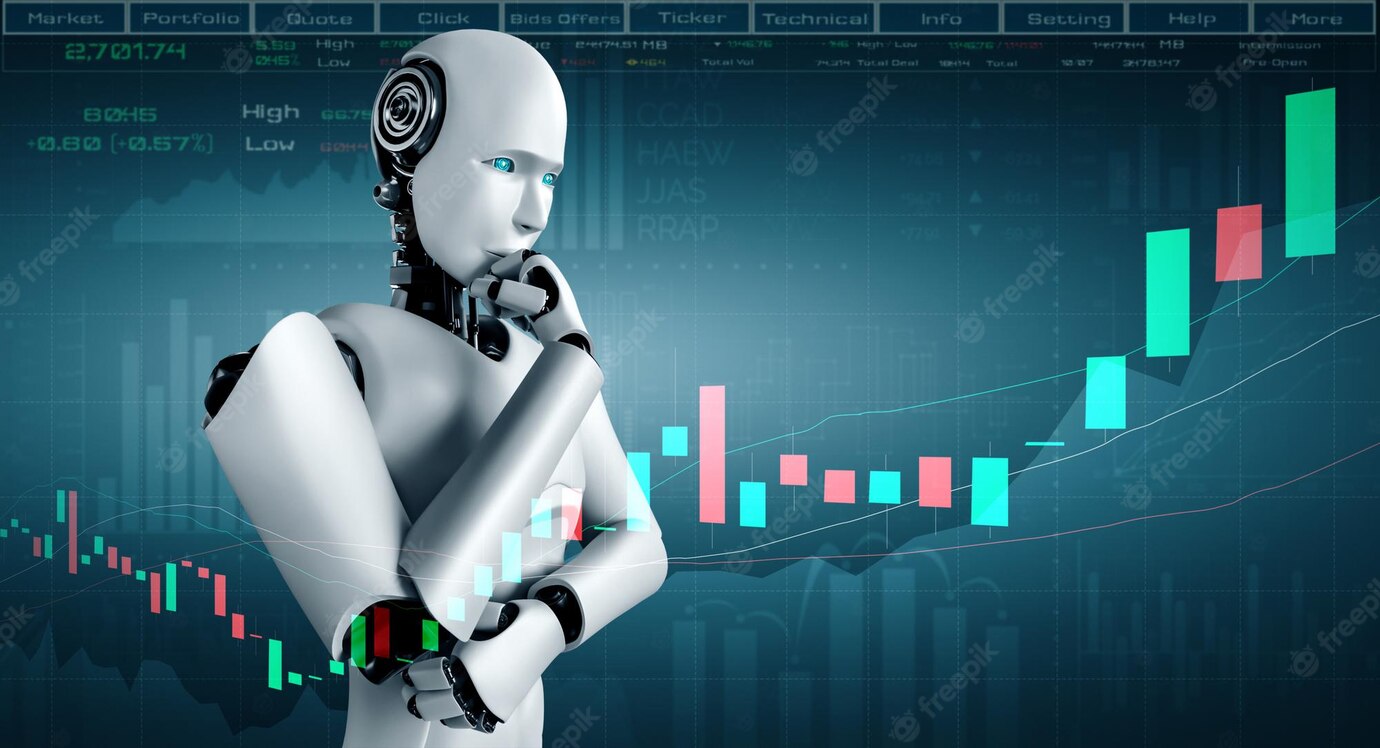
Financial markets are always complex and dynamic environments, and traders are constantly looking for innovative strategies to gain a competitive edge.
In recent years, machine learning has emerged as a game changer in the world of quantitative trading. Machine learning is revolutionizing the way quant traders operate and make investment decisions by harnessing the power of algorithms and data analytics. Let’s see how machine learning is reshaping the landscape of quantitative trading.
1. Learn from historical data
Machine learning algorithms can analyze vast amounts of historical market data to identify patterns, trends and anomalies that are not apparent to human traders. By learning from past market behavior, these algorithms can make predictions and generate trading signals with higher probability. In addition, machine learning models continuously receive new data, so they can adapt and improve their performance over time, making them more effective in dynamic market conditions.
2. Automated trading strategy

Quantitative trading involves developing and implementing complex trading strategies based on mathematical models. Machine learning allows traders to automate these strategies for faster and more accurate trade execution. Machine learning models can process information in real-time, enabling immediate response to market fluctuations, leading to more efficient trade execution and reduced latency.
3. Reveal sentiment analysis and news predictions
News and market sentiment play an important role in influencing financial markets. Machine learning algorithms can be trained to perform sentiment analysis on news articles, social media posts, and other sources of information. Understanding market sentiment allows quant traders to make more informed decisions and take advantage of market movements triggered by news events.
4. Improved risk management and portfolio optimization
Risk management is a fundamental aspect of trading. Machine learning helps quant traders build robust risk management models by analyzing historical data and identifying potential risks. Additionally, machine learning helps with portfolio optimization, helping traders build portfolios that maximize returns while minimizing risk.
5. Identify market anomalies
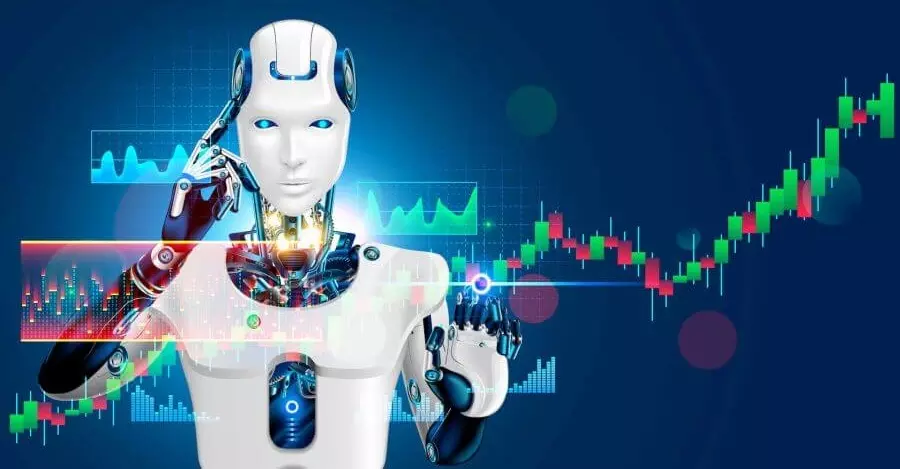
Financial markets are susceptible to anomalies caused by various factors, including market manipulation and technical glitches. Machine learning algorithms can detect these anomalies by analyzing large data sets, identifying irregular patterns and alerting traders to potential risks. This feature is especially valuable in high frequency trading where anomalies can have a significant impact on profitability.
6. Offer Algorithmic Trading Strategy
Machine learning enables quantitative traders to develop complex algorithmic trading strategies based on statistical analysis and predictive modeling. These strategies can take advantage of market inefficiencies and arbitrage opportunities that are difficult for human traders to identify. Algorithmic trading powered by machine learning allows you to execute trades at optimal prices and speeds, leading to improved trading performance.
7. Reduce emotional bias
Human emotions and biases cloud judgment and often lead to irrational trading decisions. Machine learning removes emotional bias from the trading process, making decisions based on data and statistical analysis rather than instinct and intuition. This allows for a more disciplined and consistent trading strategy.
8. Strengthening Reinforcement Learning for Adaptive Strategies
A subfield of machine learning, reinforcement learning enables algorithms to learn from their own actions and experiences. Quant trading can apply this to develop adaptive trading strategies that evolve based on market feedback. Reinforcement learning algorithms learn from both successes and failures to continuously improve the decision-making process.
The Next Challenge for Machine Learning in Quantitative Trading
Machine learning is undoubtedly transforming quantitative trading by providing powerful tools for data analysis, forecasting and automation. As technology continues to advance, quant traders will rely more and more on machine learning algorithms to gain deeper insight into financial markets and develop innovative trading strategies. However, remember that while machine learning enhances trading capabilities, the expertise and expertise of human traders is still essential to understanding market dynamics and making informed decisions. is important. Combining human intelligence and machine learning capabilities creates a powerful synergy that can lead to even greater success in the world of quantitative trading.


