
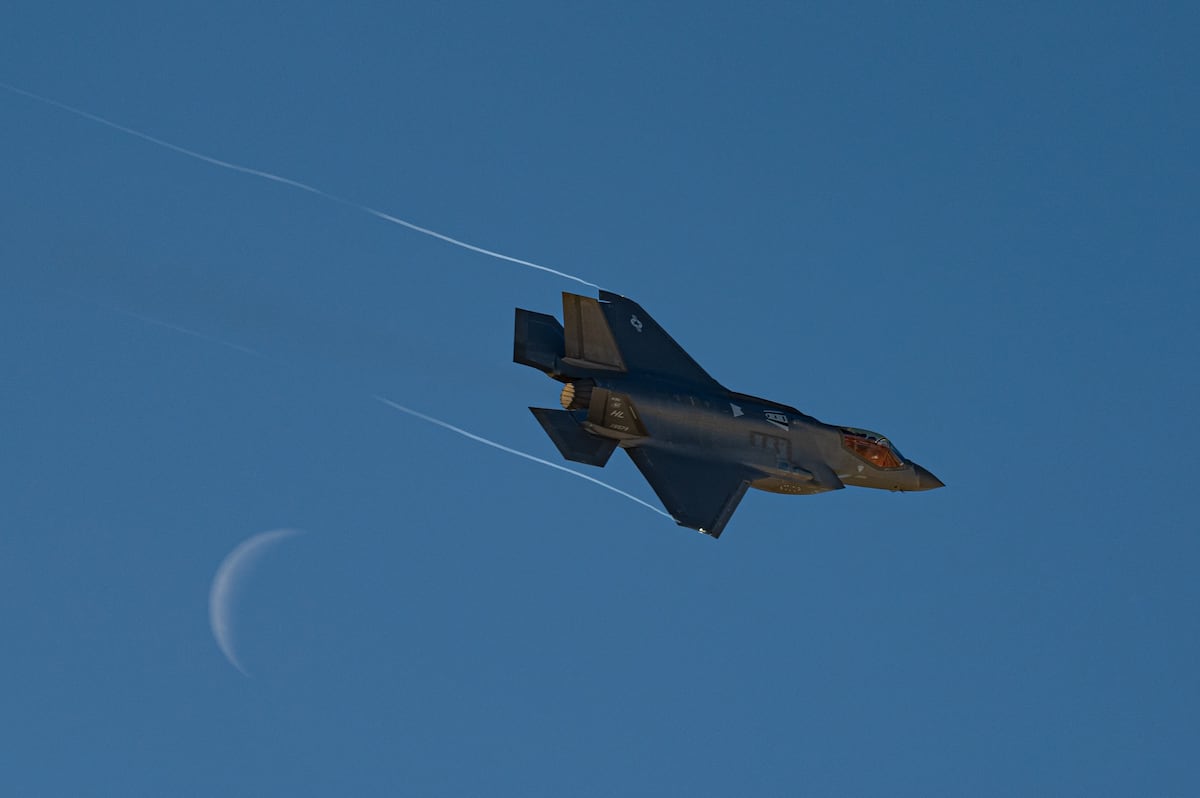
US defense giant Lockheed Martin announced on Monday that its F-35 fighter jets have successfully tested the ability to use artificial intelligence-enhanced aiming during flight.
The test, dubbed “Project Overwatch,” was conducted at Nellis Air Force Base in Nevada. Incorporated an AI machine learning model into a fighter jet’s information control system.
The AI model generated data based on the plane’s surroundings and analyzed that information to present potential targets to the pilot.
According to the company, this is the first time that a tactical AI model has independently suggested combat objectives to fighter pilots.
Jake Wirtz, vice president of F-35 combat systems at Lockheed Martin Aeronautics, said Lockheed will continue to pursue AI-driven decision-making models to help pilots identify combat targets more quickly.
“Equally important is the ability to reprogram AI models on the ground and make those updates available for the next sortie, a critical step in maintaining tactical advantage in a rapidly evolving threat environment,” Wirtz said in a statement.
The F-35 features advanced electronic warfare capabilities, low stealth, a flexible ability to deliver firepower, and flies at up to approximately 1,200 miles per hour.
The use of AI in fighter jets follows U.S. Air Force doctrine released in April 2025 that states AI will be integrated across the service as a force multiplier.
“AI will enhance intelligence, surveillance, and reconnaissance (ISR) by providing networked sensors that can identify hidden ‘needles in the haystack’ without prior threat knowledge,” the document states.
However, the Air Force observed that because AI “lacks situational sensitivity and reasoning,” the approach would be to use AI as a tool to “enhance airman performance.”
“While military discretion rests with airmen, AI enables faster and better operational decisions,” the military said.
A 2025 report published by Georgetown’s Center for Security and Emerging Technologies noted that while AI may have practical appeal from a military perspective, biased data such as spoofing and corrupted AI models pose potential risks and should be used with caution.
“Some adversaries are better at evading intelligence gathering than others, while others are more adept at active deception and data manipulation. There may be less data available on some adversaries than others,” the report said.
To properly leverage AI technologies, the report recommends that commanders be aware of the weaknesses in these systems and “prepare themselves and their teams to use them properly.”
Zita Ballinger Fletcher previously served as editor of Military History Quarterly and Vietnam magazine and historian for the U.S. Drug Enforcement Administration. She holds a master’s degree with distinction in military history.


