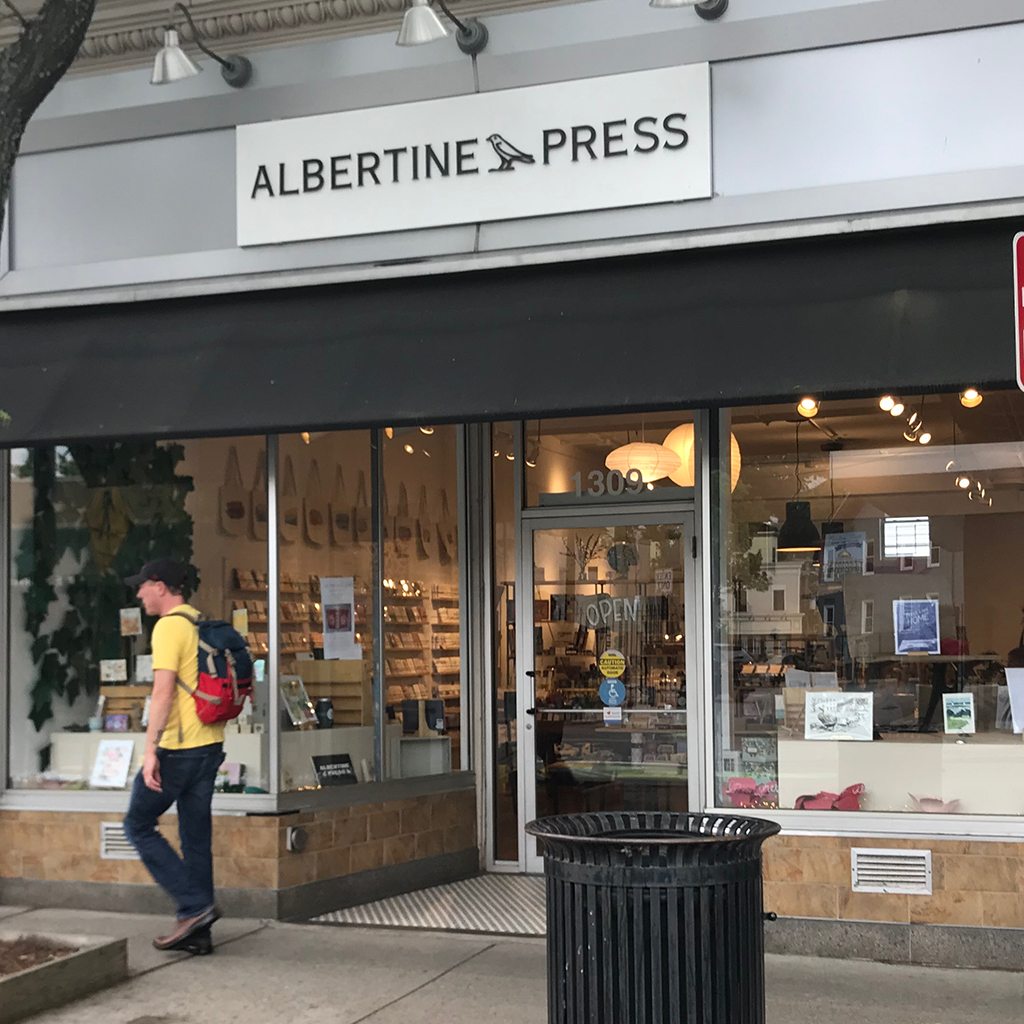
Al Bateen Press in Inman Square, Cambridge, experiments with AI. (Photo: Mark Levy)
Small businesses are at the forefront of the global artificial intelligence revolution, embracing AI as a partner rather than just a tool. Over the past few weeks, Cambridge Local First has been exploring how local businesses are using AI to turn everyday tasks into opportunities and reshape the economic and social landscape of their city.
AI's journey began in the mid-20th century and has evolved from theoretical computer science into a set of practical tools that are reshaping industries. Today, AI encompasses machine learning, natural language processing, and image generation, as seen in popular applications such as OpenAI's ChatGPT, Google's Bard, and Dall-E. These tools have demonstrated their ability to enhance communication and inspire creativity. The versatility of AI is becoming increasingly evident in Cambridge's small business sector. From bakeries employing AI for efficient inventory forecasting to retailers using chatbots to improve customer service, AI is proving to be a vital tool for business growth and community engagement. Based on conversations with Cambridge business owners, applications in the small business community include:

Content Marketing Clay Fernald of Middle East Nightclub uses AI to create eye-catching headlines for events that he incorporates into his marketing. “I use AI as the start or end point of promotional and marketing projects to enhance my workflow and bring a fresh perspective,” says Fernald. Shelley Barandes of Al Bateen Press uses AI to create initial designs for unique greeting cards to spark creativity. “AI helps generate initial ideas, but the final touches always require personal editing to reflect your own artistic voice,” she notes. The marriage of computers and human creativity is becoming a business model for many, with technology enhancing the human touch rather than replacing it.
Customer Insights and Engagement AI is revolutionizing how small businesses understand and connect with their customers. Erika Salloux of Living Harmony says that AI allows them to analyze customer feedback and “tailor their approach to those who are interested in what we do” to personalize wellness workshops based on their interests. Mark E. Harrington Jr. of Healthworks Fitness uses AI for member engagement. Analyzing gym attendance data through AI helps identify members who might benefit from extra motivation or customized fitness programs. “We use AI to track gym attendance and engage with members who need encouragement,” says Harrington Jr. Understanding customer behavior and improving customer experience can build stronger, more meaningful business-customer relationships.
Adopting this technology is not without challenges. The journey is riddled with ethical dilemmas and practical obstacles. Al Bateen Press's Barandes points to a major concern for the creative sector. “When you use AI to create an initial artwork concept, the work often inadvertently mimics an existing copyrighted work, which is a big problem for us as original content creators,” she says. Living Harmony's Saroo also faces the challenge of making sure her AI material is “not only effective, but also original so it's not plagiarized.”
As AI becomes increasingly integrated into business, support and guidance from local and state governments will be important. Andy Pyman of Breathe Cambridge noted the need for government-led education initiatives, saying, “A deep understanding of AI's capabilities and limitations is essential. We rely on government programs to gain this kind of knowledge.” Aelen Unan of Ninawa Zero Waste Clothes also advocated for more resources. “The workshops and seminars have been invaluable for us, helping us explore the business potential of AI while being ethically mindful,” she said.
Local business owners are increasingly realizing that effective adoption requires a strong support structure that extends far beyond basic technology solutions to strategic, government-led efforts to ensure that AI use is consistent with a commitment to responsible and ethical application.
This essay was written in partnership with Cambridge Local First and the Resilient Local Economy Internship Programme. Mohammed Al Tal is participating in the internship as a research intern.