Students looking forward to an unknown but technology-driven future must learn how to use it, not abuse it.
It’s no exaggeration to say that artificial intelligence (AI) has become a part of the lives of both teachers and students. Some say the traditional classroom has been transformed into a more dynamic, personalized learning space that reflects the future lives of children growing up in the technological age. Others have warned of its effects in the classroom and wondered if there are opportunities to replace it, rather than support thinking and learning. Either way, as AI continues to evolve and shape the education landscape, Island schools are putting policies in place to keep a close eye on its impact.
Teachers are now using AI to plan, differentiate students, and identify learning gaps. “These are clearly the first steps as we move into this new era and learn how AI can help us,” says Lucy Georgiou, principal of Foleys School in Limassol. Meanwhile, students are taught how to use AI ethically in their research, using it to generate ideas, practice skills, and support learning reflection. Advanced students use it to create study plans for exams. “We are very careful to ensure that AI supports thinking rather than replacing it. The future impact is about confidence. Students are learning how to work safely, ethically and critically alongside AI, so they are prepared for a workplace where AI is the norm,” Georghiou adds.
Similarly, at Heritage Private School in Limassol, Simon Demetriou, a teacher and vice-principal responsible for educational standards, says, “There is a distinction to be made between curriculum decisions and pedagogical decisions. When it comes to curriculum decisions, everyone pretty much agrees on the idea that at least some level of understanding or application of AI can be valuable in the classroom.”
Elsewhere, students are being encouraged to use AI to perform various learning tasks, such as learning specific syllabus topics through interactive conversations with generative AI platforms, and to use AI applications to create revision flashcards to revise for exams, adds Antonis Yanouros, AI Champion at International School of Paphos (ISOP). Students “must learn how to use it instead of abusing it; use it as a learning partner rather than a shortcut,” Georgiou added. “We encourage students to ask questions, challenge AI responses, and trust human knowledge. We used AI to write essays and lessons, considered that it can’t always be trusted and that human oversight is absolutely necessary, and tried to help them understand where AI can be helpful and where human judgment is more important.” At Heritage, modules on AI and prompt engineering are designed to teach ICT from grade 7 onwards. and introduced into computer classes. “Students are introduced to various commonly used AI tools, both their ethics and how to experiment with and use them productively through various applications,” Demetriou says.
Exploring how AI can support teachers and learners as education adapts to rapid technological change At a public lecture in Nicosia last month, Michalis Tortoulis, a long-time educator and recognized contributor to computer science and education innovation, spoke about the ethical and pedagogical responsibilities of AI, stressing that while technology requires guidance, educators remain the moral compass to ensure safe, transparent, and privacy-respecting use of AI.
And schools have confirmed that they will allow the use of AI to learn, plan, revise and explore, but not to replace assessed work. “We teach students what AI is, how it works, its biases and limitations, talk about ethics, copyright, data protection, prompts and critical evaluation, and emphasize responsible and transparent use,” Georghiou says. “AI literacy is embedded across the curriculum, especially ICT, to help young students learn about technology and how to use it in and out of the classroom. We teach children that AI is a machine that learns from people and the world, and is not always accurate,” she added.
Overall, schools agree that their policies are designed to evolve over time and not freeze practices. Generally, these policies cover security, data protection, academic integrity, and responsible use.
However, Demetriou said there is a danger with AI: “It’s making people think that what’s in AI right now and that they need to teach students how to use it. In fact, the extent to which students need it is very limited, and it should only be taught as an application of skills that they could theoretically use, regardless of what AI tools they actually use when they go out into the workforce.” Regarding pedagogical uses, especially non-ICT classroom uses, he says: “What we’re seeing is there’s a wave of excitement, everyone wants to know how they can use AI, and we need to think about how we can use AI to improve teaching. Basically, AI is trying to do something that goes against the way we need it to learn in some respects, and the evidence shows that no one can actually do it anywhere.
“There are a number of ways we have been able to use it productively, but what we have learned every time we incorporate AI into the classroom is to The sheer amount of time required to teach and encourage students to use them can negate or weaken any gains that have been made.It can be very difficult for young students in particular to distinguish between good and bad results, and adults who lack this ability as well.”However, there is value in having a critical ability to discern right from wrong. “Essentially, the argument is that AI is useful for people who already have basic expertise in something. So what we’re finding is that AI can be very helpful for teachers in terms of relieving them of certain elements and foundational work. We’re asking the same questions that people asked about smart phones. If they were born with a phone and a screen, how can they get the most out of their education given the new elements of the world they live in?The evidence suggests that the way we support these students is actually not that different from education.”We were helping students before this technology existed. In other words, we teach our students that these are tools, and that all tools have a primary use. Perhaps we will reach a point where the only way AI is proving to be beneficial and useful in education is in the very narrow scope of supporting receptive practice and marginal adaptive practice. Examples include grammar exercises and math problem generation and self-grading. ” he concludes.
With the world moving faster than curriculum, and recently leaked documents suggesting Amazon could replace up to 600,000 workers with robots, the pertinent question that is arising when it comes to higher education is: What are we preparing young people for?
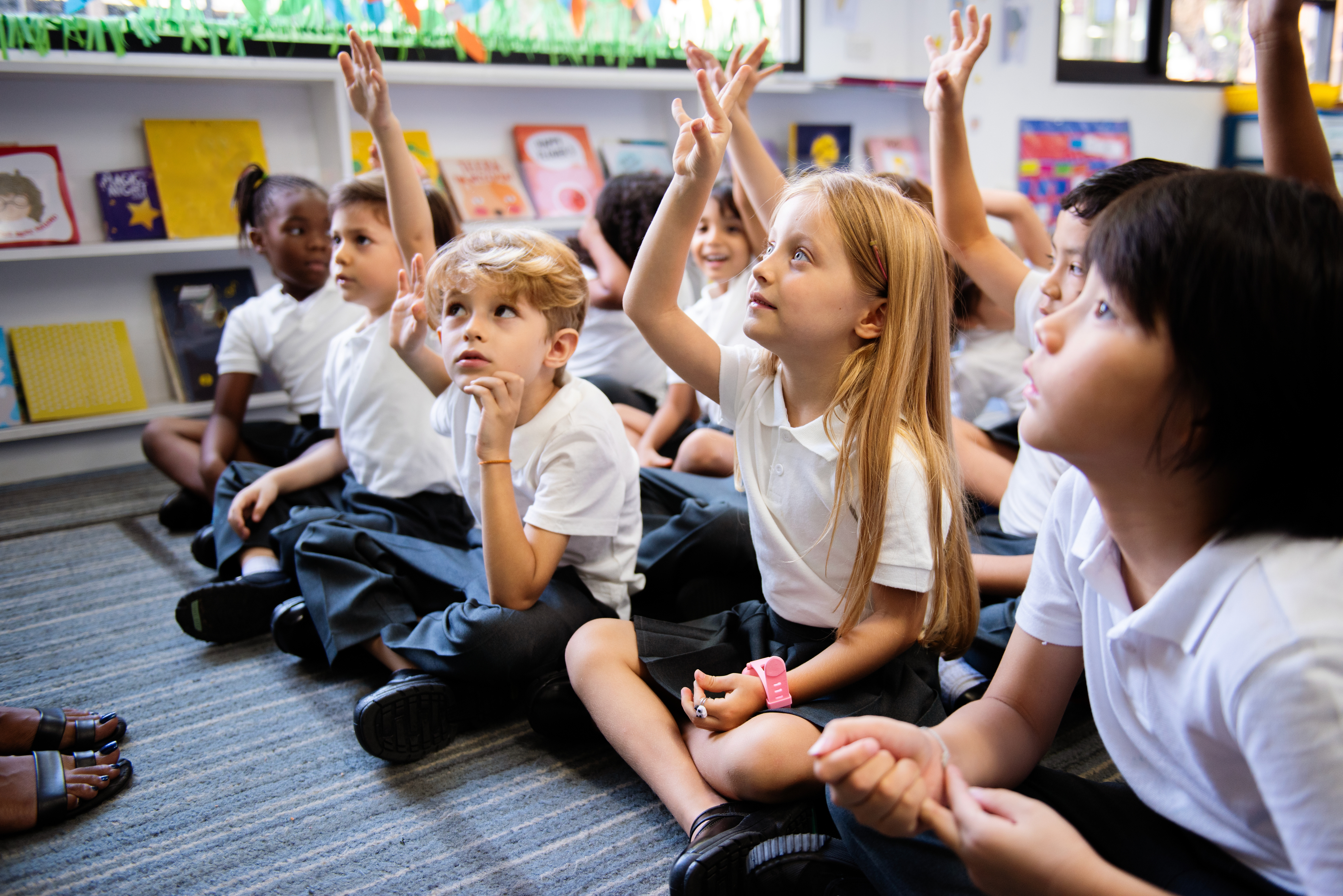
“There is a lot of speculation about how AI will evolve and its applications in the real world, and we feel that a cautious and responsible approach is needed,” said Stella Luisinho, career advisor at ISOP. To address this, the school is raising awareness at career interviews and guidance meetings to introduce students to AI and its growing role in higher education and future careers. “We will be inviting guest speakers who work in AI-related fields to share real-world insights and highlight a wide range of college pathways and career opportunities related to AI. We will also explore how AI is reshaping various industries and how that will impact the long-term relevance of specific degrees. “We encourage students to think about what they can do and focus on developing transferable skills such as problem-solving, communication and adaptability. These interpersonal skills will help secure a future career in an AI-driven world,” she added.
“While we are increasingly choosing AI in our undergraduate programs, the simple answer is that we are not encouraging students to go into a particular career path or industry,” Georgiou says, as teachers struggle to make sense of an unknown future. “We place a lot of value in encouraging children to follow their passions. AI is a great tool, but it cannot replace professional knowledge or a true passion for learning. AI will impact every subject, including medicine, law, art, engineering, business, and education. It shows students that all subjects can use AI creatively and responsibly. Human skills such as judgment, empathy, and creativity are still essential. AI will change the way subjects are learned, not whether they are important.
The answer to teaching students cannot be “tomorrow’s jobs.” Because such a job may not exist. The challenge now is to inculcate adaptability, imagination, and moral judgment that cannot be replaced by algorithms. As the historian and philosopher Hannah Arendt wrote in 1961: “Education is the point at which we decide whether we love the world enough to take responsibility for it.” This is the task before us. ”
To this end, Georgiou remains optimistic. “AI is not a shadow; it is a spotlight. AI is forcing schools to rethink assessment, teaching, and learning. Not only does it challenge old models, it also offers powerful new ways to support students and staff. Schools that ignore AI risk falling behind. Schools that approach AI thoughtfully have a huge opportunity.”
Higher education is at a crossroads. One path leads deeper into optimization. That means faster courses, stricter metrics, and closer collaboration with industry. The other path goes back to truth, curiosity, and moral imagination. The first path is safe, but soulless. The second is uncertain but alive.