
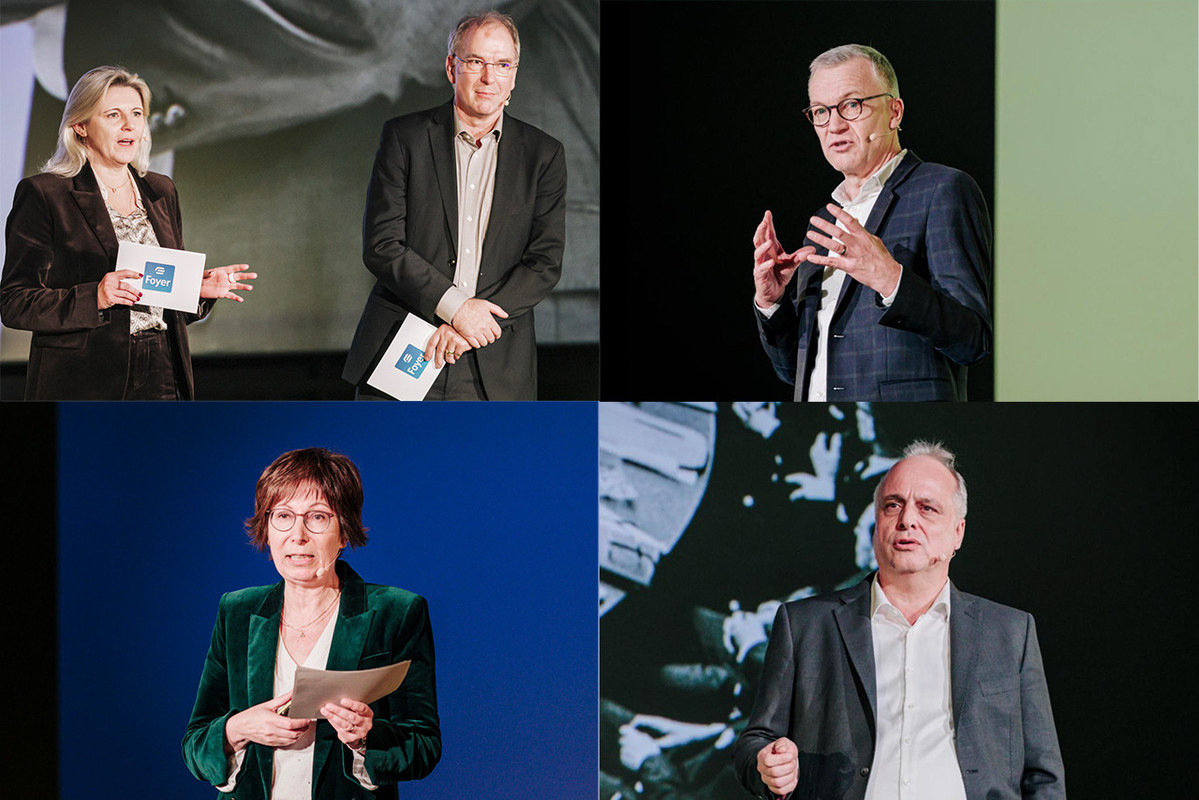
Technology is no longer just an IT department problem. This basic support function has become a central challenge for leadership. Increasingly faster artificial intelligence is accelerating this transformation, which must be implemented holistically and co-piloted by CEOs and CIOs. 10×6’s CEO and CIO attended the AI (R)evolution event together and shared analysis and personal accounts. We’ve put together 5 things every executive should know.
Security and ethics as a foundation
To launch 10×6 CEOs and CIOs together for AI (R) evolution, the Minister of Digitalization He emphasized the importance of prioritizing safety and ethics in all AI projects undertaken by countries and companies.
“It is up to all of us to build trust in AI and ensure the security of our data. And this can only be achieved by governments and businesses putting safety and ethics at the forefront of every new project that uses AI. At every step, we must ensure that these tools serve humans, rather than replace them, and that they are operated with transparency and accountability.”

Stéphanie Aubertin, Minister for Digitalization, launched the event. (Photo: Julian Pierrot/PaperJam)
keep people in mind
“The more we delegate to machines, the more important the role of humans becomes, whether in terms of governance, ethics or insight. AI is an evolution in technology, but it is a true revolution in terms of power, responsibility and ultimately leadership,” Feuer said. . So how do you stay on track when technology evolves faster than decision-making cycles?
“This means investing in the development of technical skills, but above all, it means investing in the development of human skills: critical thinking, collaboration, the ability to make decisions under uncertainty, all while remaining true to our vision and values,” Foyer’s CIO Remy Els said with him, arguing that the five things to remember are dialogue, vision, governance, decision-making and trust.
Defining the four basics
Director of “Post Luxembourg” We detailed real-world examples of using AI to increase customer loyalty and improve customer experience, highlighting the success of implementing predictive tools to identify customers at risk.
We define four basic criteria for CEOs and CIOs to act as guarantors.
– Measurability, “Measuring the value generated by AI implementation”;
– data (from a quantitative and qualitative point of view),
– Adaptation, “i.e., assessing the use of AI by employees”;
– Strategy, “This includes defining the objectives sought by the implementation of AI and whether it meets the company’s strategic pillars.”
Engage, train and support.
According to CLK Constructions CEO B, this is a huge opportunity for all companies, especially construction companies, but the key to success is not just about technology..
She advises: “To lay out all your goals, it’s important to apply them to your team from the beginning: Why are you implementing AI? What specific problems will it solve? What benefits will it bring to your team? Everyone agrees that change, even when embraced, will scale their work faster than before. They must then train and support their team.
Be humble (but courageous)
To the CEO of Enovos, today’s transformation requires stronger leadership than ever before. “I’ve been a CEO for over 20 years, but I’m not an engineering, trading, or IT expert, and I’ve never been an AI expert. My role has always been to understand change and the tensions it creates, and to measure the scale of change that is being led. And courage means agreeing to go faster than you are ready. In fact, what I look for in a CIO is not to be a technology expert, but to be a change expert. does not change the nature of leadership, but its scope.”


