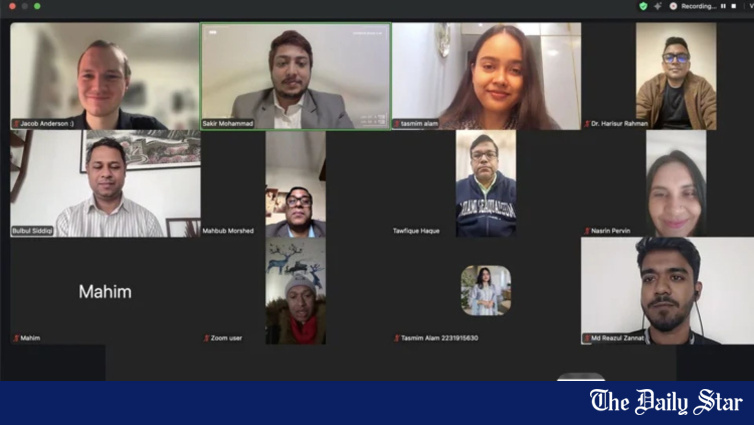
The Global South Initiative for Media and AI Literacy (GSIMAL) was officially launched on Friday.
The organization aims to advance critical media and AI literacy as a “people’s right” and address the unique challenges facing the Global South in the era of embedded artificial intelligence (AI).
The inaugural program began with a welcome address by Nasrin Pervin, faculty member at North South University and coordinator of GSIMAL.
He highlighted the growing confusion caused by AI misinformation and stressed the need to treat media and AI literacy as a matter of public interest.
Mahboob Morshed, Managing Director and Editor-in-Chief of Bangladesh Sangbad Sangsta, who delivered the keynote speech, emphasized that many newsrooms in Bangladesh are still new to AI technology.
He explained that GSIMAL is an important platform for students, teachers and media professionals.
Several advisors and guests shared their thoughts on the impact of AI on information and society.
Li Guo of the University of Nebraska at Omaha said the initiative will help empower voices from the Global South.
Professor Sk Tawfique M Haque from North South University pointed out that non-traditional media are increasingly shaping the way students access information.
Bulbul Siddiqui warned about the risks of deepfake content and misinformation during elections, and co-founder and advisor Harisur Rahman outlined GSIMAL’s vision to empower citizens to meaningfully engage with media and AI governance.
Jacob Anderson, founder of Logic Lens, said AI presents both opportunities and threats depending on its use.
The event concluded with closing remarks from GSIMAL founder Sakir Mohammad, who said that discussions about media and AI are no longer optional.
He also emphasized that the organization focuses on volunteer-led, low-cost activities. The program was hosted by Tasmim Alam Luponti, Youth Support and Training Coordinator.
GSIML aims to promote inclusive, ethical, and accessible AI and media literacy across the Global South.