
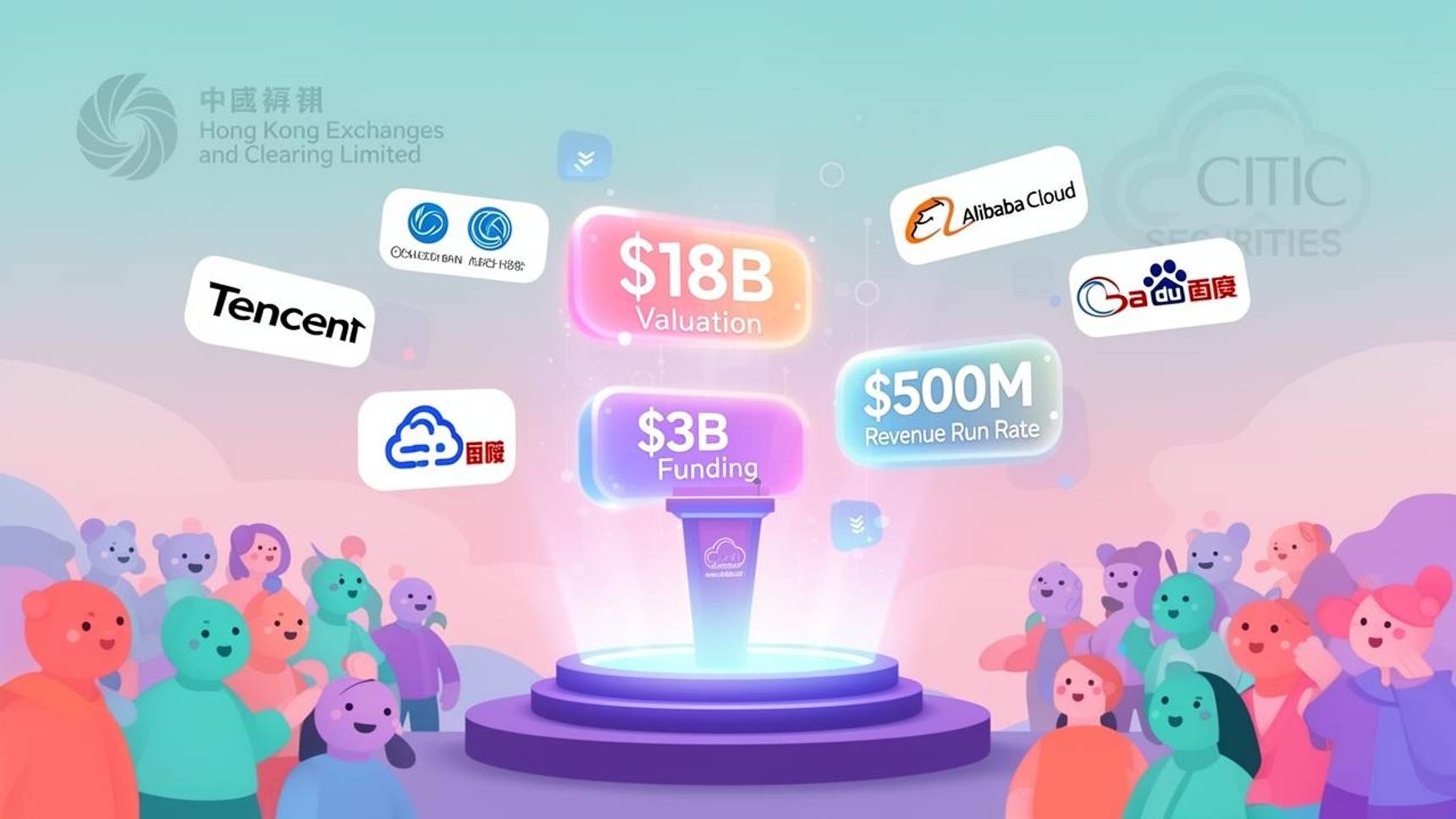
Chinese short video giant Kuaishou’s video generation large model Kling AI has officially secured the largest funding round ever in the global video large model field. On July 3, Kuaishou confirmed that Kling AI’s total funding for this round is expected to reach nearly $3 billion, with a post-fund valuation of $18 billion, and the company’s independent commercial development has officially begun.
According to Kuaishou’s previous announcement on the Hong Kong Stock Exchange, the structure of this funding round is sophisticated and substantial. After the reorganization, Beijing Kling Corporation will take over Kling AI-related assets and business from Kuaishou Group. With the first signing, Beijing Kling has reached agreements with 21 initial investors, which will inject a total of approximately 13.82 billion yuan (approximately $2 billion) in cash capital.
The announcement also left flexibility for subsequent capital inflows. The agreement provides that additional investors may participate in this round by signing a combination agreement within 60 days of the signing date. To date, 15 more investors have signed on, with plans to inject an additional 5.22 billion yuan (approximately $770.9 million) in cash. According to the upper limit of the agreement, the total capital increase by all investors in this round shall not exceed 20.45 billion yuan (approximately $3 billion), which is equivalent to approximately 16.67% of Beijing Kring’s expanded registered capital.
Judging by the lineup of investors, Kling AI’s funding round brings together the true names of China’s internet and capital markets. Co-lead investors include CPE, Kuniyoshi Venture Capital, BlueFive, Tencent (00700.HK), Zhongguancun Science City Fund (in partnership with Guoke Investment), and CITIC Securities (06030.HK). In addition, leading industrial capitals such as Alibaba Cloud and Baidu (09888.HK) and leading companies in the entertainment industry such as Huace Film & TV and Mango Industry Investor (Houwei Capital) also actively participated. Leading financial institutions such as Industrial and Commercial Bank of China (01398.HK), China Construction Bank (00939.HK) and China Internet Investment Fund were also included in the investor list.
Upon completion of this financing round, Kuaishou’s indirect equity interest in Kling AI will be diluted to approximately 68.33%, but Kling AI’s financial results will continue to be integrated into Kuaishou’s financial statements. Kuaishou management believes that the $15 billion pre-money valuation of the Beijing Kling transaction is commercially reasonable and falls within the valuation range implied by the selected comparable companies and comparable transactions.
Kling AI’s commercialization capabilities are a central pillar of its strong reputation. According to Kuaishou’s 2026 Q1 financial report, Kling AI’s quarterly operating revenue has already exceeded 650 million yuan (approximately $95.9 million), representing more than 300% year-on-year growth. Even more noteworthy is the growth trajectory of annual recurring revenue (ARR). In March 2026, Kling AI’s ARR was approaching $500 million, compared to just $100 million a year earlier. This is a four-fold increase in one year. According to market data, approximately 75% of Kling AI’s revenue comes from overseas markets such as North America, and the number of cumulative users worldwide exceeds 100 million.
The completion of this latest financing also confirms previous intense market speculation. In mid-June of this year, reports surfaced that Kling AI was raising a first round of funding of approximately $2 billion. In early July, further details about Tencent’s participation and $18 billion post-mortem valuation were revealed. Kuaishou officials have previously declined to comment on the rumors, but the company made a voluntary announcement on the Hong Kong Stock Exchange in May this year confirming that its board was evaluating a plan to restructure its assets and business around Kling AI, including bringing in external investors, laying the foundation for the latest funding.
Kling AI’s capitalization process does not end with this funding round. People close to the deal said Kuaishou plans to begin the process of listing Kling AI independently on the Hong Kong Stock Exchange within the next 12 months. The funds raised through the IPO will primarily be used to expand computing capacity and data centers, and attract and retain core AI technology talent. If successful, Kling AI could become China’s first independently listed AI-generated video company.
However, behind this high reputation lies fierce market competition and price negotiations. Notably, when Kuaishou first planned to spin off Kling AI in April of this year, market reports said the target valuation was as high as $20 billion and the expected funding amount was $2 billion. The amount raised has now increased to $3 billion, but the post-funding valuation has been adjusted downward to $18 billion. Key market analysts suggest that this slight decline reflects pricing rationalization between investors and the company, and a shift in capital market valuation criteria for AI assets from early-stage “pay for technology narrative” to “pay for transaction and cash flow expectations.”
The competitive pressures facing Kling AI should not be underestimated. In Japan, ByteDance’s video generation model Seedance 2.0 has been performing well since its release, with some media reports saying that its gross profit margin has reached 70%. ByteDance plans to invest up to 160 billion yuan (approximately $23.6 billion) in AI infrastructure in 2026. Alibaba’s video generation model HappyHorse 1.0 has also started testing grayscale. Globally, products such as Google’s Gemini Omni Flash are also being updated rapidly.
For Kuaishou, spinning off its high-growth but equally capital-intensive AI business from its core short video platform with a low valuation is widely interpreted by the market as a “valuation arbitrage” strategy to extract embedded value. In the fourth quarter of last year, Kuaishou CFO Jin Bing revealed that group-wide capital expenditures in 2026 are expected to reach approximately 26 billion yuan (approximately $3.8 billion), an increase of approximately 11 billion yuan (approximately $1.6 billion) from 2025, a significant portion of which will be allocated to investment in computing power for Kling large models and related initiatives. An independent listing of AI unicorns not only promises a higher sales premium, but may also relieve some capital investment pressure on the parent company due to continued increases in computing power.
Zheshang Securities’ analysis points out that multimodal large-scale models are still in the early stage of industrialization, and the current penetration rate of Kling AI in the global multimodal power generation market is still less than 1%. Before the underlying technology paradigm fully converges, Kling AI still has a chance to leverage its vast video data accumulation, mature creator ecosystem, and engineering optimization capabilities to make breakthroughs. However, analysts caution that Kling AI is still in the stage of making significant investments and needs to continue to monitor ARR growth rates, customer retention in the face of intense competition, and the market liquidity environment during the Hong Kong IPO period.


