
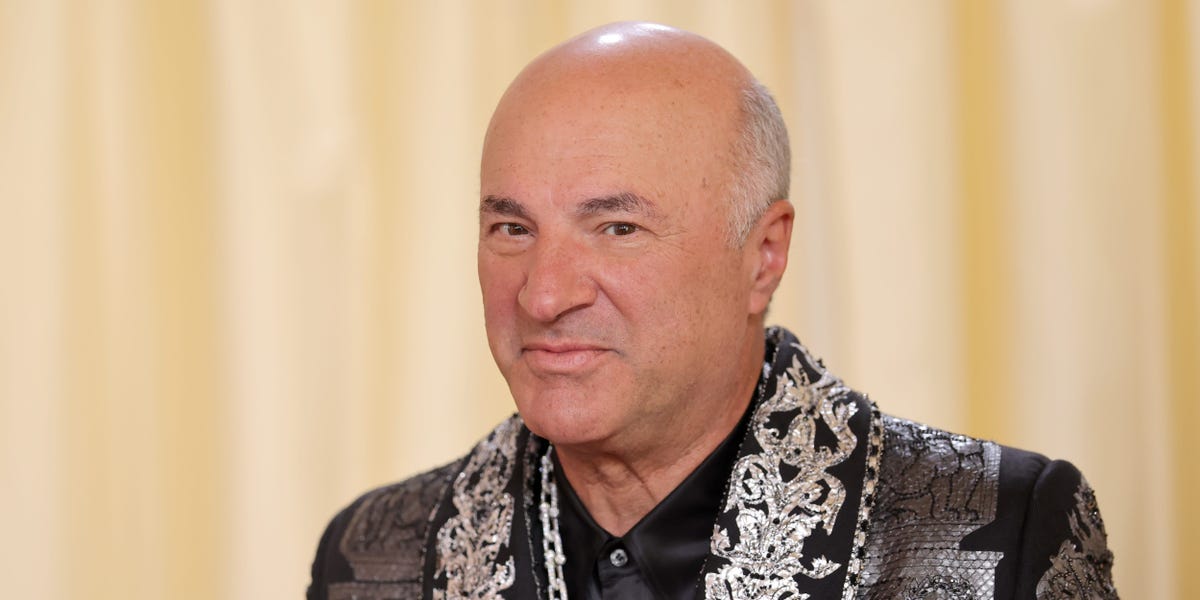
Kevin O’Leary disagrees with a common concern about the AI data center boom: that sprawling facilities are consuming large amounts of water and putting pressure on local systems.
During a recent appearance on Glenn Beck’s radio show, the Shark Tank investor argued that modern AI data centers use far less water than many believe, comparing their water usage to that of a golf course.
O’Leary has emerged as one of the industry’s most vocal advocates, with O’Leary Ventures developing large data centers in Utah and Canada.
O’Leary said on the show that the first phase of the project would have 1.4 gigawatts of power capacity and would be “no different than a golf course” in terms of water usage, referring to the Utah development. That, he argued, is the comparison that critics should make.
“Because data centers, not just my project, any new data center is like a golf course now,” O’Leary said.
Data centers can use large amounts of water, both directly to cool servers and indirectly through the electricity required to power them.
A previous investigation by Business Insider found that some of the nation’s largest data center facilities were allowed to use more water each day than nearly 49,000 Americans would normally consume.
Like O’Leary, some technology leaders dispute criticism of data center water use, arguing that advances in cooling technology such as closed-loop systems are making AI infrastructure more efficient.
Earlier this year, OpenAI CEO Sam Altman denied “totally outrageous” claims circulating online that his AI company uses large amounts of water to power ChatGPT.
Asked about concerns about AI companies’ water use, Altman said, “Water is completely fake.” “It used to be true. We used to do evaporative cooling in data centers, but we don’t do that anymore. You see things on the internet like, ‘Don’t use ChatGPT. It takes 17 gallons of water per query.'”
“New modern data centers don’t have to be located near water like they used to in Virginia 15 years ago, where data centers got a bad name because they consumed so much water,” O’Leary said on Beck’s show.
In defense of data centres, O’Leary added: “As part of a national solution, the new rules of engagement should be: If you put data centers anywhere, you have to get your own electricity. You can stay competitive by spending billions of dollars building electricity and putting some of it back into the grid.”
Meanwhile, O’Leary is facing a defamation lawsuit after he made comments in multiple media appearances accusing some opponents of his Utah data center project of being backed by the Chinese Communist Party.
Ahead of the lawsuit, O’Leary clarified on social media that there was no evidence that the critics were funded by China.
Mr. O’Leary’s attorney, Jeffrey Neiman, previously told Business Insider in a statement that his “Mr. Wonderful” client intends to “vigorously defend this lawsuit” and file a counterclaim.
Neiman also called the lawsuit a “cash grab.”