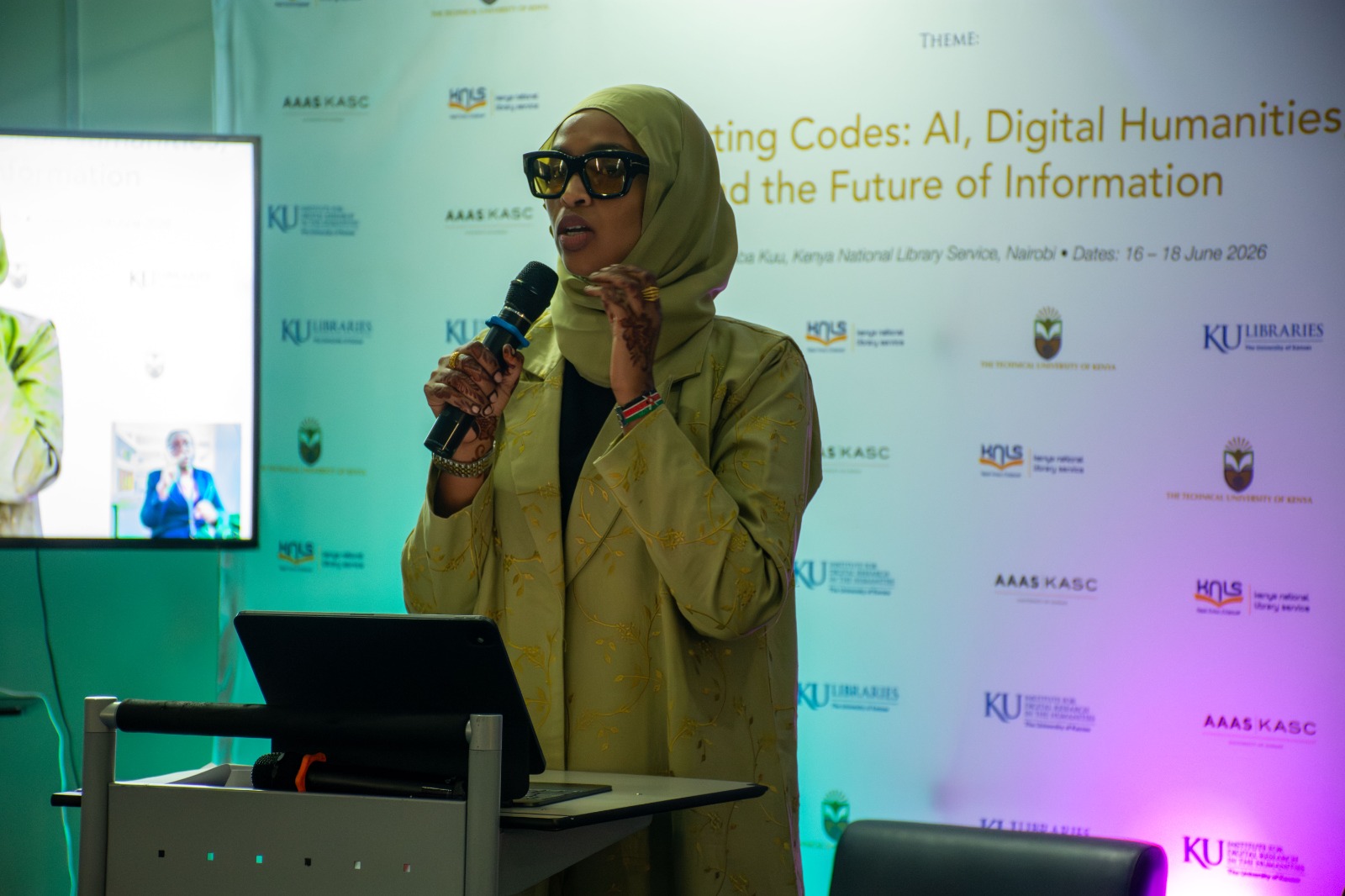
Kenya is calling for stronger safeguards regarding the use of artificial intelligence (AI) as policymakers, researchers and technology experts gather in Nairobi to discuss how emerging technologies can transform access to information while protecting cultural identity.
The call was made during the 2026 Connectivity Code conference held at the Kenya National Library Service (KNLS) headquarters, where government officials, academics, researchers and international partners gathered to explore the future of AI, digital humanities and knowledge systems.
The conference focused on the role of technology in promoting digital inclusion, preserving cultural heritage, and ensuring equitable access to information in a rapidly changing digital environment.
Umi Bashir, Principal Secretary of the Department of State, Culture, Arts and Heritage, who represented the Cabinet Secretary for Gender, Culture and Children’s Services, said the government is committed to ensuring that digital transformation benefits all citizens.

Bashir said emerging technologies must be developed in a way that supports national development while protecting Kenya’s cultural heritage.
Daniel Epuyo Nanok, chairman of the Parliamentary Broadcasting and Libraries Committee, said AI presents huge opportunities in areas such as education, healthcare, agriculture and public service delivery, but requires a clear policy and regulatory framework.
Nanok said Congress has a responsibility to create an enabling environment for innovation while protecting people’s rights, noting that issues such as accountability, transparency, privacy and fairness need to guide the adoption of AI.
He also warned that African perspectives could be marginalized in the global knowledge economy if African languages, history and cultural content are not incorporated into digital platforms.
The conference featured keynotes, panel discussions, and research presentations on AI-driven knowledge systems, digital inclusion, and preserving cultural heritage through technology.
Conference discussions revealed that although Kenya’s digital innovation sector continues to expand, challenges such as limited infrastructure, skills gaps and the need for stronger governance frameworks remain key barriers to inclusive technology advancement.
Participants called for increased investment in digital infrastructure, ethical AI policies, and capacity-building programs to equip citizens and institutions with the skills they need to deal with emerging technologies.
The event also brought together institutions including the Kenya University of Technology, the University of Kansas, and other national and international partners.