
Michael Brown is CEO of Public Purpose Strategies, which helps social entrepreneurs achieve greater impact. He is co-founder and former chief executive of City Year, a national youth service organization.
Last month, in the Vatican’s Synod Hall, Pope Leo He told the world that AI must be freed from “the logic of domination, exclusion and death.” Sitting at a long table with the cardinals and theologians, Christopher Oler, co-founder of Anthropic, the company that makes Claude, was invited to speak.
When it was his turn to take the podium, Oler spoke surprisingly candidly about his industry. He said companies like his face “intense commercial, geopolitical and personal pressures that may conflict with the broader interests of society.” All major AI labs, including Anthropic, “operate within a set of incentives and constraints that can be at odds with doing the right thing.” He argued that the moral quandaries facing AI companies are not just a problem for computer scientists, but belong to the humanities, religion, philosophy, and society at large. He called on the world’s moral community to hold companies like his to account.
It was a wonderful prelude. The AI industry should welcome oversight from governments, civil society, and moral bodies like the Catholic Church. But it is also a workaround, placing a huge burden on other companies at a time when the industry can and should take urgent steps on its own.
One thing Anthropic can do now, and perhaps most importantly, is cancel military contracts. All of them.
Last summer, Anthropic signed a contract worth up to $200 million with the Department of Defense. The company is the first AI company to deploy the latest model to classified military networks. The contract prohibited the government from using Claude for mass surveillance of American citizens or for fully autonomous weapons systems that could select and fire on targets without a human making the final decision.
When the Pentagon renegotiated those terms and required unrestricted access for “all lawful purposes,” Anthropic did something remarkable – something almost no one in Silicon Valley does anymore. They told the Trump administration no.
President Trump responded by calling the company “a left-wing madhouse.” And the Pentagon designated Anthropic a national security risk (a label typically given to companies controlled by foreign adversaries, such as China’s Huawei), effectively blacklisting it from government contracts. Hours later, OpenAI signed the same deal that critics, and even some of its own employees, apparently agreed to.
Anthropic’s rejection sparked an outpouring of national gratitude. Claude reached number 1 on Apple’s App Store. Signups soared to more than 1 million per day, a new record. And San Franciscans wrote “Thank you” in chalk on the sidewalk outside Anthropic’s headquarters. Antropic did a brave thing.
But rebellion is not the same as departure. Humans never left the military. In fact, they are fighting to stay.
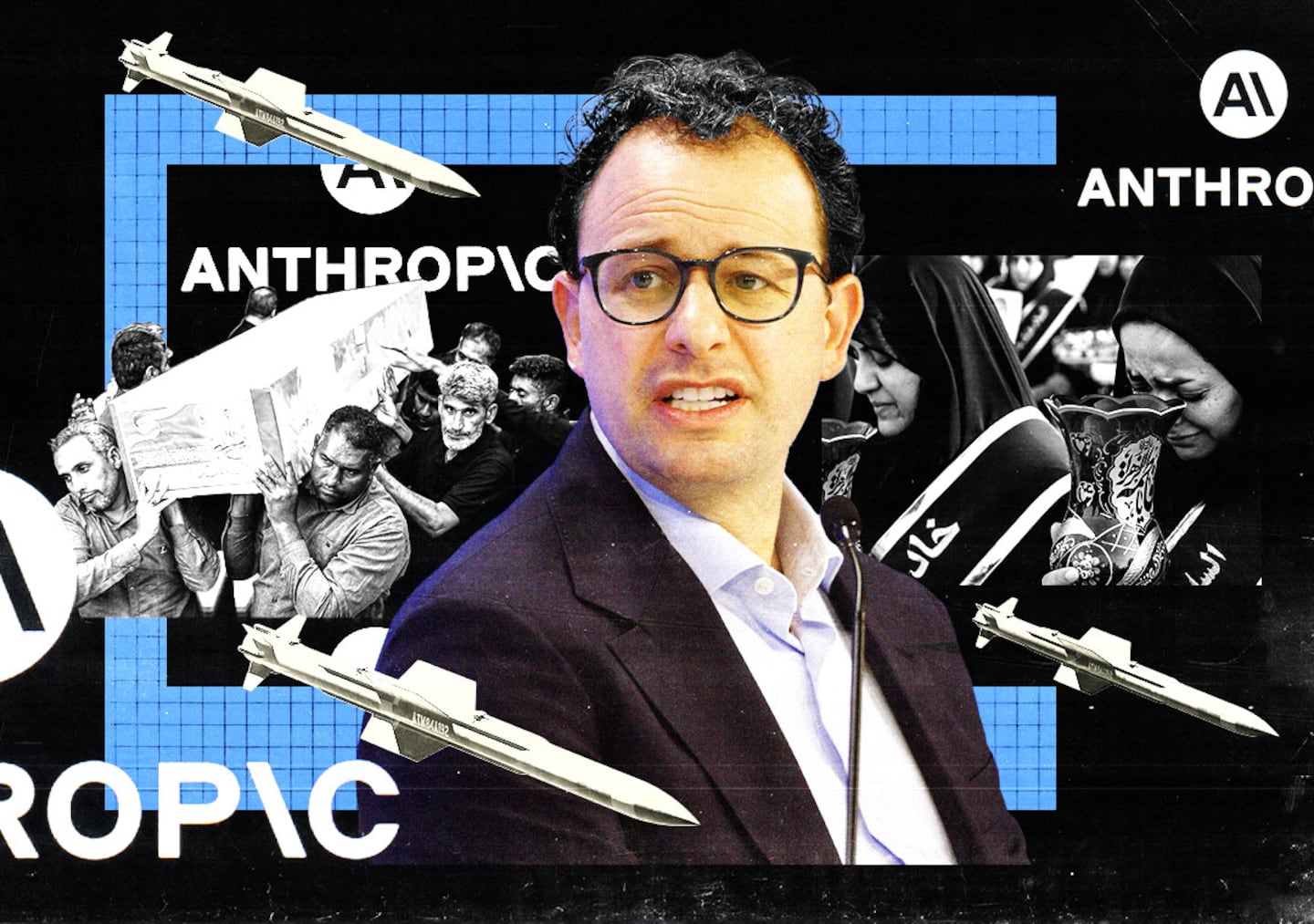
That same weekend, while the “thank you” chalk was still fresh, the United States and Israel launched a major air campaign against Iran. The Wall Street Journal reported that U.S. Central Command used Claude for intelligence assessment, target identification and simulation of combat scenarios.
Among the first buildings attacked was Shajare Tayebeh Girls’ Primary School in Minab. The school was hit three times in a triple attack, killing rescue workers and children who had evacuated after the first impact. More than 150 people were killed, most of them girls between the ages of 7 and 12.
Claude was not directly responsible. An investigation determined that information delays and human error were to blame.
But AI speeds up the development of war. The United States struck more than 1,000 targets in the first 24 hours of the Iran operation. This is twice the pace of Shock and Awe in Iraq. At that speed, errors are harder to spot and harder to contain their consequences.
After being blacklisted, Anthropic co-founder and CEO Dario Amodei vowed on the company’s website to provide the model to the Department of Defense “as long as we are permitted.” As recently as May 19, Anthropic went to a federal appeals court challenging the government’s blacklisting and, in effect, its right to remain integrated into the Pentagon’s networks.
The stakes are real. Anthropic’s lawyers told the judge that the company could face billions of dollars in lost revenue by being barred from government contracts.
But Apple faced similar pressure when it rejected an FBI request for a backdoor into the iPhone and gave all users the ability to suppress location tracking. Apple bet that the market for trust is bigger than the market for surveillance. The company has become one of the most valuable companies on the planet.
For Anthropic, there could be billions of dollars more in the market for human-centered AI than there is in the Pentagon contract. But capturing that market will require a complete break with the military and a moral stance that remains regardless of the stakes and the value of the IPO.
Anthropic is built on a moral foundation and is literally named after humanity itself.
The founders envisioned it as a “public interest corporation” that was required to strike a balance between the pursuit of profits and the pursuit of social benefits. Anthropic’s charter states that its mission is “the responsible development and maintenance of advanced AI for the long-term benefit of humanity.” The founders created a long-term benefit trust — an economically disinterested trustee empowered with a majority on the board — to keep the company tied to its mission even when profits were squeezed.
Perhaps the values written into Anthropic’s legal structure are an exercise in positioning. Perhaps Amodei’s public anguish over the dangers of AI is performance. But I don’t think so. When he started Anthropic, he stepped down from his leadership position at OpenAI, then the most powerful organization in artificial intelligence, because he believed its security had been compromised. Anthropic’s legal battle may yet be decided. But there’s another kind of victory in store. It is a victory that no judge can recognize and no Pentagon can take away. It is a declaration that Claude exists not for war but for the prosperity of humanity. A declaration that Anthropic will no longer permit its technology to be used in any military operation or for any purpose by any government.
Yes, if Anthropic leaves the military, someone else will take over the contract. it doesn’t matter. Importantly, there must be at least one platform that humanity can fully trust. It rejects murder and symbolizes that rejection.
The people who cheered when Anthropic said no to the Pentagon weren’t rooting for red lines or careful constraints. They were rooting for the idea that there are, or could be, AI companies that belong to the people, not the powers that be.
Amodei can unilaterally decide to withdraw from the war. If he does not comply, the board could intervene.
There is a parable that civil rights leader Fannie Lou Hamer used to tell. Two young men tried to trick a wise old man. They held the bird in their hands and asked, “Is it alive or dead?” If they say he’s dead, they’ll release it. If he said he was alive, they would crush it. The old man smiled. “It’s in your hands,” he said.
Dario, you have already chosen conscience over commerce four times. I left OpenAI in favor of AI safety. We refused to monetize our users with ads. You create an 80-page moral constitution to give Claude a conscience. You said no to the President of the United States. There is another position.
It’s in your hands.


