1
6
screen grab
While it is still up for debate who wins on the ground, in the battle for perception Iran is acting with purpose.
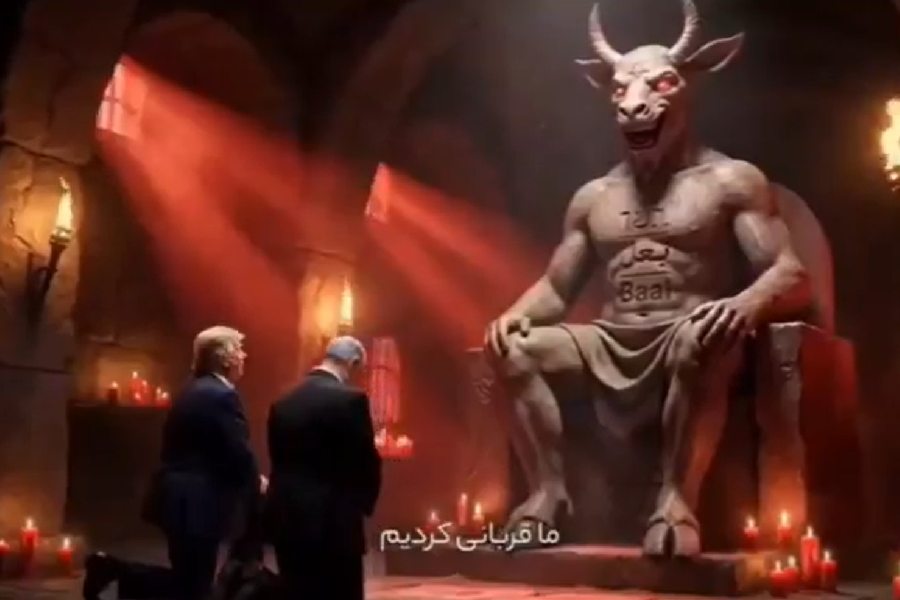
This conflict unfolds in two tracks. One is visible in the form of missile attacks, drone attacks, and disruptions to delivery routes, and the other is unfolding on mobile phone screens, where short videos, memes, and AI-generated clips are shaping the way we understand war.
Iran has treated its second track as a serious front.
2
6
screen grab
Strikes are followed by posts, clips, and graphics that make up those events before other versions take root.
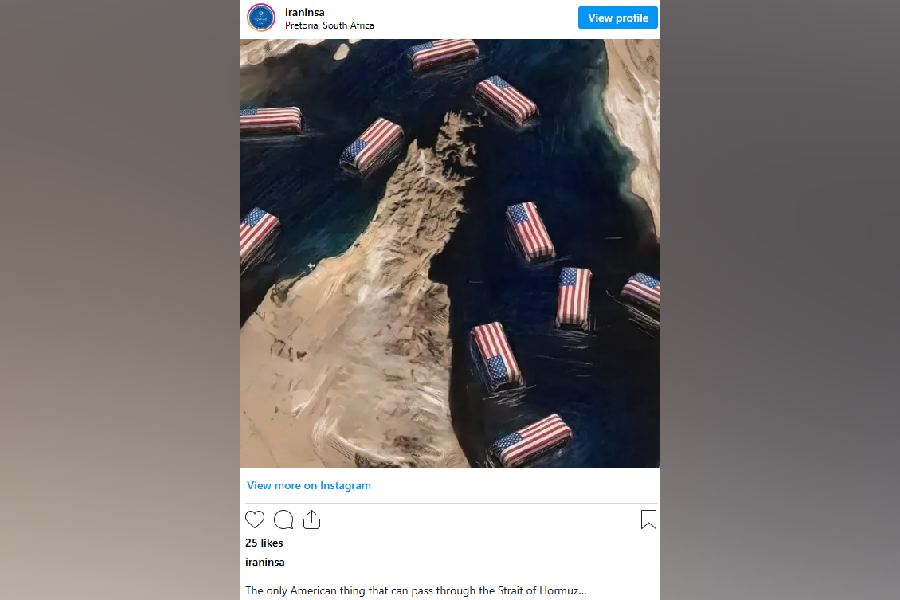
One example comes from the Iranian Embassy in Pretoria. He posted an image of a coffin draped in the American flag floating in the Strait of Hormuz. The post was captioned: “The only American-made ship that can pass through the Strait of Hormuz.”
The Strait of Hormuz appears repeatedly in Iranian content. It is not only a strategic chokepoint, but also a visual and political symbol of the conflict.
3
6
screen grab
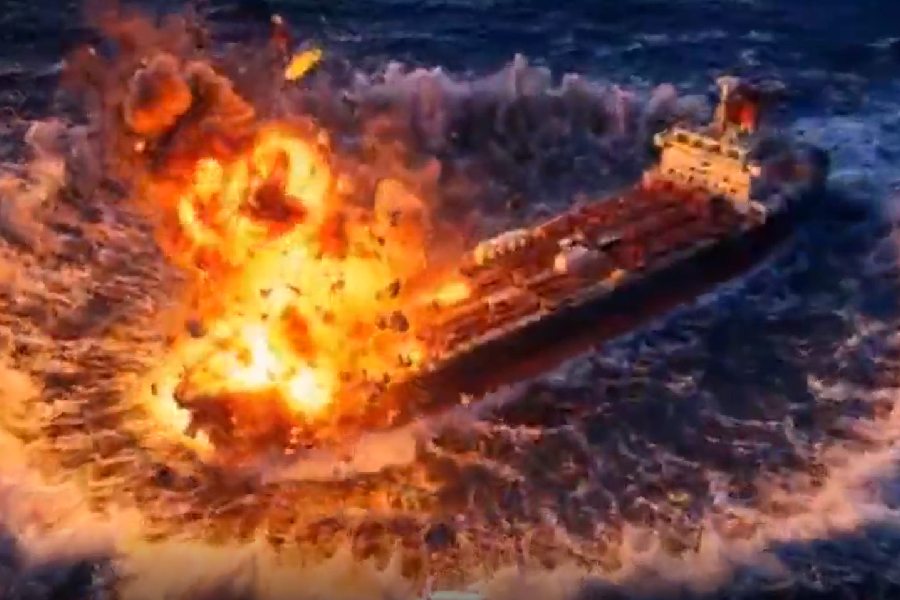
The animated video “Lord of the Straits” depicts Iran shutting down all global shipping. The US president has begged allies for help, but he has been repeatedly turned down. Iran has relied heavily on AI-generated videos to promote its claims.
Lego style animations are also used to depict events.
A clip shared by RT and attributed to Iran’s Tasnim news agency shows a Lego version of Donald Trump sweating as Iranian forces attack tankers and lay mines in the Strait of Hormuz.
4
6
screen grab
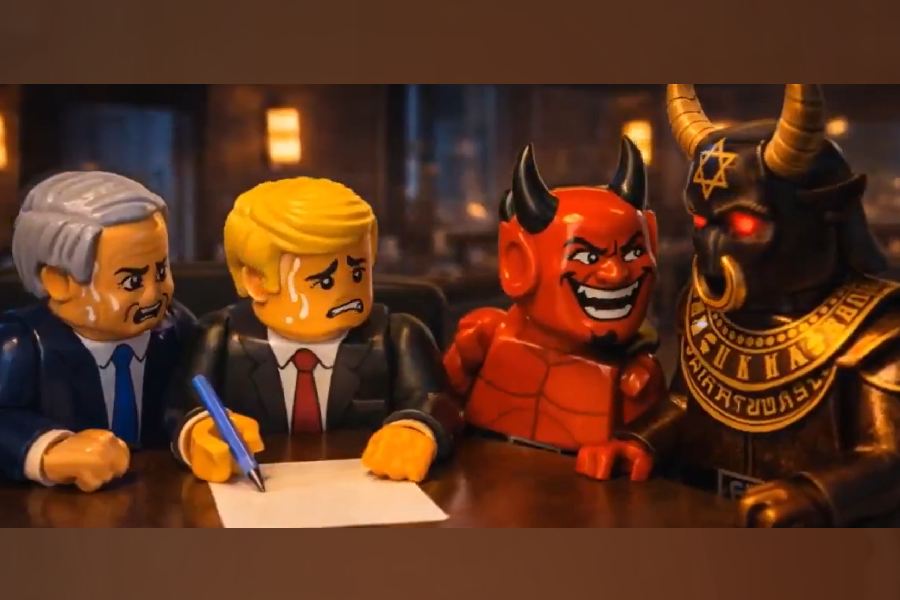
Another AI-generated video targets President Trump and Israeli Prime Minister Benjamin Netanyahu over the Jeffrey Epstein files. In the clip, both leaders stand next to Lego Satan and a folder titled “Jeffrey Epstein Files.”
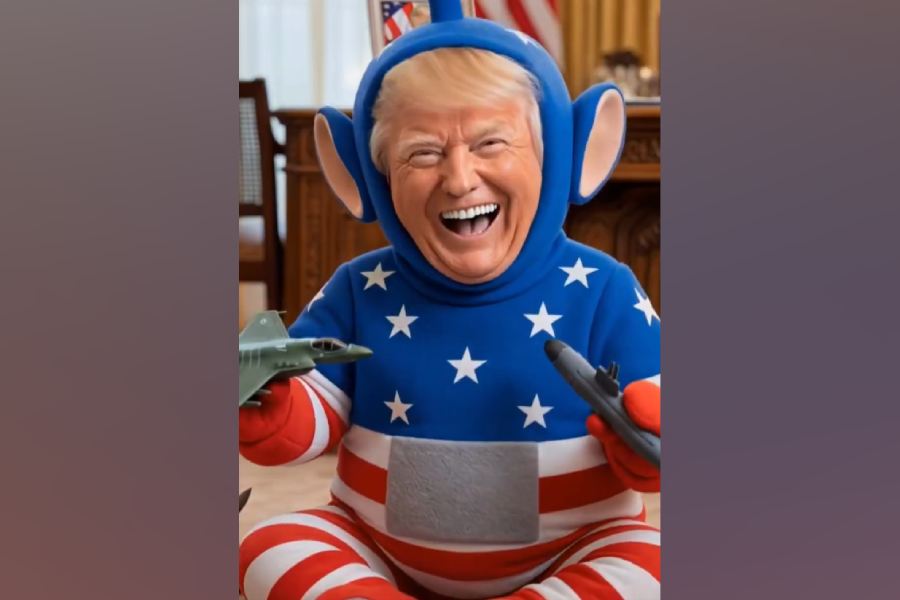
An Epstein-like figure appeared next to them in a prison jumpsuit. Another video shows Trump dressed like a Teletubbies character. He knelt down and asked the leaders of Europe for help. They say, “No, no, no.”
As he was leaving, one person told him to close the door. The room is filled with laughter.
5
6
screen grab
Communication in Iran is not limited to animation. After Prime Minister Netanyahu said Iran should be “eliminated,” the Iranian consulate in Hyderabad responded with a post featuring the tree and a caption pointing out Israel’s short history.
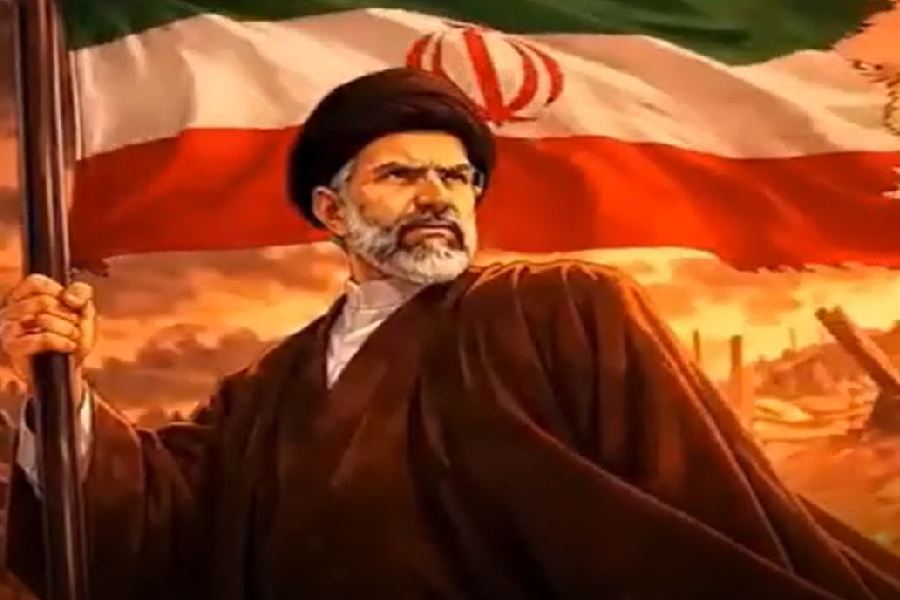
Some videos move away from humor and focus on emotion. In one AI-generated clip, an elderly person resembling Ali Khamenei appears with a child in a quiet moment. Missile attacks continue. The ring on his finger shines among the rubble.
Afterwards, President Trump said, “Khamenei is dead.” A young man, Mojtaba Khamenei, appears. He picks up the ring, holds the Iranian flag, and stands among the rubble. President Trump received another message: “Khamenei is back.”
6
6
screen grab
The final frame shows the missile rising into the night sky. This sequence constructs a story of loss and return. Social media sets the tone early on. First impressions are formed before detailed reports are released.
Iranian content is built for that environment and is short, visual, and easy to share. It reaches audiences who don’t follow traditional news closely.
A Clemson University study cited by the Guardian found that Iran’s network is shifting toward a system centered on war and the projection of Ali Khamenei.
“This is completely asymmetric warfare,” said Darren Linville of Clemson University’s Media Forensics Hub. He added that Iran is using artificial intelligence at a pace that “I don’t think anyone has ever seen before to the same extent or in the same way.”
Iran’s anti-American message has long lived within its walls. It will be shown on screens in 2026.
In January, authorities unveiled a large mural in Tehran’s Enherab Square.
It depicts a damaged U.S. aircraft carrier, a fighter jet exploding in the air, and blood flowing into the sea in stripes resembling the Stars and Stripes.
Printed on it are the following sentences: “If you sow a wind, you will reap a whirlwind” and “He who sows a wind will reap a storm.” The mural surfaced as U.S. warships, including the aircraft carrier Abraham Lincoln, approached Iran.
Old locations have been repainted and updated, such as the “Down with USA” wall near the former U.S. Embassy. New elements have been added to the old design, which is rooted in the 1979 hostage crisis, including missiles, warships, and a stylized American flag.
These locations often also serve as sites for protests, ensuring that footage remains part of the public gathering.
In March, the state channel released the AI-generated short film “One Vengeance For All.”
The film stitches together scenes from conflicts involving the United States, Vietnam, Iraq, and Palestine, ending with a “diabolical” missile attack on the Statue of Liberty.
Regardless of format, the message remains consistent. While the US is presented as a global aggressor, any Iranian response is portrayed as justified. Murals make a difference domestically, but AI video conveys that message across borders.
“This conflict is the first time that we have actually seen AI-generated content being used very deliberately to cause confusion and confusion about what is actually happening on the ground,” said Melanie Smith, an information operations expert at the Institute for Strategic Dialogue, as reported by France 24 newspaper.
These messages are derived from real developments. Iran launched drones and ballistic missiles that struck near Dimona and Arad and targeted US and British facilities in Diego Garcia.
It also damaged the energy infrastructure of Saudi Arabia, Kuwait, Qatar, UAE and Bahrain. The threat of blocking the Strait of Hormuz has disrupted shipping and energy transport.
These events are reflected in the narratives constructed online, often presented as clear and decisive movements. The theme remains the same throughout the posts and videos. President Trump appears to be out of line or under pressure. Prime Minister Netanyahu appears to be cornered.