Creator( )euronews farsi
Release date
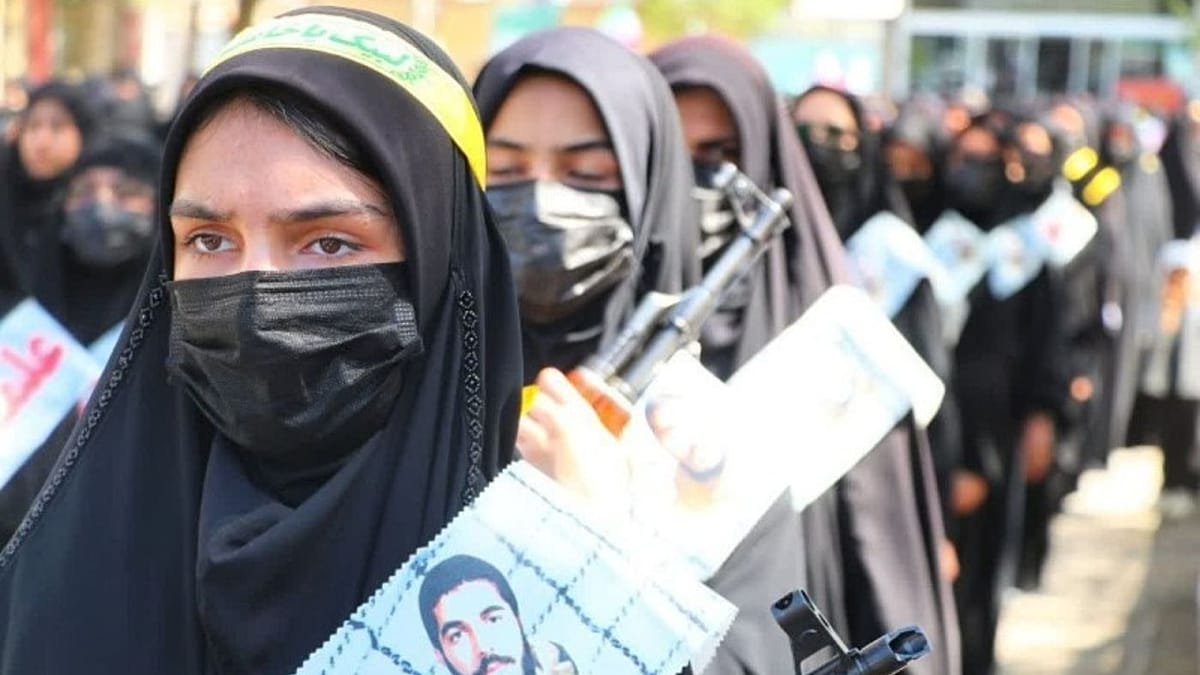
Videos released on social media from Iran show women carrying Kalashnikov rifles and riding through the streets of at least six Iranian cities in armored vehicles equipped with machine guns, footage promoted by state media as evidence of women’s participation in the country’s war effort.

advertisement
advertisement
The footage, said to have been shot in Rasht, Tehran, Mashhad, Qom, Bushehr and Qazvin, shows women traveling in organized convoys with Revolutionary Guards personnel and can be heard chanting pro-regime slogans.
Iranian state television broadcast some of the clips. Revolutionary Guards news agencies described the parade as part of what they called “women’s jihad” in support of the Islamic Republic.
Since then, some of the footage has been questioned. Researchers and social media users have noted visual discrepancies, saying they could indicate AI-generated content or digital editing.
Euronews was unable to independently verify the video. Iranian authorities have denied that any of the material was fabricated.
Some of the women in the video are not wearing the full hijab required by Iranian law, a detail that has drawn attention given that the Iranian government has enforced a dress code for decades.
Utilizing women in national messaging is not new for the Islamic Republic. Since the 1979 revolution, official media have portrayed women in supporting roles, as “mothers of martyrs” and as volunteers in Basij militias.
Such images were used extensively during the Iran-Iraq war in the 1980s. This kind of armed street parade deviates from that pattern.
The footage was released as Iran is at war and facing its worst internal crisis in decades.
Protests that began in December 2025 in the wake of the collapse of the Real, just before the war between the United States and Israel, spread to at least 180 cities and began a crackdown by security forces on January 8 and 9, 2026, resulting in thousands of deaths.
Iran’s Supreme Council for National Security put the death toll at 3,117. The UN Special Rapporteur on Iran has said the number is at least 5,000, but Iranian insiders and human rights groups fear the number could reach more than 32,000.
The Iran war then prompted the regime to demonstrate popular support mixed with religious fervor in order to counter the onslaught from the United States and Israel and project an image of regime stability.
The Tehran regime has maintained an internet blackout since January 8.