High expectations for AI collided with weak earnings signals, triggering a broad tech stock selloff and renewed volatility across the Nasdaq and global markets.
Technology stocks are once again showing signs of investor nervousness. Many participants are disappointed by the high price of entry into the AI market, with no promise of profit growth.
The Nasdaq index, a barometer for the technology sector, is expected to fall about 1.2% on Friday, reflecting a broader decline in South Korea, where the Kospi index fell 5.8%.
The Nasdaq market has ended this week in negative territory, and is currently down more than 6% from its June 2nd high.
Investors are right to tread carefully. Valuations for AI stocks have continued to rise in recent years, based more on the prospects for the technology than on earnings growth.
The demand for artificial intelligence is not slowing down; on the contrary, this field is showing strong growth. However, rapid development has required companies to spend and raise tens of billions of dollars on technology development without immediate financial results.
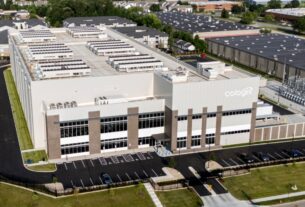
This is not just a problem for large companies. Increased demand has led to a data center boom, requiring large quantities of powerful chips that chipmakers can’t produce quickly.
This arrangement creates a K-shaped market. Chipmakers’ stock prices soar, while companies supplying AI models begin to decline.
Trends in leading companies and scale of adjustment
Microsoft and Meta found themselves in a bear market after falling about 20% from their highs. Other Mag7 giants Amazon, Apple, Google, Nvidia and Tesla are also in corrections, with losses of at least 10% from peak levels.
Apple’s AI moat scandal saw its stock drop more than 6% on Thursday after the company announced price hikes for MacBooks and iPads due to memory shortages. Memory and storage maker Micron soared nearly 16% on Thursday after reporting impressive results the previous day, boosted by rising demand for semiconductor components.
This situation is forcing the industry to consider its future response. According to the New York Times, OpenAI is considering delaying its IPO due to market volatility, which could prevent it from achieving its desired $1 trillion valuation.
KOSPI, half of whose value is formed by two tech giants SK Hynix and Samsung, imposed another 20-minute regulatory trading halt on Friday. The market remained very volatile. The index is up about 90% for the year, but this week has been very volatile with wild swings.
The market continued to be volatile this week, dropping 10% on Tuesday, rising 5% and 3% on Wednesday and Thursday, and falling again on Friday.
The tech sector continued to be the driving force behind stock gains in recent years, but demand for semiconductors partially offset the decline, increasing the sector’s share of the S&P 500 to about 19%.
Rising bond yields and the possibility of a Fed rate hike could constrain the tech sector, which is particularly sensitive to high borrowing costs.
If technology uncertainty spills over into aggressive selling, other sectors will have to bear the main burden of the market. But other industries have also shown growth this week, with the S&P 500 still just over 3% away from its all-time high.
Despite technological advantages, the market remains sensitive to changes in monetary policy and chip demand. At the same time, the overall trend points to a potential recovery from the recent decline.
Despite the volatility, investors continue to expect the market to adapt to new conditions. Demand for AI solutions and industry developments are partially supporting activity in the semiconductor and technology sector.
Looking ahead, the industry is likely to balance the growing demand for AI solutions with company performance, allowing the market to gradually recover from recent fluctuations.